Monyak R E, Emerson D, Schoenfeld B P, Zheng X, Chambers D B, Rosenfelt C, Langer S, Hinchey P, Choi C H, McDonald T V, Bolduc F V, Sehgal A, McBride S M J, Jongens T A
Department of Genetics, Perelman School of Medicine at the University of Pennsylvania, Philadelphia, PA, USA.
Section of Molecular Cardiology, Departments of Medicine and Molecular Pharmacology, Albert Einstein College of Medicine, Bronx, NY, USA.
Mol Psychiatry. 2017 Aug;22(8):1140-1148. doi: 10.1038/mp.2016.51. Epub 2016 Apr 19.
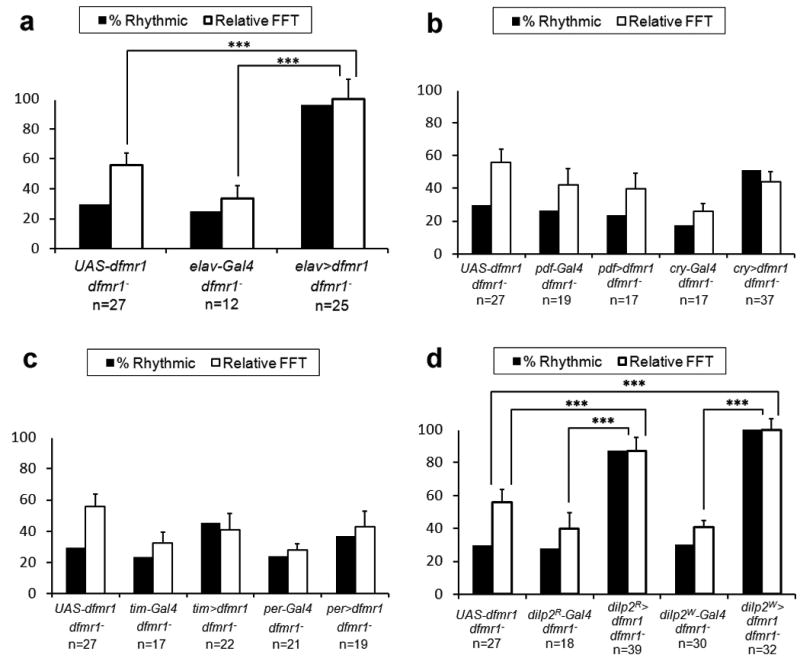
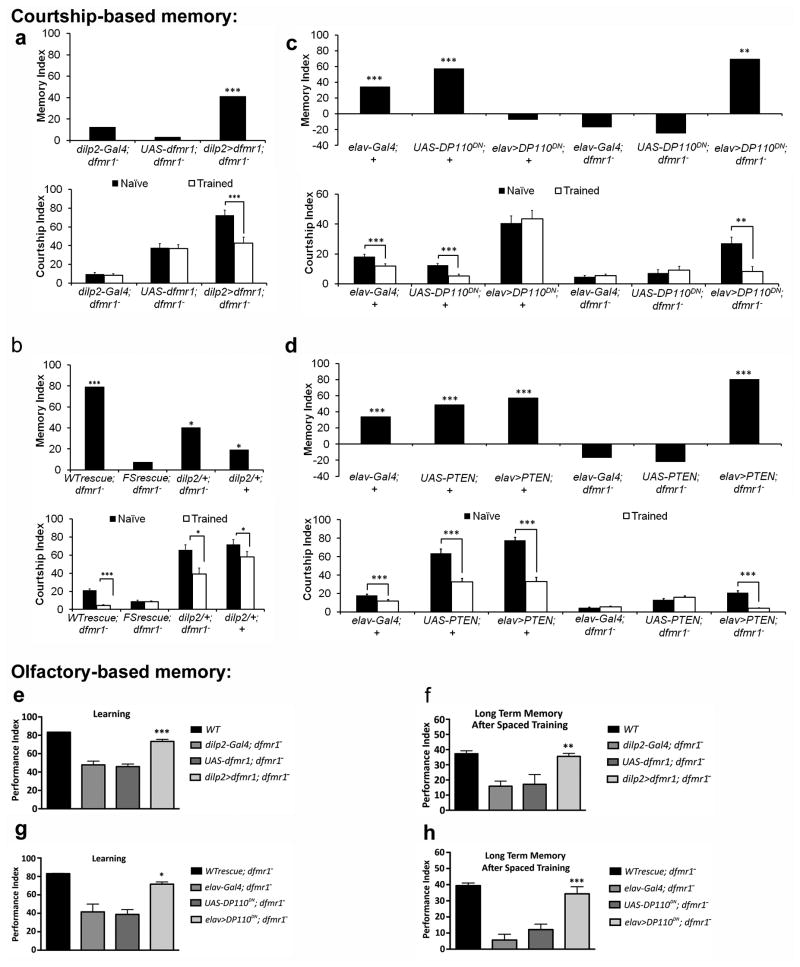
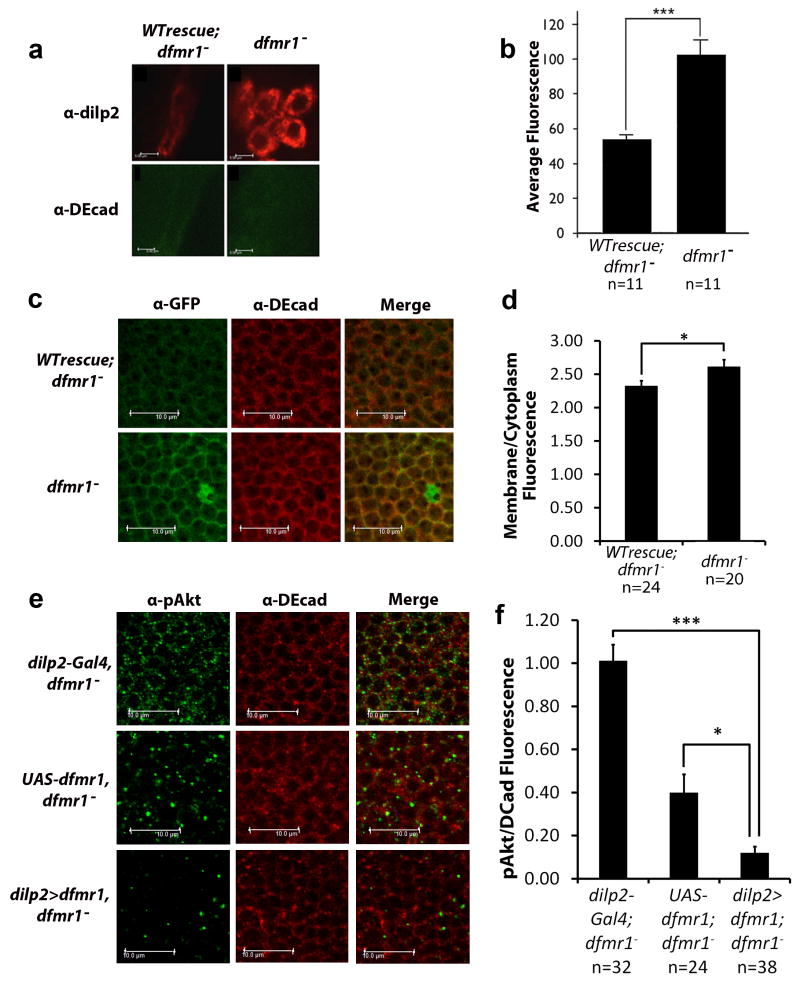
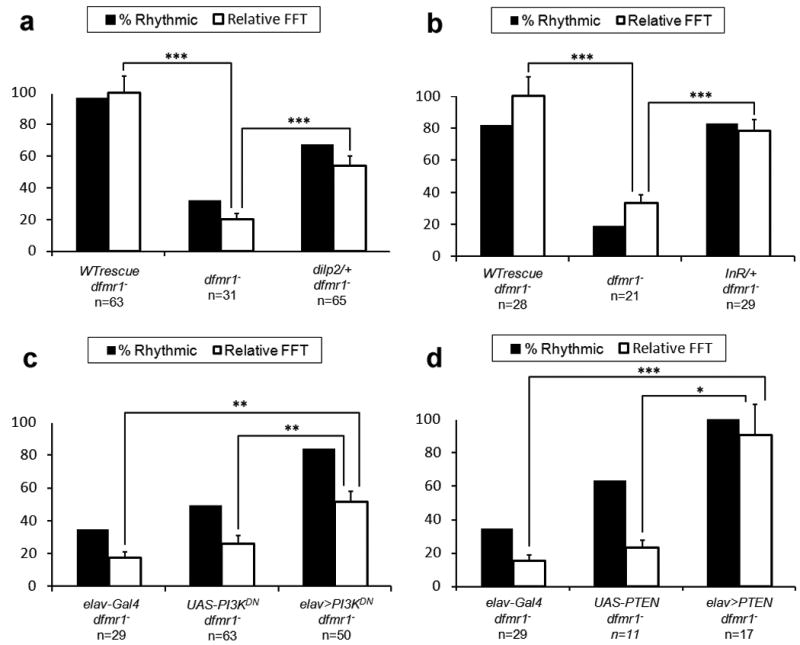
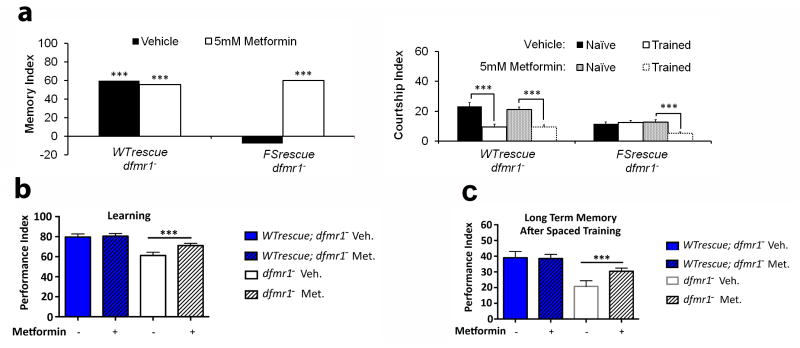
Fragile X syndrome (FXS) is an undertreated neurodevelopmental disorder characterized by low intelligence quotent and a wide range of other symptoms including disordered sleep and autism. Although FXS is the most prevalent inherited cause of intellectual disability, its mechanistic underpinnings are not well understood. Using Drosophila as a model of FXS, we showed that select expression of dfmr1 in the insulin-producing cells (IPCs) of the brain was sufficient to restore normal circadian behavior and to rescue the memory deficits in the fragile X mutant fly. Examination of the insulin signaling (IS) pathway revealed elevated levels of Drosophila insulin-like peptide 2 (Dilp2) in the IPCs and elevated IS in the dfmr1 mutant brain. Consistent with a causal role for elevated IS in dfmr1 mutant phenotypes, the expression of dfmr1 specifically in the IPCs reduced IS, and genetic reduction of the insulin pathway also led to amelioration of circadian and memory defects. Furthermore, we showed that treatment with the FDA-approved drug metformin also rescued memory. Finally, we showed that reduction of IS is required at different time points to rescue circadian behavior and memory. Our results indicate that insulin misregulation underlies the circadian and cognitive phenotypes displayed by the Drosophila fragile X model, and thus reveal a metabolic pathway that can be targeted by new and already approved drugs to treat fragile X patients.
脆性X综合征(FXS)是一种治疗不足的神经发育障碍,其特征是智商较低以及包括睡眠紊乱和自闭症在内的一系列其他症状。尽管FXS是智力残疾最常见的遗传原因,但其机制基础尚未得到充分理解。我们以果蝇作为FXS的模型,发现大脑中胰岛素生成细胞(IPC)中dfmr1的选择性表达足以恢复正常的昼夜节律行为,并挽救脆性X突变果蝇的记忆缺陷。对胰岛素信号(IS)通路的检查显示,IPC中果蝇胰岛素样肽2(Dilp2)水平升高,dfmr1突变体大脑中的IS升高。与IS升高在dfmr1突变体表型中起因果作用一致,dfmr1在IPC中的特异性表达降低了IS,胰岛素通路的基因减少也导致昼夜节律和记忆缺陷得到改善。此外,我们表明,使用美国食品药品监督管理局(FDA)批准的药物二甲双胍进行治疗也能挽救记忆。最后,我们表明,在不同时间点降低IS对于挽救昼夜节律行为和记忆是必需的。我们的结果表明,胰岛素调节异常是果蝇脆性X模型所表现出的昼夜节律和认知表型的基础,从而揭示了一条可被新的和已批准的药物靶向治疗脆性X患者的代谢途径。