Stanton Cassandra A, Keith Diana R, Gaalema Diann E, Bunn Janice Y, Doogan Nathan J, Redner Ryan, Kurti Allison N, Roberts Megan E, Higgins Stephen T
Westat, Center for Evaluation and Coordination of Training and Research (CECTR) in Tobacco Regulatory Science, United States; Department of Oncology, Georgetown University Medical Center, Cancer Prevention and Control Program, Lombardi Comprehensive Cancer Center, United States.
Vermont Center on Tobacco Regulatory Science, University of Vermont, United States.
Prev Med. 2016 Nov;92:160-168. doi: 10.1016/j.ypmed.2016.04.008. Epub 2016 Apr 15.
Chronic conditions are among the most common and costly of all health problems. Addressing tobacco use among adults with chronic conditions is a public health priority due to high prevalence as well as greater potential harm from continued use.
Data were drawn from 9years (2005-2013) of the U.S. National Survey on Drug Use and Health. Adult (≥18years) tobacco use included any past 30-day use of cigarettes, cigars, pipes, or smokeless tobacco. Chronic conditions examined included anxiety, asthma, coronary heart disease, depression, diabetes, hepatitis, HIV, hypertension, lung cancer, stroke, and substance abuse. Controlling for sociodemographics, trends in product use for most conditions and a composite of any condition among those with chronic conditions were compared to respondents with no condition in weighted logistic regression analyses.
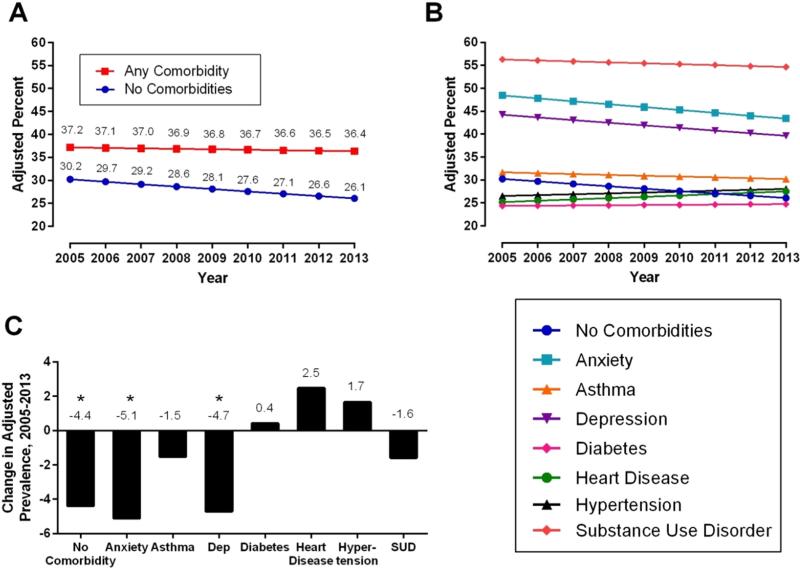
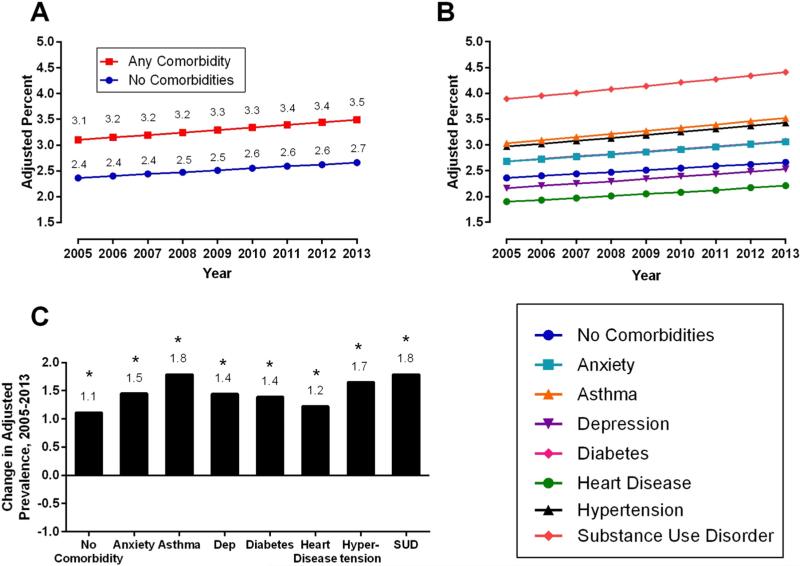
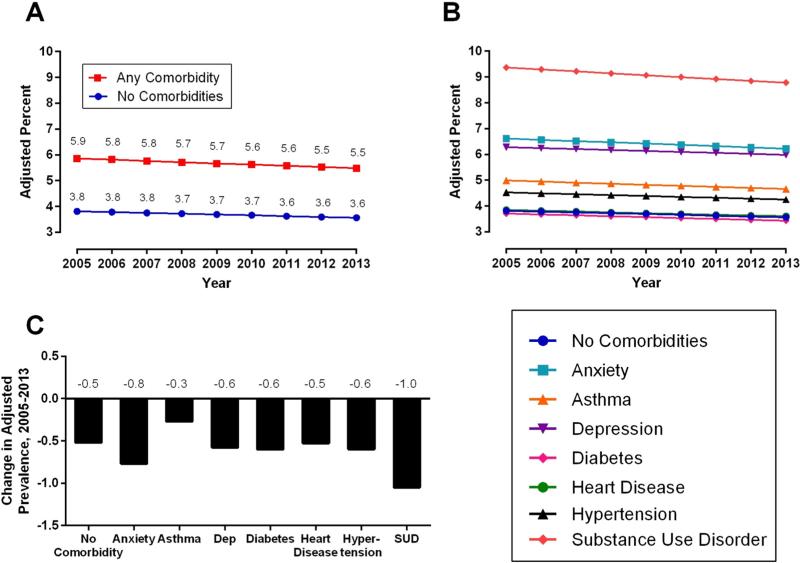
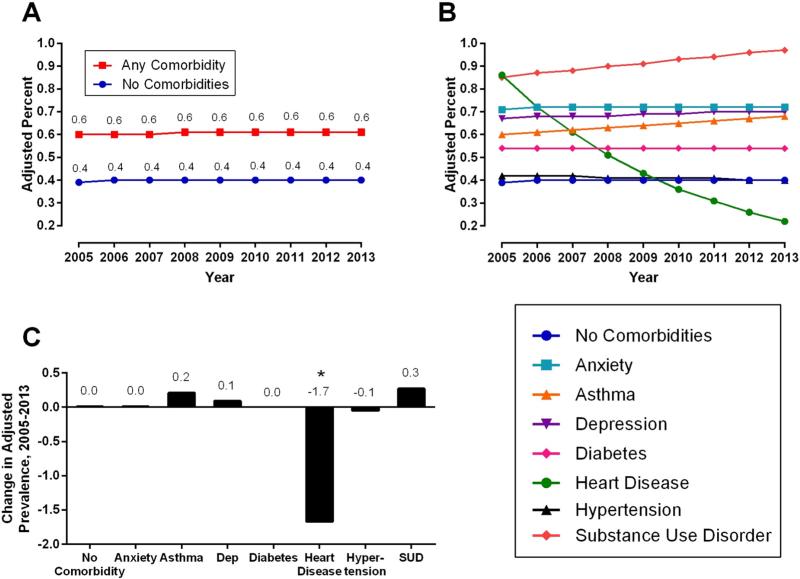
Cigarette smoking declined significantly over time among adults with no chronic condition. Adults with one or more chronic condition showed no comparable decrease, with cigarette smoking remaining especially high among those reporting anxiety, depression, and substance abuse. Cigar and pipe use remained stable and more prevalent among those with any chronic condition, with the exception of pipe use declining among those with heart disease. Smokeless tobacco use increased over time, with higher prevalence among those with asthma, mental health, and substance abuse conditions.
These findings have tobacco control and regulatory implications for addressing higher tobacco use among adults with chronic conditions. Provider advice and cessation resources targeting tobacco use among those with chronic conditions are recommended.
慢性病是所有健康问题中最常见且成本最高的问题之一。由于慢性病在成年人中的高患病率以及持续使用烟草带来的更大潜在危害,解决慢性病成年人中的烟草使用问题是一项公共卫生重点工作。
数据取自美国国家药物使用和健康调查9年(2005 - 2013年)的数据。成年人(≥18岁)的烟草使用包括过去30天内使用过香烟、雪茄、烟斗或无烟烟草。所研究的慢性病包括焦虑症、哮喘、冠心病、抑郁症、糖尿病、肝炎、艾滋病毒、高血压、肺癌、中风和药物滥用。在加权逻辑回归分析中,在控制社会人口统计学因素的情况下,将大多数慢性病患者的产品使用趋势以及慢性病患者中任何一种慢性病的综合情况与无慢性病的受访者进行比较。
无慢性病的成年人中,吸烟率随时间显著下降。患有一种或多种慢性病的成年人没有出现类似的下降,在报告有焦虑症、抑郁症和药物滥用的人群中吸烟率仍然特别高。雪茄和烟斗的使用保持稳定,在任何慢性病患者中更为普遍,但患有心脏病的患者中烟斗使用有所下降。无烟烟草的使用随时间增加,在患有哮喘、心理健康问题和药物滥用疾病的人群中患病率更高。
这些发现对解决慢性病成年人中较高的烟草使用问题具有烟草控制和监管意义。建议针对慢性病患者的烟草使用提供医疗建议和戒烟资源。