Lacar Benjamin, Linker Sara B, Jaeger Baptiste N, Krishnaswami Suguna R, Barron Jerika J, Kelder Martijn J E, Parylak Sarah L, Paquola Apuã C M, Venepally Pratap, Novotny Mark, O'Connor Carolyn, Fitzpatrick Conor, Erwin Jennifer A, Hsu Jonathan Y, Husband David, McConnell Michael J, Lasken Roger, Gage Fred H
Laboratory of Genetics, The Salk Institute for Biological Studies, 10010 N Torrey Pines Road, La Jolla, California 92037-1002, USA.
J. Craig Venter Institute, La Jolla, California 92037, USA.
Nat Commun. 2016 Apr 19;7:11022. doi: 10.1038/ncomms11022.
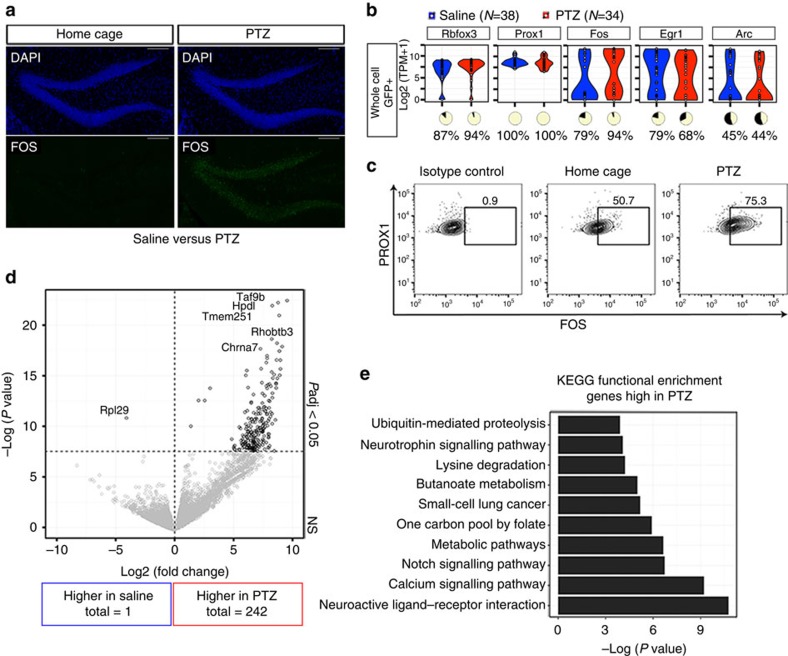
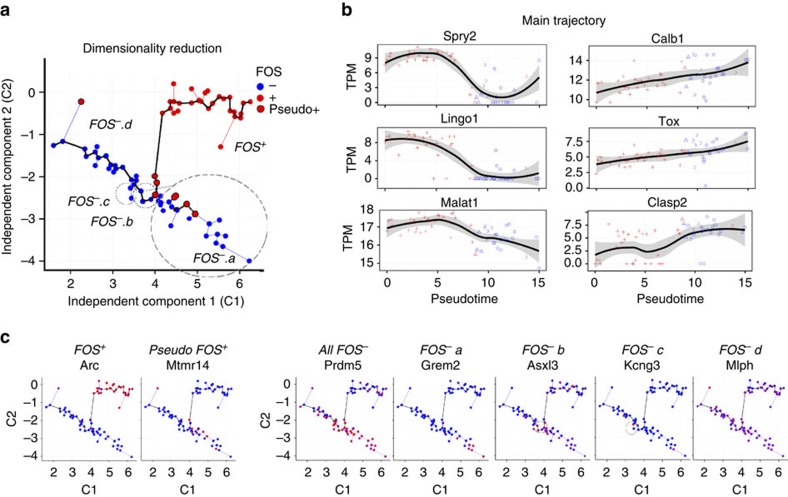
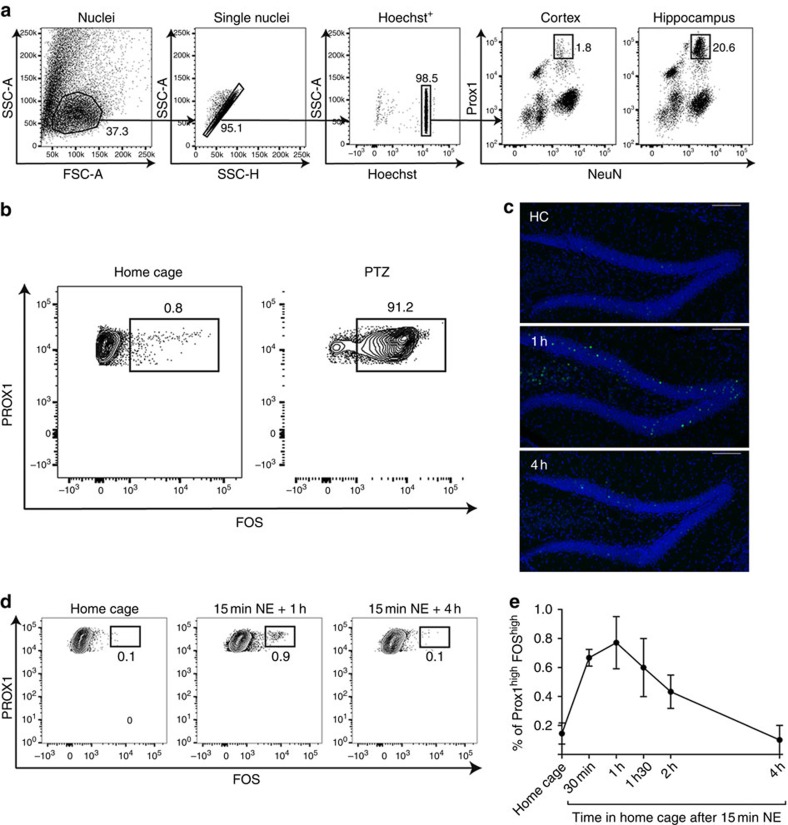
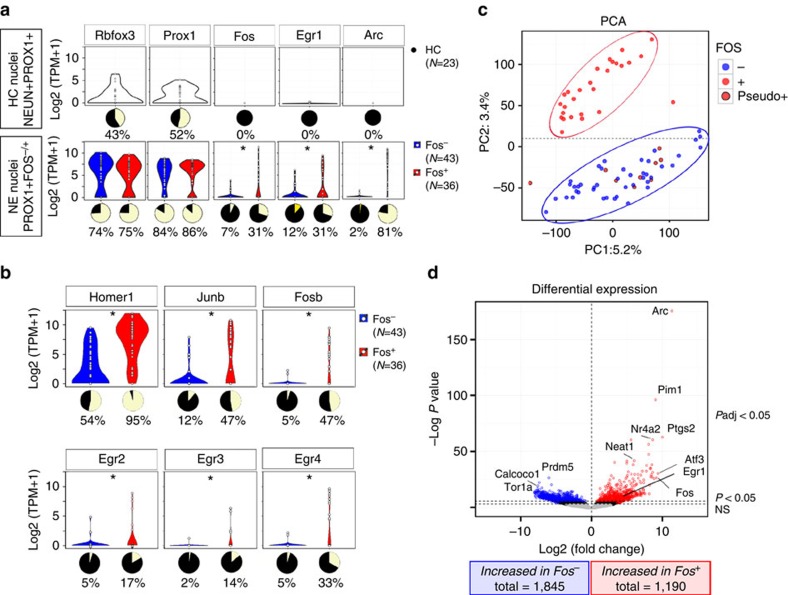
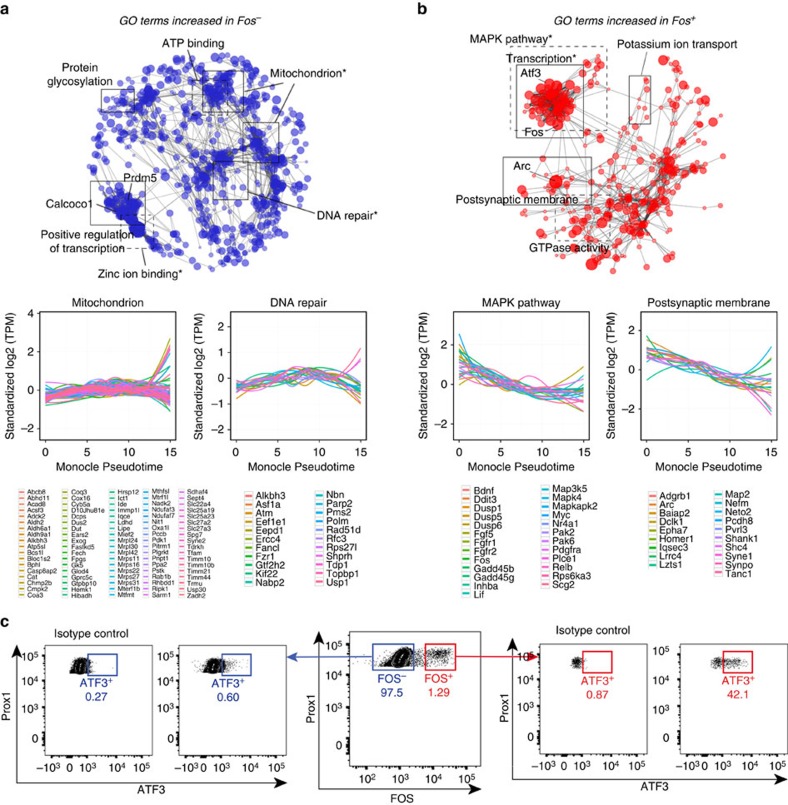
Single-cell sequencing methods have emerged as powerful tools for identification of heterogeneous cell types within defined brain regions. Application of single-cell techniques to study the transcriptome of activated neurons can offer insight into molecular dynamics associated with differential neuronal responses to a given experience. Through evaluation of common whole-cell and single-nuclei RNA-sequencing (snRNA-seq) methods, here we show that snRNA-seq faithfully recapitulates transcriptional patterns associated with experience-driven induction of activity, including immediate early genes (IEGs) such as Fos, Arc and Egr1. SnRNA-seq of mouse dentate granule cells reveals large-scale changes in the activated neuronal transcriptome after brief novel environment exposure, including induction of MAPK pathway genes. In addition, we observe a continuum of activation states, revealing a pseudotemporal pattern of activation from gene expression alone. In summary, snRNA-seq of activated neurons enables the examination of gene expression beyond IEGs, allowing for novel insights into neuronal activation patterns in vivo.
单细胞测序方法已成为识别特定脑区内异质细胞类型的强大工具。将单细胞技术应用于研究活化神经元的转录组,能够深入了解与神经元对特定经历的差异性反应相关的分子动力学。通过评估常见的全细胞和单核RNA测序(snRNA-seq)方法,我们在此表明,snRNA-seq能够如实地重现与经验驱动的活性诱导相关的转录模式,包括立即早期基因(IEGs),如Fos、Arc和Egr1。对小鼠齿状颗粒细胞进行snRNA-seq分析发现,在短暂暴露于新环境后,活化神经元转录组发生了大规模变化,包括MAPK通路基因的诱导。此外,我们观察到一系列激活状态,仅从基因表达就揭示了一种假时间激活模式。总之,对活化神经元进行snRNA-seq分析能够检测IEGs之外的基因表达,从而为体内神经元激活模式提供新的见解。