Hu Zhangjian, Lv Xiangzhang, Xia Xiaojian, Zhou Jie, Shi Kai, Yu Jingquan, Zhou Yanhong
Department of Horticulture, Zhejiang University Hangzhou, China.
Department of Horticulture, Zhejiang UniversityHangzhou, China; Zhejiang Provincial Key Laboratory of Horticultural Plant Integrative BiologyHangzhou, China.
Front Plant Sci. 2016 Apr 8;7:469. doi: 10.3389/fpls.2016.00469. eCollection 2016.
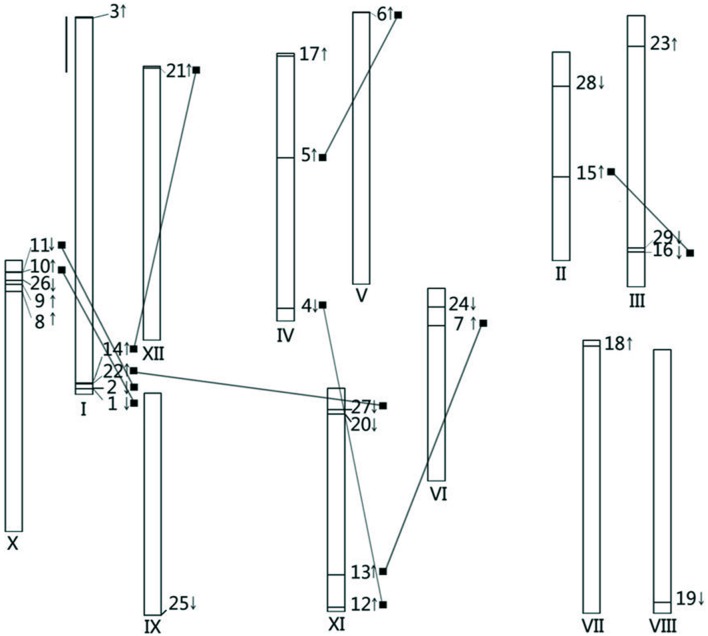
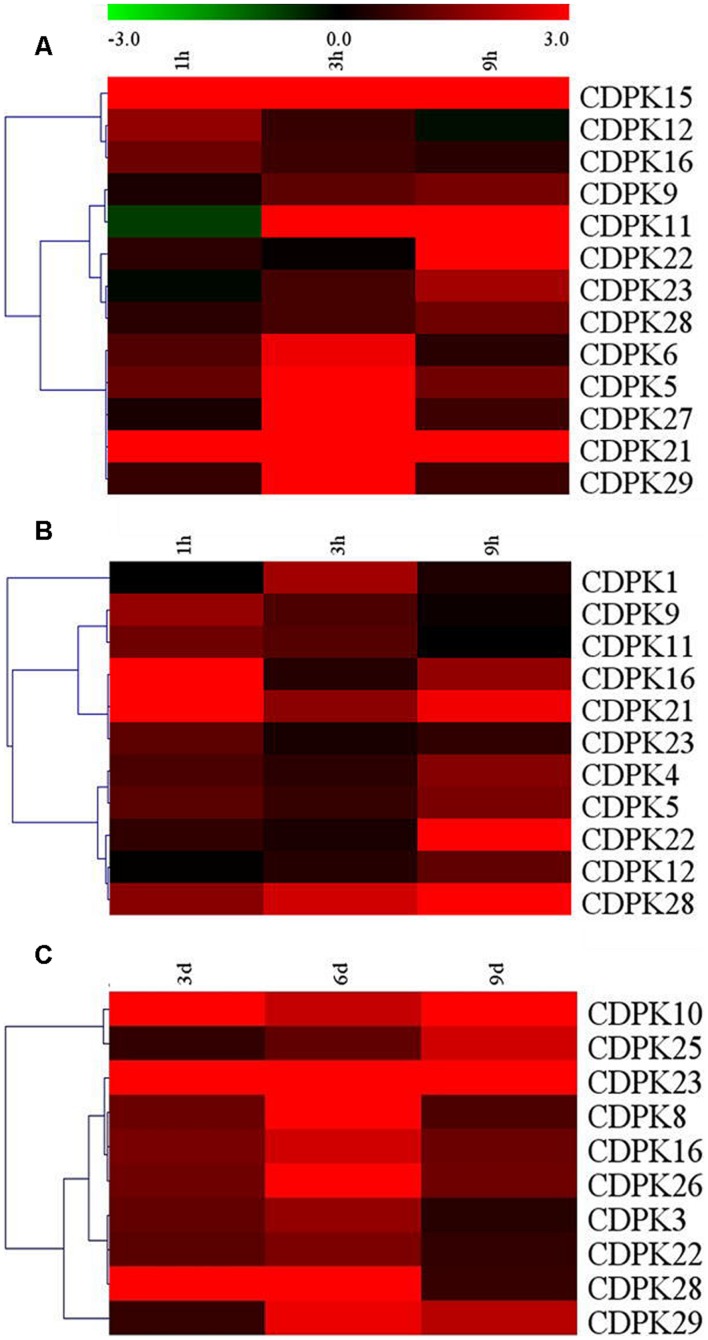
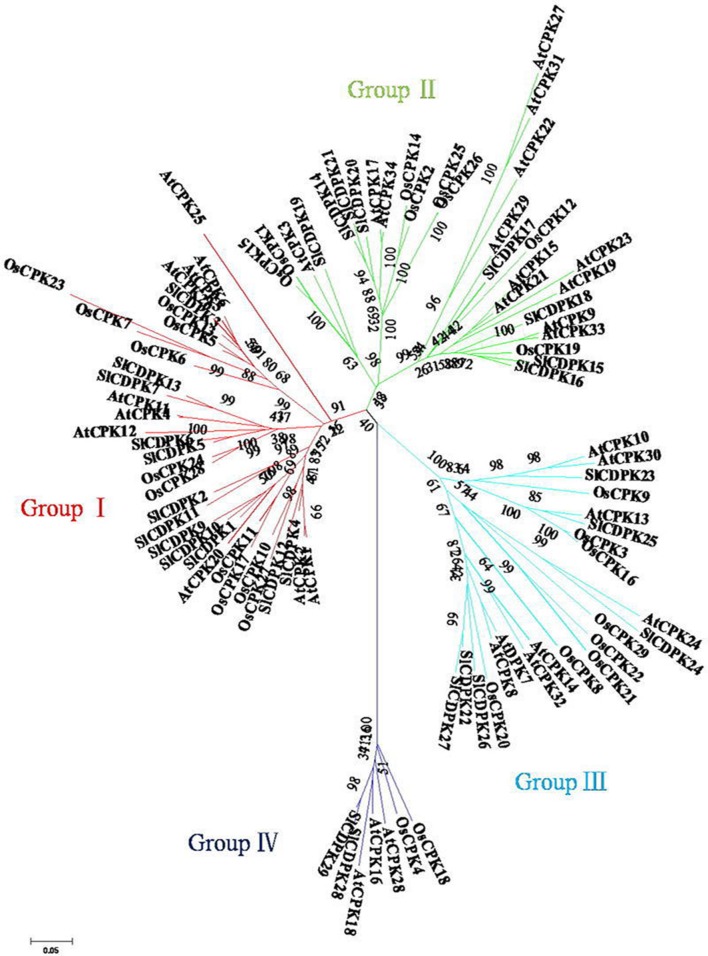
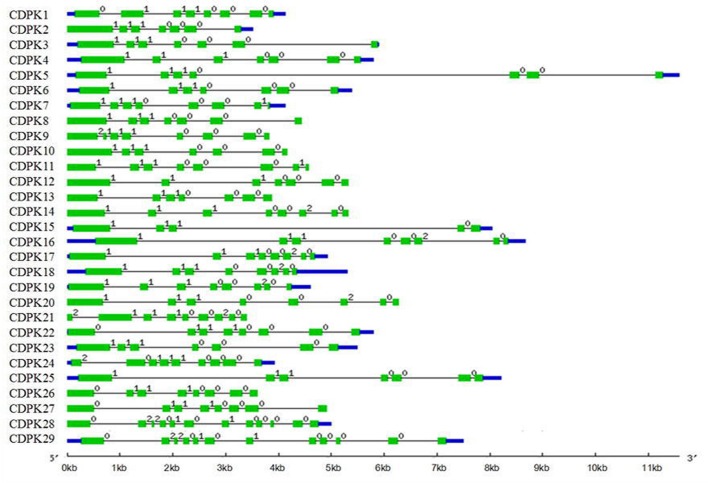
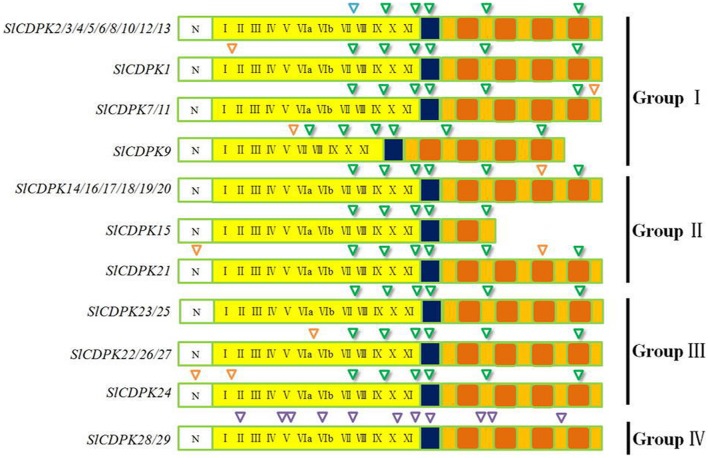
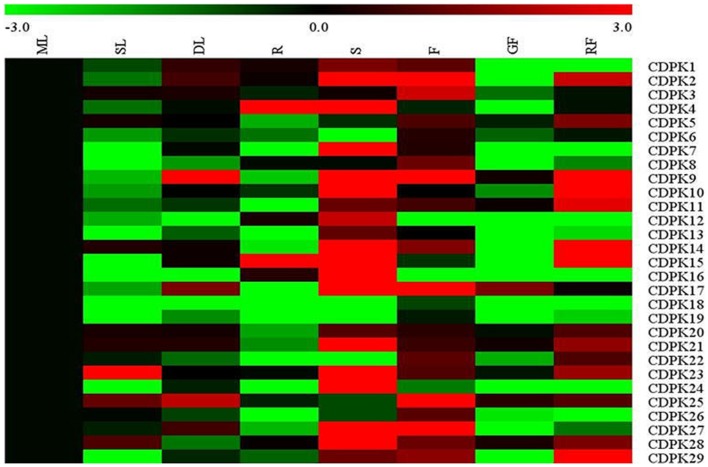
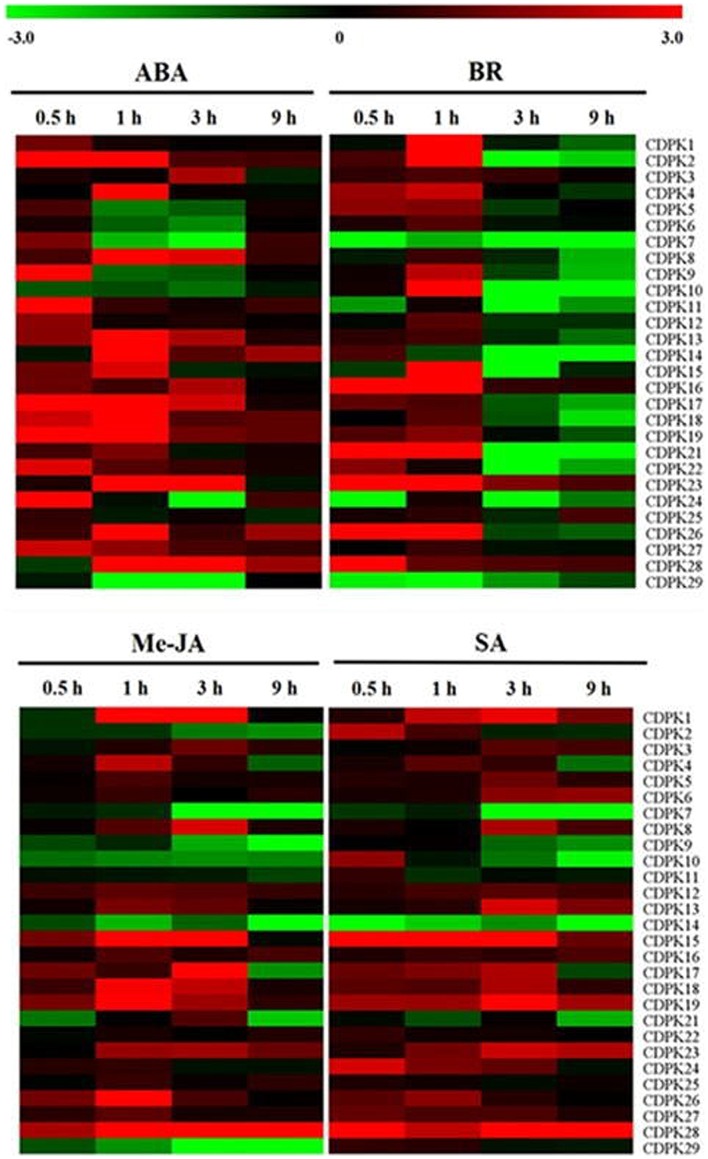
Calcium-dependent protein kinases (CDPKs) play critical roles in regulating growth, development and stress response in plants. Information about CDPKs in tomato, however, remains obscure although it is one of the most important model crops in the world. In this study, we performed a bioinformatics analysis of the entire tomato genome and identified 29 CDPK genes. These CDPK genes are found to be located in 12 chromosomes, and could be divided into four groups. Analysis of the gene structure and splicing site reflected high structure conservation within different CDPK gene groups both in the exon-intron pattern and mRNA splicing. Transcripts of most CDPK genes varied with plant organs and developmental stages and their transcripts could be differentially induced by abscisic acid (ABA), brassinosteroids (BRs), methyl jasmonate (MeJA), and salicylic acid (SA), as well as after exposure to heat, cold, and drought, respectively. To our knowledge, this is the first report about the genome-wide analysis of the CDPK gene family in tomato, and the findings obtained offer a clue to the elaborated regulatory role of CDPKs in plant growth, development and stress response in tomato.
钙依赖蛋白激酶(CDPKs)在调节植物的生长、发育和应激反应中发挥着关键作用。然而,尽管番茄是世界上最重要的模式作物之一,但关于番茄中CDPKs的信息仍然不清楚。在本研究中,我们对整个番茄基因组进行了生物信息学分析,鉴定出29个CDPK基因。这些CDPK基因位于12条染色体上,可分为4组。对基因结构和剪接位点的分析表明,不同CDPK基因组在外显子-内含子模式和mRNA剪接方面都具有高度的结构保守性。大多数CDPK基因的转录本随植物器官和发育阶段而变化,并且它们的转录本分别可被脱落酸(ABA)、油菜素类固醇(BRs)、茉莉酸甲酯(MeJA)和水杨酸(SA)以及在暴露于热、冷和干旱后差异诱导。据我们所知,这是关于番茄CDPK基因家族全基因组分析的首次报道,所获得的结果为CDPKs在番茄植物生长、发育和应激反应中的精细调节作用提供了线索。