Mittal Shikha, Mallikarjuna Mallana Gowdra, Rao Atmakuri R, Jain Prashant A, Dash Prasanta K, Thirunavukkarasu Nepolean
Division of Genetics, Indian Agricultural Research Institute (ICAR), New Delhi, India.
Centre for Agricultural Bioinformatics, Indian Agricultural Statistics Research Institute (ICAR), New Delhi, India.
Front Chem. 2017 Dec 19;5:115. doi: 10.3389/fchem.2017.00115. eCollection 2017.
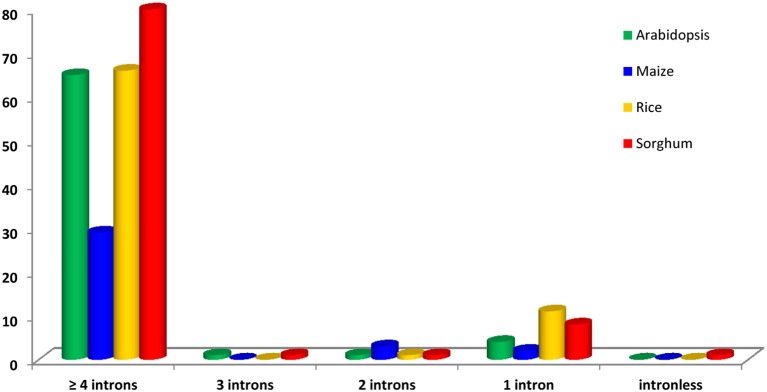
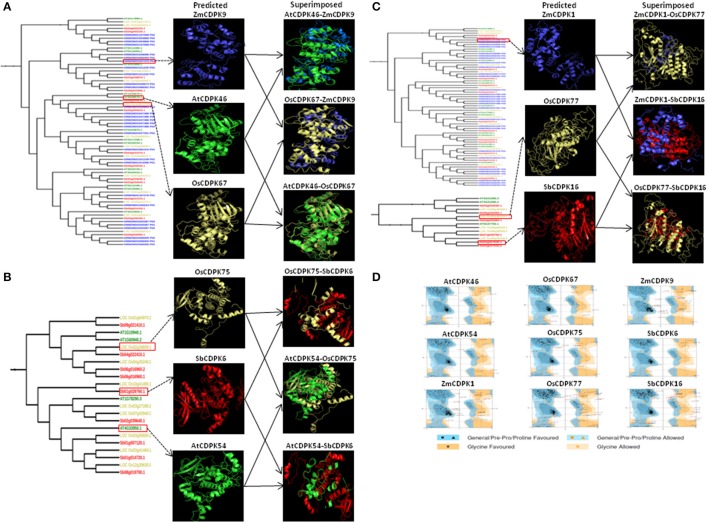
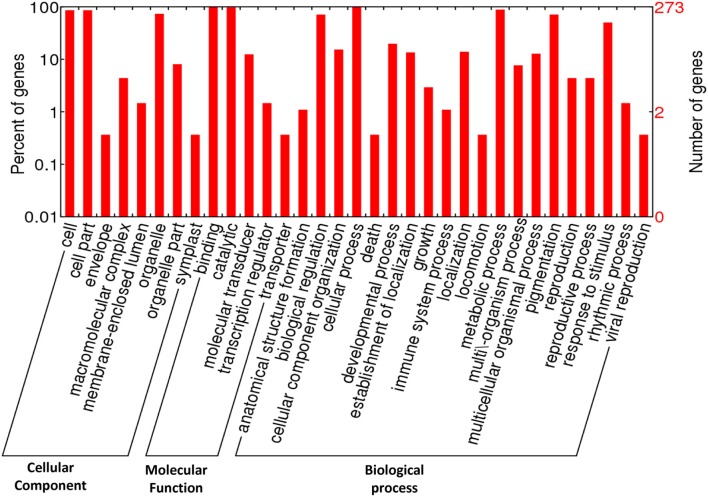
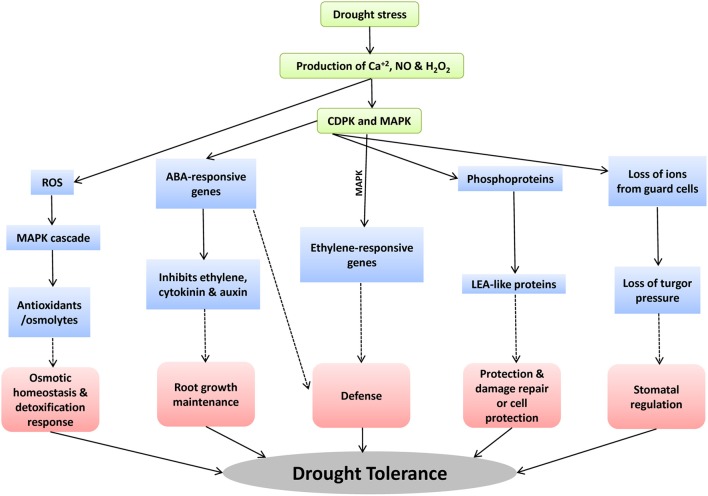
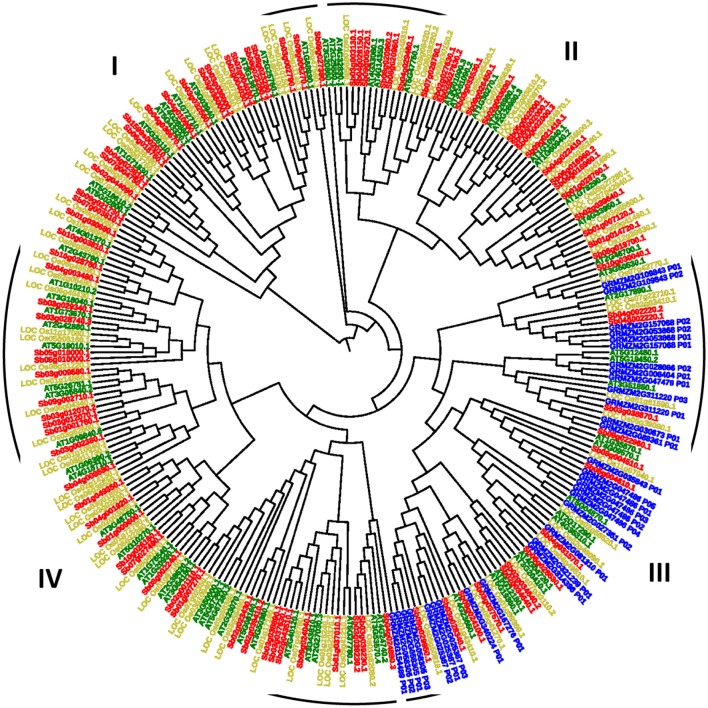
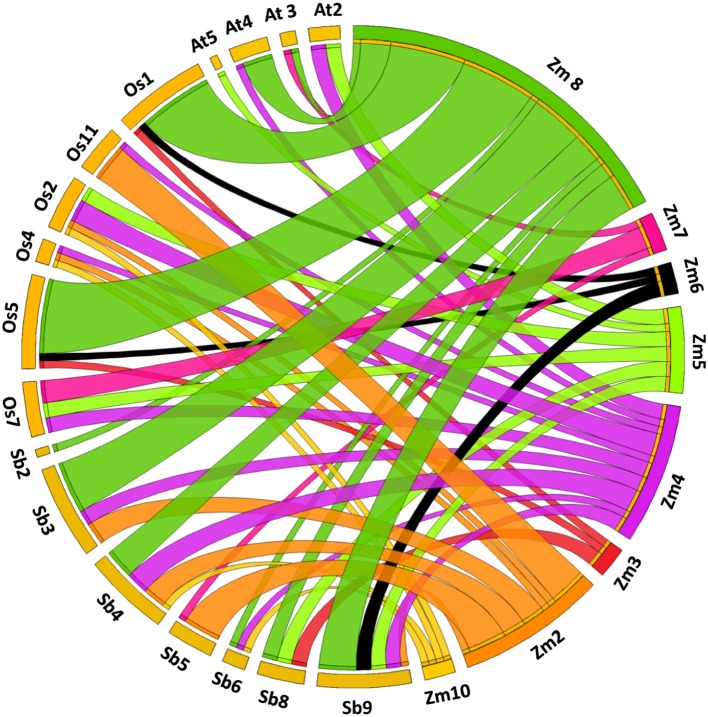
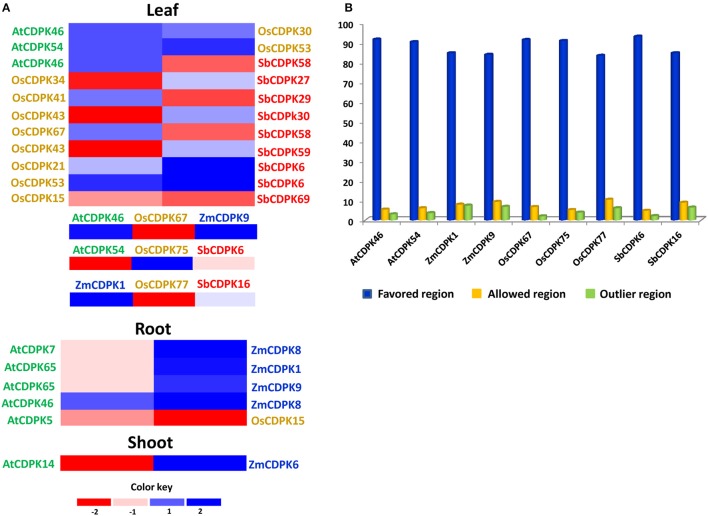
Calcium dependent protein kinases (CDPKs) play significant role in regulation of plant growth and development in response to various stresses including drought. A set of 32 CDPK genes identified in maize were further used for searching of orthologs in the model plant (72) and major food crops such as rice (78) and sorghum (91). We comprehensively studied the phylogenetic relationship, annotations, gene duplications, gene structure, divergence time, 3-D protein structures and tissue-specific drought induced expression of CDPK genes in all four species. Variation in intron frequency in the studied species was one of the reasons for the functional diversity of CDPK genes to various stress responses. Protein kinase and protein kinase C phosphorylation site domains were the most conserved motifs identified in all species. Four groups were identified from the sequence-based phylogenetic analysis, in which maize CDPKs were clustered in group III. Expression data showed that the CDPK genes were highly expressed in leaf of maize, rice, and sorghum whereas in the maximum expression was observed in root. The expression assay showed 5, 6, 11, and 9 were the commonly and differentially expressed drought-related orthologous genes in maize, , rice, and sorghum, respectively. 3-D protein structure were predicted for the nine genes (: 2, maize: 2, rice: 3, and sorghum: 2) showing differential expression in at least three species. The predicted 3-D structures were further evaluated and validated by Ramachandran plot, ANOLEA, ProSA, and Verify-3D. The superimposed 3-D structure of drought-related orthologous proteins retained similar folding pattern owing to their conserved nature. Functional annotation revealed the involvement of CDPK genes in various pathways such as osmotic homeostasis, cell protection, and root growth. The interactions of CDPK genes in various pathways play crucial role in imparting drought tolerance through different ABA and MAPK signaling cascades. These selected candidate genes could be targeted in development of drought tolerant genotypes in maize, rice, and sorghum through appropriate breeding approaches. Our comparative experiments of CDPK genes could also be extended in the drought stress breeding programmes of the related species.
钙依赖蛋白激酶(CDPKs)在植物响应包括干旱在内的各种胁迫时的生长和发育调控中发挥着重要作用。在玉米中鉴定出的一组32个CDPK基因,进一步用于在模式植物(72个)以及主要粮食作物如水稻(78个)和高粱(91个)中寻找直系同源基因。我们全面研究了这四个物种中CDPK基因的系统发育关系、注释、基因复制、基因结构、分化时间、三维蛋白质结构以及组织特异性干旱诱导表达。所研究物种中内含子频率的变化是CDPK基因对各种胁迫反应功能多样性的原因之一。蛋白激酶和蛋白激酶C磷酸化位点结构域是在所有物种中鉴定出的最保守基序。基于序列的系统发育分析鉴定出四个组,其中玉米CDPKs聚集在第三组。表达数据表明,CDPK基因在玉米、水稻和高粱的叶片中高度表达,而在根中表达量最高。表达分析表明,分别有5个、6个、11个和9个是玉米、水稻和高粱中共同且差异表达的干旱相关直系同源基因。对在至少三个物种中表现出差异表达的9个基因(拟南芥:2个、玉米:2个、水稻:3个、高粱:2个)进行了三维蛋白质结构预测。通过拉氏图、ANOLEA、ProSA和Verify-3D对预测的三维结构进行了进一步评估和验证。由于其保守性质,干旱相关直系同源蛋白的叠加三维结构保留了相似的折叠模式。功能注释揭示了CDPK基因参与各种途径,如渗透稳态、细胞保护和根生长。CDPK基因在各种途径中的相互作用通过不同的ABA和MAPK信号级联在赋予耐旱性方面起着关键作用。通过适当的育种方法,这些选定的候选基因可作为培育玉米、水稻和高粱耐旱基因型的目标。我们对CDPK基因的比较实验也可扩展到相关物种的干旱胁迫育种计划中。