Kim Eun-Ae, Kim Sang-Woo, Nam Jehyun, Sung Eon-Gi, Song In-Hwan, Kim Joo-Young, Kwon Taeg Kyu, Lee Tae-Jin
Department of Anatomy, College of Medicine, Yeungnam University, Nam-gu, Daegu, Republic of Korea.
Department of Biological Sciences, Pusan National University, Busan, Republic of Korea.
Oncotarget. 2016 May 31;7(22):31832-46. doi: 10.18632/oncotarget.7149.
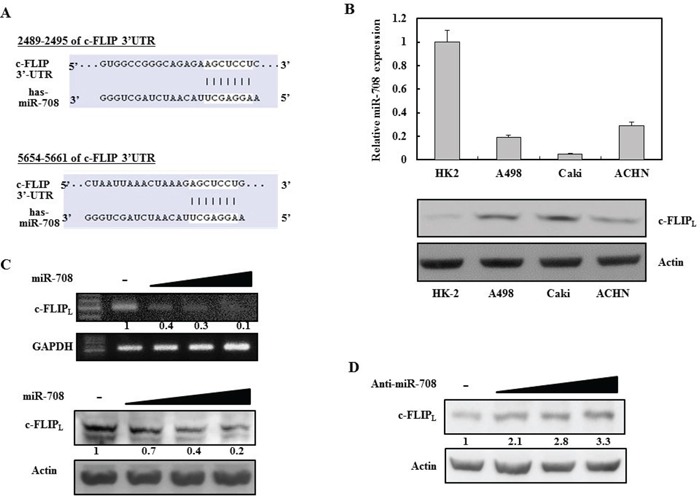
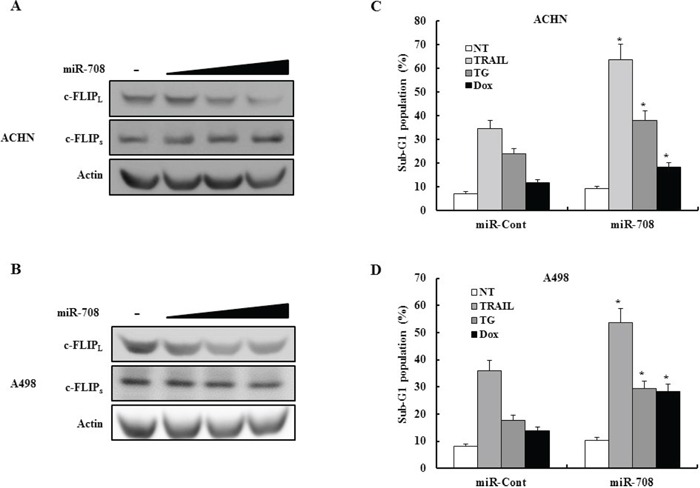
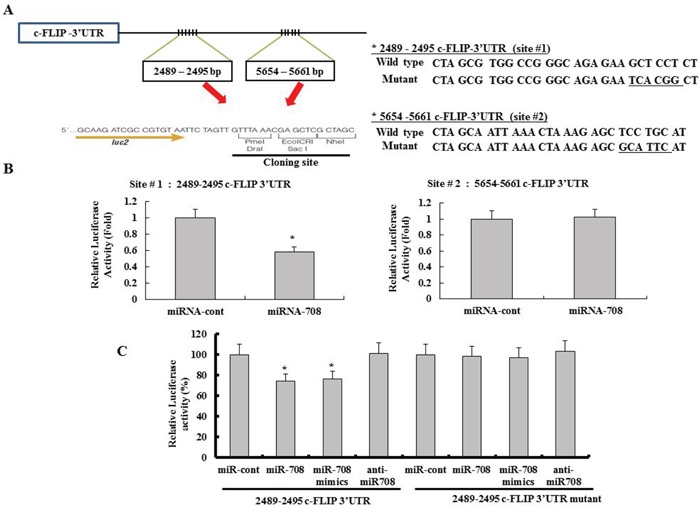
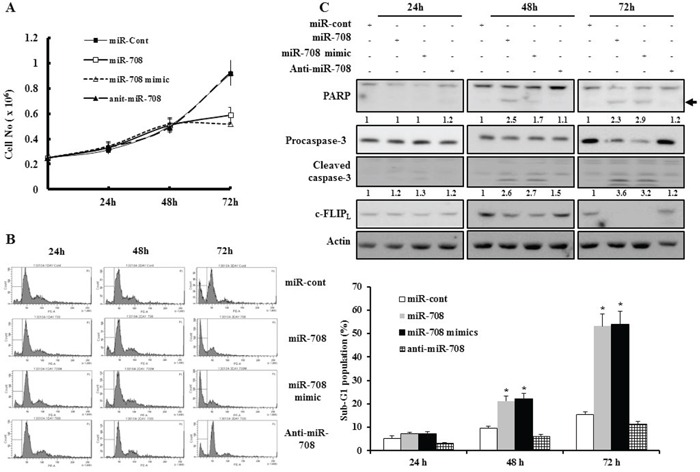
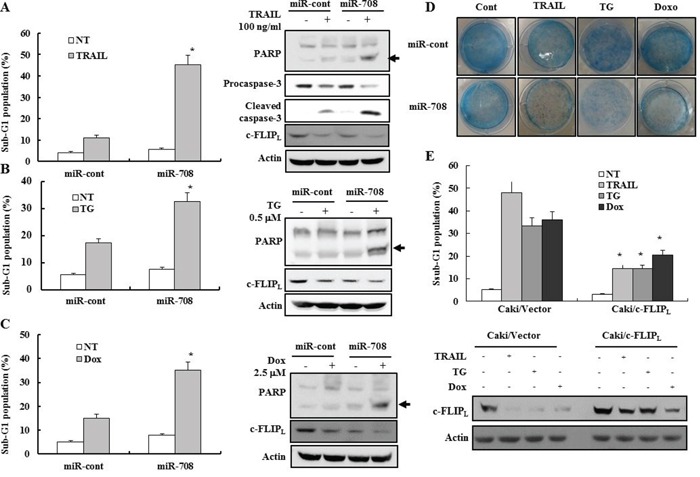
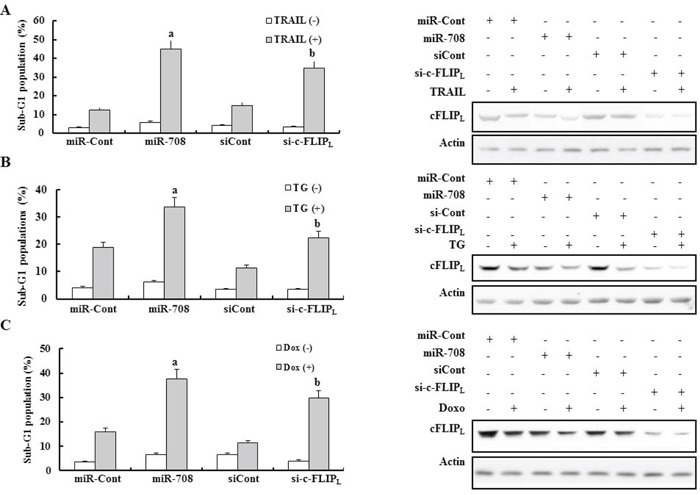
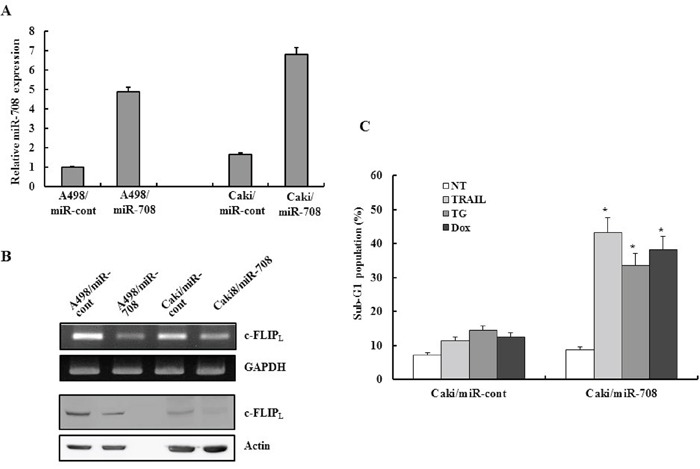
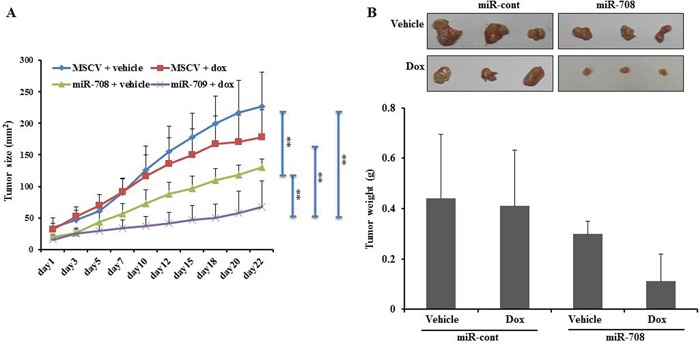
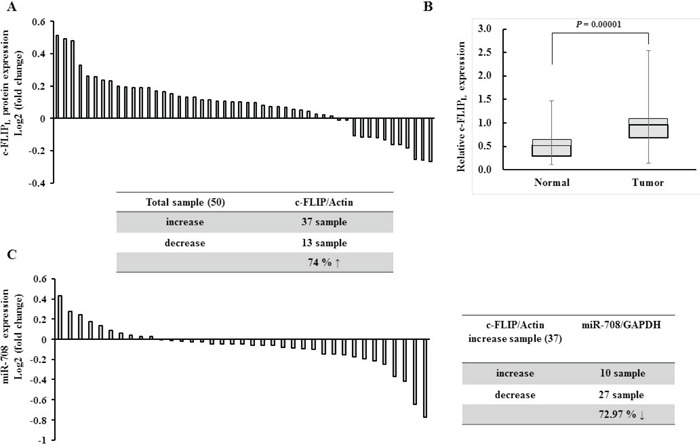
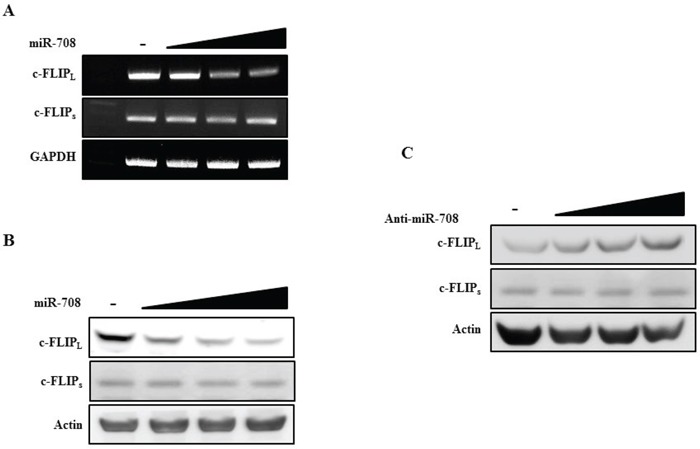
Dysregulation of the anti-apoptotic protein, cellular FLICE-like inhibitory protein (c-FLIP), has been associated with tumorigenesis and chemoresistance in various human cancers. Therefore, c-FLIP is an excellent target for therapeutic intervention. MicroRNAs (miRNAs) are small non-coding RNAs that are involved in tumorigenesis, tumor suppression, and resistance or sensitivity to anti-cancer drugs. However, whether miRNAs can suppress c-FLIPL expression in cancer cells is unclear. The aim of this study was to identify miRNAs that could inhibit the growth of renal cancer cells and induce cell death by inhibiting c-FLIPL expression. We found that MiRNA-708 and c-FLIPL expression were inversely correlated. While c-FLIPL expression was upregulated, miRNA-708 was rarely expressed in renal cancer cells. Luciferase reporter assays demonstrated that miRNA-708 negatively regulated c-FLIPL expression by binding to the miRNA-708 binding site in the 3' untranslated region (3'UTR) of c-FLIPL. Ectopic expression of miRNA-708 increased the accumulation of sub-G1 populations and cleavage of procaspase-3 and PARP, which could be prevented by pretreatment with the pan-caspase inhibitor, Z-VAD. Ectopic expression of miRNA-708 also increased the sensitivity to various apoptotic stimuli such as tumor necrosis factor-related apoptosis-inducing ligand, doxorubicin (Dox), and thapsigargin in Caki cells. Interestingly, miRNA-708 specifically repressed c-FLIPL without any change in c-FLIPs expression. In contrast, inhibition of endogenous miRNA-708 using antago-miRNAs resulted in an increase in c-FLIPL protein expression. The expression of c-FLIPL was upregulated in renal cell carcinoma (RCC) tissues compared to normal tissues. In contrast, miRNA-708 expression was reduced in RCC tissues. Finally, miRNA-708 enhanced the tumor-suppressive effect of Dox in a xenograft model of human RCC. In conclusion, miRNA-708 acts as a tumor suppressor because it negatively regulates the anti-apoptotic protein c-FLIPL and regulates the sensitivity of renal cancer cells to various apoptotic stimuli.
抗凋亡蛋白——细胞FLICE样抑制蛋白(c-FLIP)的失调与多种人类癌症的肿瘤发生和化疗耐药性相关。因此,c-FLIP是治疗干预的一个极佳靶点。微小RNA(miRNA)是参与肿瘤发生、肿瘤抑制以及对抗癌药物的耐药性或敏感性的小非编码RNA。然而,miRNA是否能抑制癌细胞中c-FLIPL的表达尚不清楚。本研究的目的是鉴定能够通过抑制c-FLIPL表达来抑制肾癌细胞生长并诱导细胞死亡的miRNA。我们发现MiRNA-708与c-FLIPL的表达呈负相关。当c-FLIPL表达上调时,miRNA-708在肾癌细胞中很少表达。荧光素酶报告基因检测表明,miRNA-708通过与c-FLIPL的3'非翻译区(3'UTR)中的miRNA-708结合位点结合来负调控c-FLIPL的表达。miRNA-708的异位表达增加了亚G1期细胞群的积累以及procaspase-3和PARP的切割,而泛半胱天冬酶抑制剂Z-VAD预处理可阻止这种情况。miRNA-708的异位表达还增加了对各种凋亡刺激的敏感性,如肿瘤坏死因子相关凋亡诱导配体、阿霉素(Dox)和毒胡萝卜素在Caki细胞中的敏感性。有趣的是,miRNA-708特异性抑制c-FLIPL,而c-FLIPs的表达没有任何变化。相反,使用抗miRNA抑制内源性miRNA-708导致c-FLIPL蛋白表达增加。与正常组织相比,肾细胞癌(RCC)组织中c-FLIPL的表达上调。相反,RCC组织中miRNA-708的表达降低。最后,在人RCC的异种移植模型中,miRNA-708增强了Dox的肿瘤抑制作用。总之,miRNA-708作为一种肿瘤抑制因子,因为它负调控抗凋亡蛋白c-FLIPL并调节肾癌细胞对各种凋亡刺激的敏感性。