Widmer R Jay, Allison Thomas G, Keane Brendie, Dallas Anthony, Bailey Kent R, Lerman Lilach O, Lerman Amir
Division of Cardiovascular Diseases, Department of Internal Medicine, Mayo Clinic and College of Medicine, Rochester, MN 55905, United States of America.
CareHere, Inc., Nashville, TN, United States of America.
PLoS One. 2016 Apr 19;11(4):e0152657. doi: 10.1371/journal.pone.0152657. eCollection 2016.
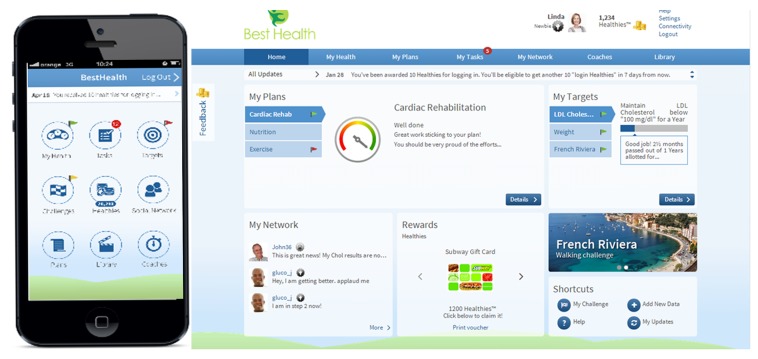
Cardiovascular disease (CVD) is the leading cause of morbidity and mortality in the US. Emerging employer-sponsored work health programs (WHP) and Digital Health Intervention (DHI) provide monitoring and guidance based on participants' health risk assessments, but with uncertain success. DHI--mobile technology including online and smartphone interventions--has previously been found to be beneficial in reducing CVD outcomes and risk factors, however its use and efficacy in a large, multisite, primary prevention cohort has not been described to date. We analyzed usage of DHI and change in intermediate markers of CVD over the course of one year in 30,974 participants of a WHP across 81 organizations in 42 states between 2011 and 2014, stratified by participation log-ins categorized as no (n = 14,173), very low (<12/yr, n = 12,260), monthly (n = 3,360), weekly (n = 651), or semi-weekly (at least twice per week). We assessed changes in weight, waist circumference, body mass index (BMI), blood pressure, lipids, and glucose at one year, as a function of participation level. We utilized a Poisson regression model to analyze variables associated with increased participation. Those with the highest level of participation were slightly, but significantly (p<0.0001), older (48.3±11.2 yrs) than non-participants (47.7±12.2 yr) and more likely to be females (63.7% vs 37.3% p<0.0001). Significant improvements in weight loss were demonstrated with every increasing level of DHI usage with the largest being in the semi-weekly group (-3.39±1.06 lbs; p = 0.0013 for difference from weekly). Regression analyses demonstrated that greater participation in the DHI (measured by log-ins) was significantly associated with older age (p<0.001), female sex (p<0.001), and Hispanic ethnicity (p<0.001). The current study demonstrates the success of DHI in a large, community cohort to modestly reduce CVD risk factors in individuals with high participation rate. Furthermore, participants previously underrepresented in WHPs (females and Hispanics) and those with an increased number of CVD risk factors including age and elevated BMI show increased adherence to DHI, supporting the use of this low-cost intervention to improve CVD health.
心血管疾病(CVD)是美国发病和死亡的主要原因。新兴的雇主赞助的工作健康计划(WHP)和数字健康干预(DHI)基于参与者的健康风险评估提供监测和指导,但成效尚不确定。DHI——包括在线和智能手机干预在内的移动技术——此前已被发现有助于降低心血管疾病的发病结果和风险因素,然而,其在大型、多地点的一级预防队列中的使用和效果迄今尚未见描述。我们分析了2011年至2014年间42个州81个组织的WHP的30974名参与者在一年时间里DHI的使用情况以及心血管疾病中间标志物的变化,根据参与登录情况分层,分为未参与(n = 14173)、极低参与度(<12次/年,n = 12260)、每月参与(n = 3360)、每周参与(n = 651)或半周参与(每周至少两次)。我们评估了一年时体重、腰围、体重指数(BMI)、血压、血脂和血糖的变化,作为参与水平的函数。我们使用泊松回归模型分析与参与度增加相关的变量。参与度最高的人群比未参与者略年长(48.3±11.2岁 vs 47.7±12.2岁),但差异显著(p<0.0001),且更可能为女性(63.7% vs 37.3%,p<0.0001)。随着DHI使用水平的每一次提高,体重减轻都有显著改善,其中半周参与组改善最大(-3.39±1.06磅;与每周参与组相比差异p = 0.0013)。回归分析表明,更多地参与DHI(以登录次数衡量)与年龄较大(p<0.001)、女性(p<0.001)和西班牙裔(p<0.001)显著相关。当前研究表明,DHI在大型社区队列中成功地适度降低了高参与率个体的心血管疾病风险因素。此外,此前在WHP中代表性不足的参与者(女性和西班牙裔)以及那些心血管疾病风险因素增加(包括年龄和BMI升高)的人对DHI的依从性增加,这支持使用这种低成本干预措施来改善心血管健康。