Xin Yong, Huang Qian, Zhang Pei, Yang Ming, Hou Xiao-Yang, Tang Jian-Qin, Zhang Long Zhen, Jiang Guan
From the Department of Radiotherapy, Affiliated Hospital of Xuzhou Medical College (YX, ZZ); Major of oncology, Xuzhou Medical College (QH, PZ, MY); and Department of Dermatology, Affiliated Hospital of Xuzhou Medical College, Xuzhou, Jiangsu, China (X-YH, J-QT, GJ).
Medicine (Baltimore). 2016 Apr;95(16):e3406. doi: 10.1097/MD.0000000000003406.
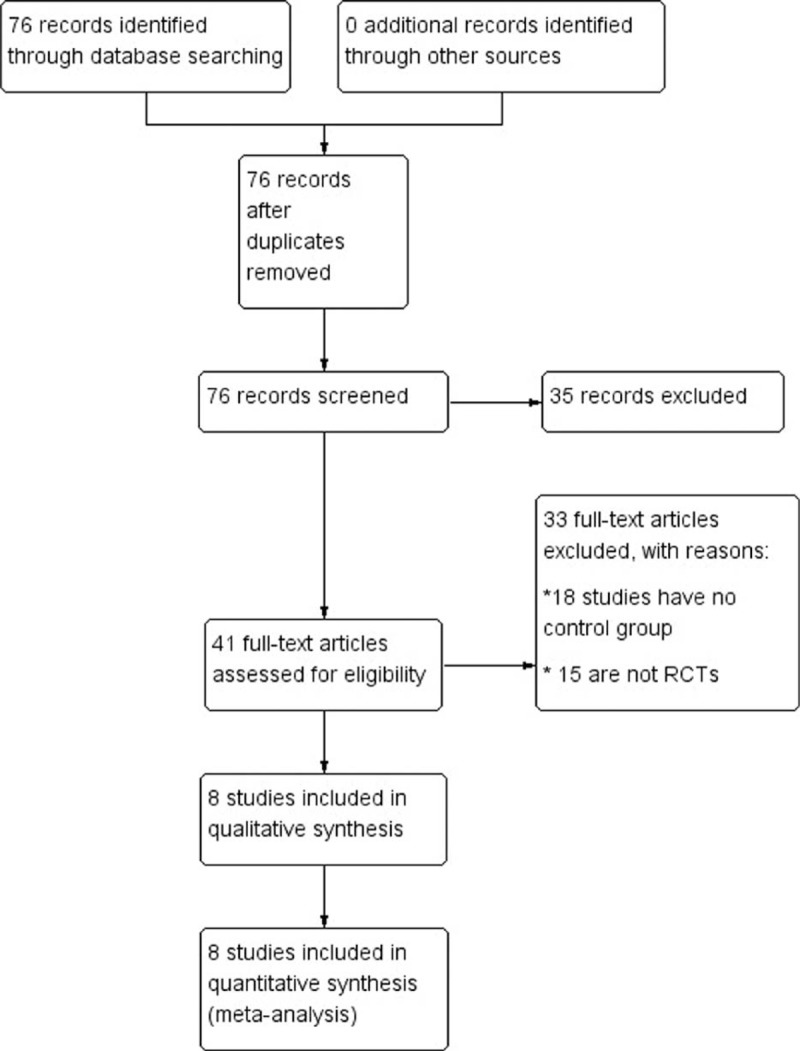
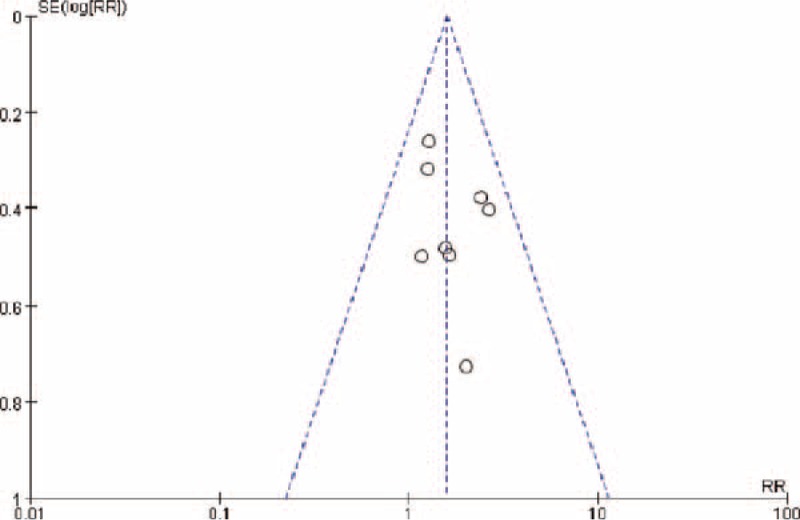
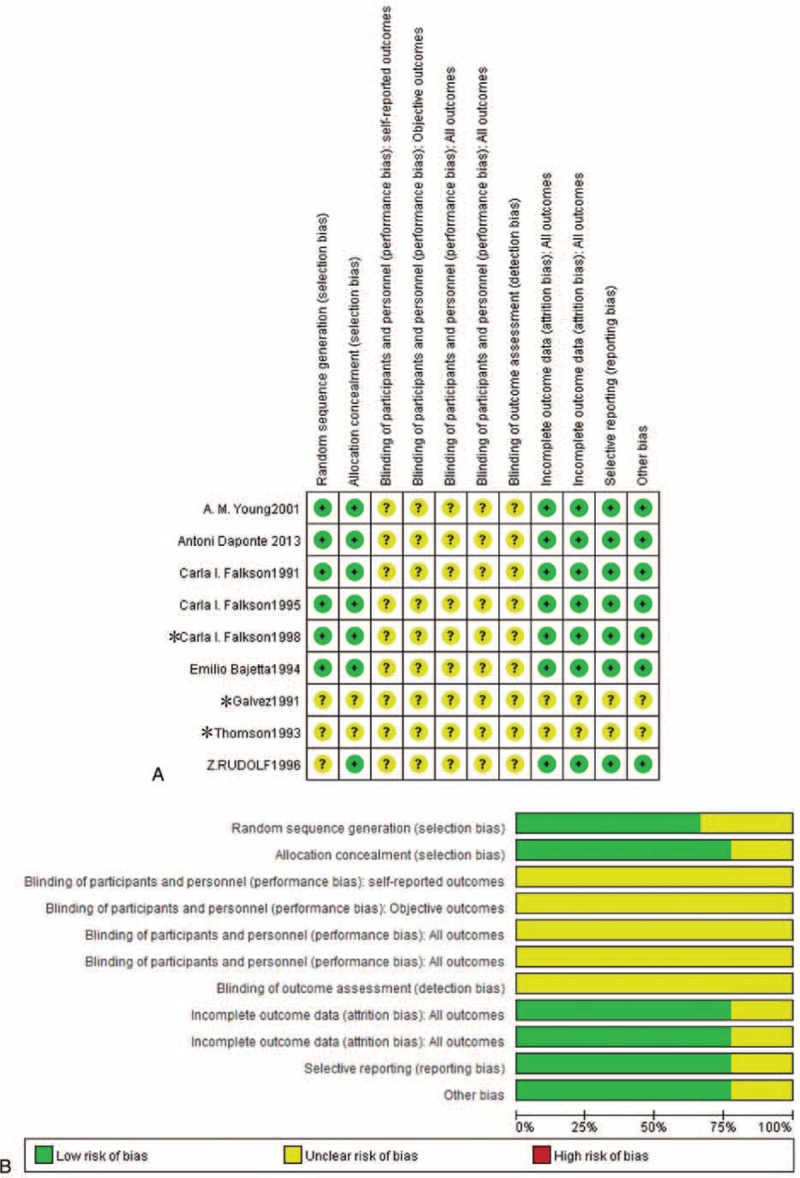
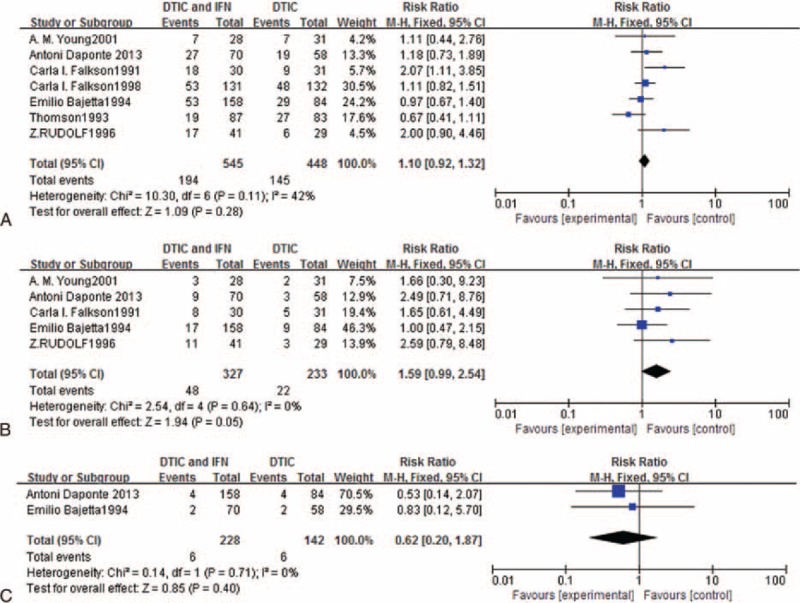
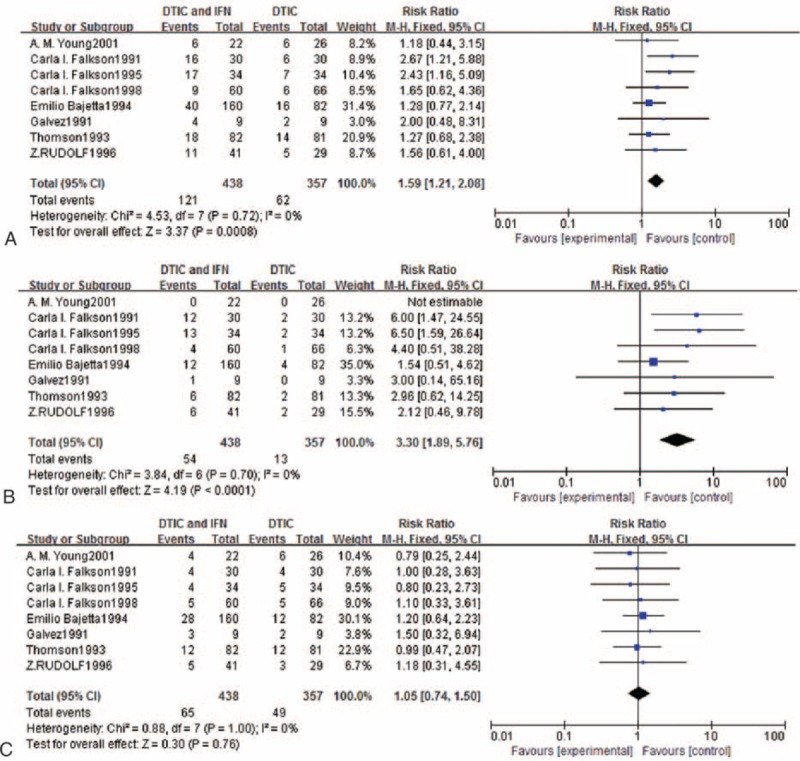
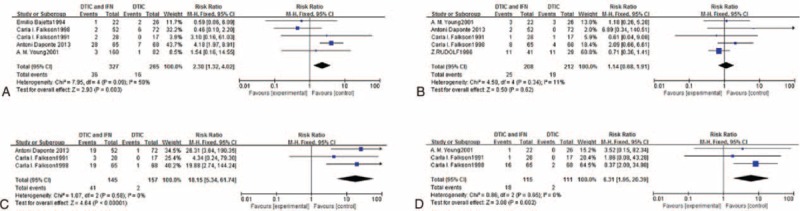
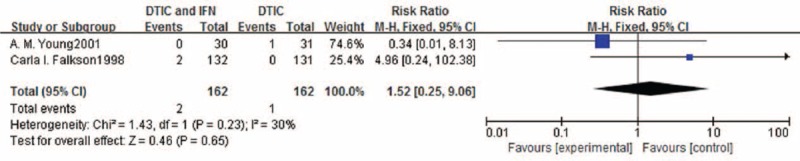
The aim of this study was to compare the efficacy and safety of interferon (IFN) combined with dacarbazine (DTIC) (experimental group) versus DTIC alone (control group) in cutaneous malignant melanoma. After searching all available databases, eligible articles were identified and subjected to quality assessment. Meta-analysis was performed using RevMan 5.3; combined relative risk (RR) and 95% confidence intervals (95% CIs) were calculated for survival rates, response rates, and adverse events. Eight randomized controlled trials published between 1990 and 2014 involving 795 patients were included in the meta-analysis. Compared with DTIC alone, IFN combined with DTIC significantly increased the overall response rate (RR = 1.59, 95% CI 1.21-2.08, P = 0.0008),the complete response rate (RR = 3.30, 95% CI 1.89-5.76, P < 0.0001), 2-year survival (RR = 1.59, 95% CI 0.99-2.54, P = 0.050) grade ≥3 hematologic toxicity (RR = 2.30, 95% CI 1.32-4.02, P = 0.003), neurotoxicity (RR = 18.15, 95% CI 5.34-61.74, P < 0.00001), and flu-like symptoms (RR = 6.31, 95% CI 1.95-20.39, P = 0.002). The partial response rate, grade ≥3 nausea and vomiting, treatment-related, and 1- and 3-year survival were not significantly different between IFN combined with DTIC and DTIC alone. IFN combined with DTIC may moderately improve the complete response rate, but increases the incidence of adverse events and has no significant effect on 1- and 3-year survival in cutaneous malignant melanoma.
本研究旨在比较干扰素(IFN)联合达卡巴嗪(DTIC)(试验组)与单用达卡巴嗪(DTIC)(对照组)治疗皮肤恶性黑色素瘤的疗效和安全性。检索所有可用数据库后,筛选出符合条件的文章并进行质量评估。使用RevMan 5.3进行荟萃分析;计算生存率、缓解率和不良事件的合并相对危险度(RR)及95%置信区间(95%CI)。荟萃分析纳入了1990年至2014年发表的8项随机对照试验,共795例患者。与单用DTIC相比,IFN联合DTIC显著提高了总缓解率(RR = 1.59,95%CI 1.21 - 2.08,P = 0.0008)、完全缓解率(RR = 3.30,95%CI 1.89 - 5.76,P < 0.0001)、2年生存率(RR = 1.59,95%CI 0.99 - 2.54,P = 0.050)、≥3级血液学毒性(RR = 2.30,95%CI 1.32 - 4.02,P = 0.003)、神经毒性(RR = 18.15,95%CI 5.34 - 61.74,P < 0.00001)和流感样症状(RR = 6.31,95%CI 1.95 - 20.39,P = 0.002)。IFN联合DTIC与单用DTIC相比,部分缓解率、≥3级恶心和呕吐、治疗相关不良事件以及1年和3年生存率无显著差异。IFN联合DTIC可能适度提高完全缓解率,但会增加不良事件的发生率,且对皮肤恶性黑色素瘤的1年和3年生存率无显著影响。