Liappas Georgios, González-Mateo Guadalupe, Aguirre Anna Rita, Abensur Hugo, Albar-Vizcaino Patricia, Parra Emilio González, Sandoval Pilar, Ramírez Laura García, Del Peso Gloria, Acedo Juan Manuel, Bajo María A, Selgas Rafael, Sánchez Tomero José A, López-Cabrera Manuel, Aguilera Abelardo
Immunology and Cellular Biology Department, Molecular Biology Centre Severo Ochoa, Madrid, Spain.
Nephrology Department, University of Sao Paulo, School of Medicine, Sao Paulo, Brazil.
Oncotarget. 2016 May 24;7(21):30133-46. doi: 10.18632/oncotarget.8780.
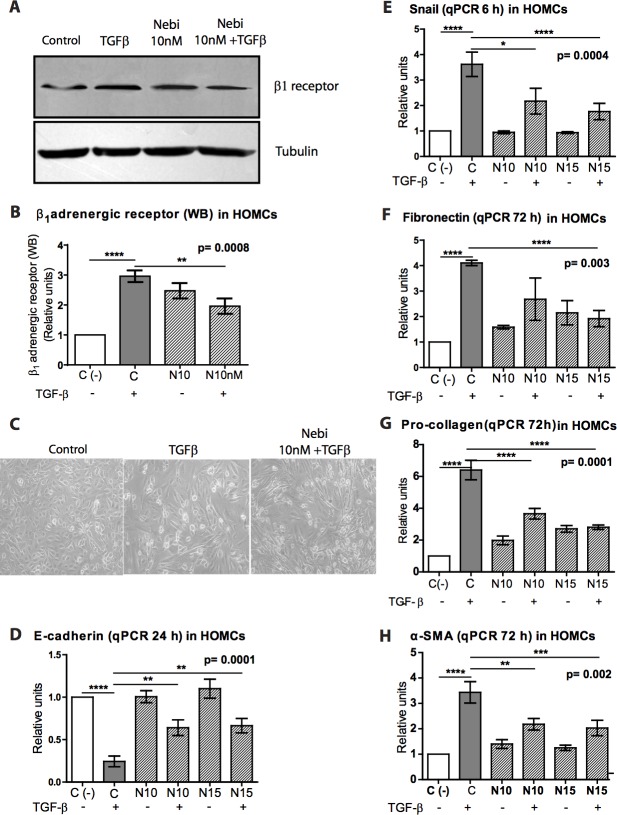
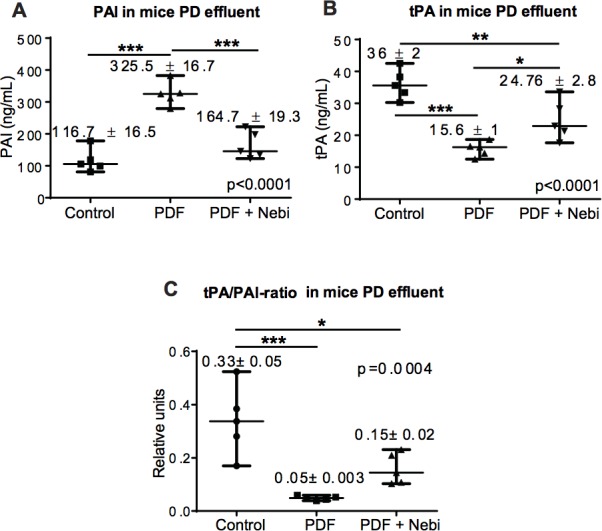
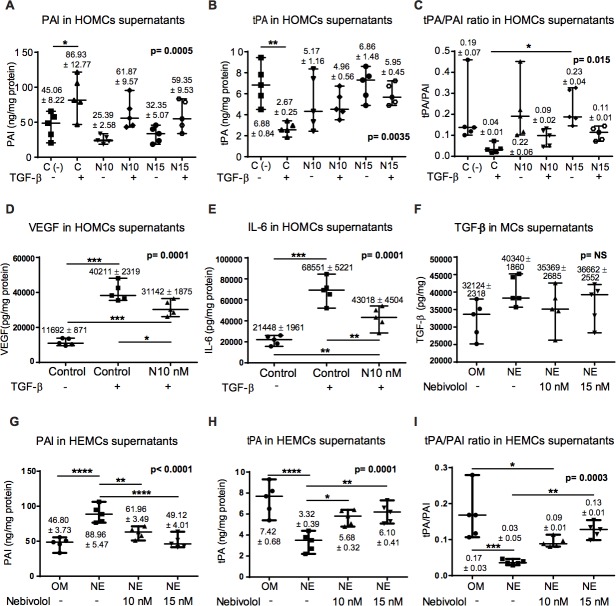
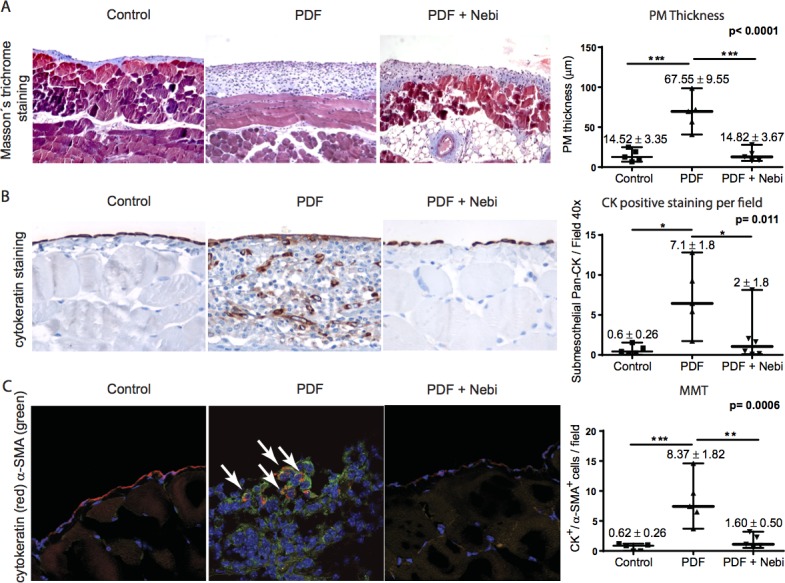
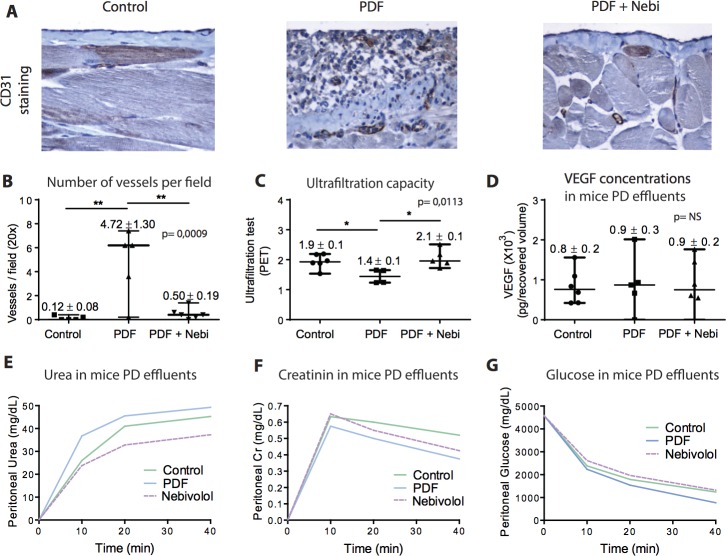
Peritoneal dialysis (PD) is a form of renal replacement treatment, which employs the peritoneal membrane (PM) to eliminate toxins that cannot be removed by the kidney. The procedure itself, however, contributes to the loss of the PM ultrafiltration capacity (UFC), leading consequently to the technique malfunction. β-blockers have been considered deleterious for PM due to their association with loss of UFC and induction of fibrosis. Herein we analyzed the effects of Nebivolol, a new generation of β1-blocker, on PM alterations induced by PD fluids (PDF).In vitro: We found that mesothelial cells (MCs) express β1-adrenergic receptor. MCs were treated with TGF-β to induce mesothelial-to-mesenchymal transition (MMT) and co-treated with Nebivolol. Nebivolol reversed the TGF-β effects, decreasing extracellular matrix synthesis, and improved the fibrinolytic capacity, decreasing plasminogen activator inhibitor-1 (PAI-1) and increasing tissue-type plasminogen activator (tPA) supernatant levels. Moreover, Nebivolol partially inhibited MMT and decreased vascular endothelial growth factor (VEGF) and IL-6 levels in supernatants.In vivo: Twenty-one C57BL/6 mice were divided into 3 groups. Control group carried a catheter without PDF infusion. Study group received intraperitoneally PDF and oral Nebivolol during 30 days. PDF group received PDF alone. Nebivolol maintained the UFC and reduced PM thickness, MMT and angiogenesis promoted by PDF. It also improved the fibrinolytic capacity in PD effluents decreasing PAI-1 and IL-8 and increased tPA levels.
Nebivolol protects PM from PDF-induced damage, promoting anti-fibrotic, anti-angiogenic, anti-inflammatory and pro-fibrinolytic effects.
腹膜透析(PD)是一种肾脏替代治疗形式,它利用腹膜(PM)来清除肾脏无法清除的毒素。然而,该治疗过程本身会导致PM超滤能力(UFC)丧失,进而导致技术故障。β受体阻滞剂因其与UFC丧失和纤维化诱导有关,一直被认为对PM有害。在此,我们分析了新一代β1受体阻滞剂奈必洛尔对PD液(PDF)诱导的PM改变的影响。
我们发现间皮细胞(MCs)表达β1肾上腺素能受体。用转化生长因子-β(TGF-β)处理MCs以诱导间皮-间充质转化(MMT),并与奈必洛尔共同处理。奈必洛尔逆转了TGF-β的作用,减少细胞外基质合成,并提高纤溶能力,降低纤溶酶原激活物抑制剂-1(PAI-1)水平,增加组织型纤溶酶原激活物(tPA)上清液水平。此外,奈必洛尔部分抑制MMT,并降低上清液中血管内皮生长因子(VEGF)和白细胞介素-6(IL-6)水平。
将21只C57BL/6小鼠分为3组。对照组植入导管但不注入PDF。研究组在30天内腹腔内注入PDF并口服奈必洛尔。PDF组仅接受PDF。奈必洛尔维持了UFC,并减少了PDF促进的PM厚度、MMT和血管生成。它还改善了PD流出液中的纤溶能力,降低PAI-1和IL-8水平,并增加tPA水平。
奈必洛尔可保护PM免受PDF诱导的损伤,发挥抗纤维化、抗血管生成、抗炎和促纤溶作用。