Schmitz J, Evers N, Awazawa M, Nicholls H T, Brönneke H S, Dietrich A, Mauer J, Blüher M, Brüning J C
Max Planck Institute for Metabolism Research, Cologne, Germany; Cologne Excellence Cluster on Cellular Stress Responses in Aging Associated Diseases (CECAD), Cologne, Germany; Center for Molecular Medicine (CMMC), University of Cologne, Cologne, Germany; Center for Endocrinology, Diabetes and Preventive Medicine (CEDP), University Hospital Cologne, Gleueler Str. 50, D-50931 Cologne, Germany.
Department of Surgery, University of Leipzig, Leipzig, Germany.
Mol Metab. 2016 Jan 11;5(5):328-339. doi: 10.1016/j.molmet.2015.12.001. eCollection 2016 May.
Obesity represents a major risk factor for the development of type 2 diabetes mellitus, atherosclerosis and certain cancer entities. Treatment of obesity is hindered by the long-term maintenance of initially reduced body weight, and it remains unclear whether all pathologies associated with obesity are fully reversible even upon successfully maintained weight loss.
We compared high fat diet-fed, weight reduced and lean mice in terms of body weight development, adipose tissue and liver insulin sensitivity as well as inflammatory gene expression. Moreover, we assessed similar parameters in a human cohort before and after bariatric surgery.
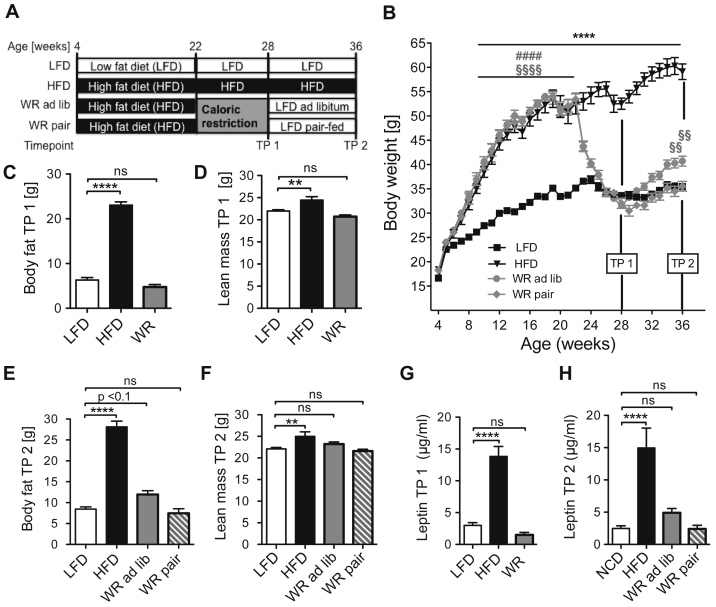
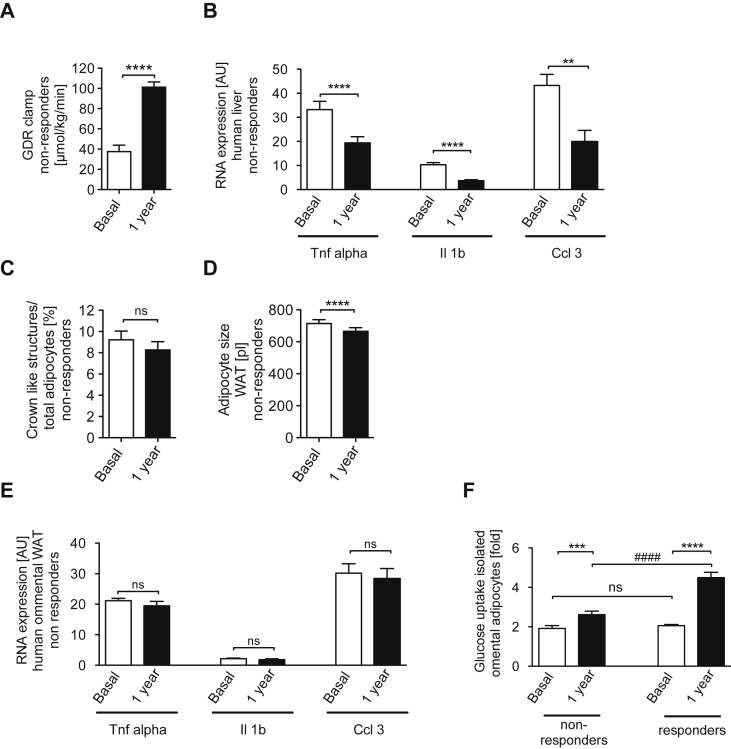
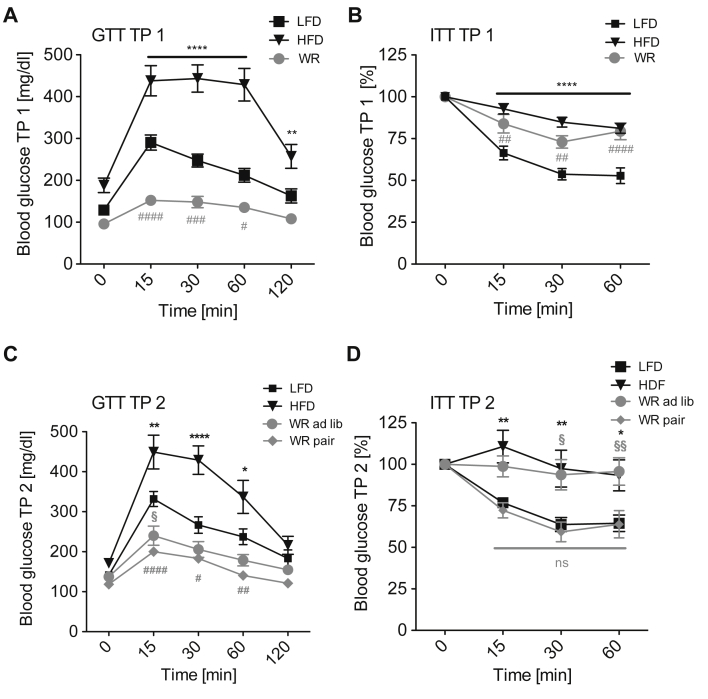
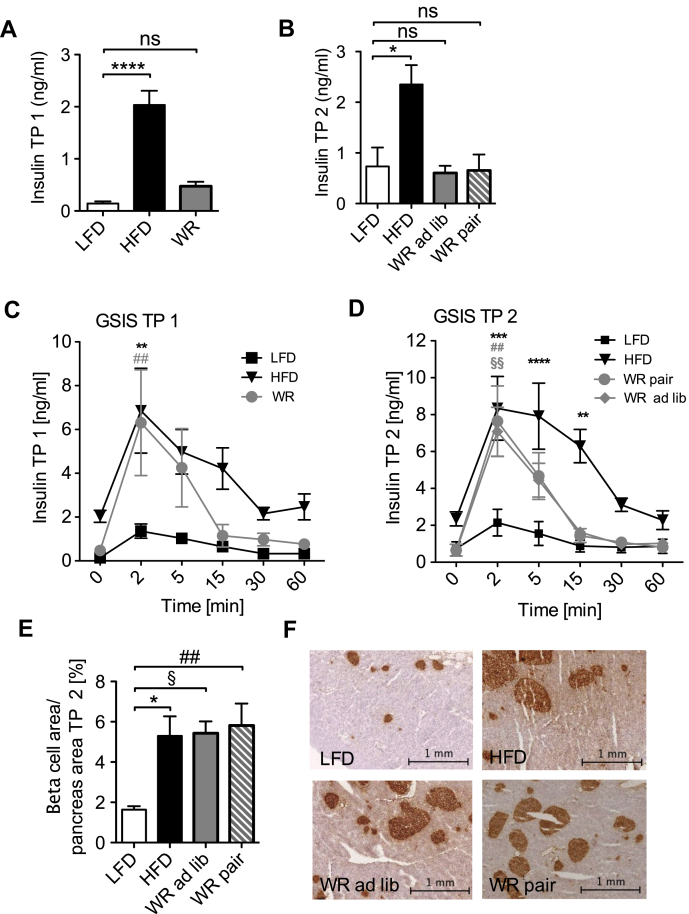
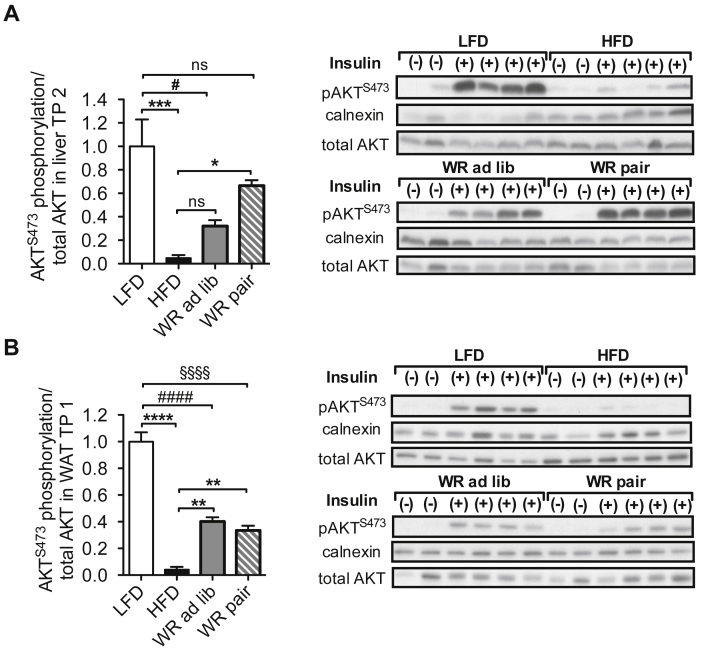
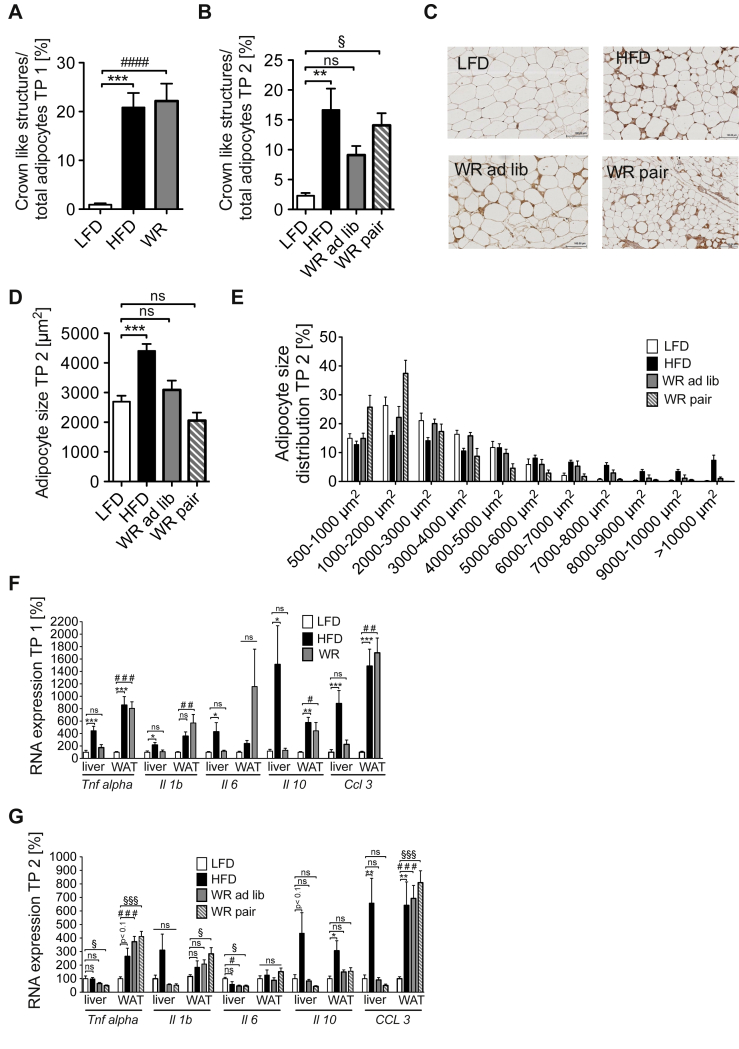
Compared to lean animals, mice that demonstrated successful weight reduction showed increased weight gain following exposure to ad libitum control diet. However, pair-feeding weight-reduced mice with lean controls efficiently stabilized body weight, indicating that hyperphagia was the predominant cause for the observed weight regain. Additionally, whereas glucose tolerance improved rapidly after weight loss, systemic insulin resistance was retained and ameliorated only upon prolonged pair-feeding. Weight loss enhanced insulin action and resolved pro-inflammatory gene expression exclusively in the liver, whereas visceral adipose tissue displayed no significant improvement of metabolic and inflammatory parameters compared to obese mice. Similarly, bariatric surgery in humans (n = 55) resulted in massive weight reduction, improved hepatic inflammation and systemic glucose homeostasis, while adipose tissue inflammation remained unaffected and adipocyte-autonomous insulin action only exhibit minor improvements in a subgroup of patients (42%).
These results demonstrate that although sustained weight loss improves systemic glucose homeostasis, primarily through improved inflammation and insulin action in liver, a remarkable obesogenic memory can confer long-term increases in adipose tissue inflammation and insulin resistance in mice as well as in a significant subpopulation of obese patients.
肥胖是2型糖尿病、动脉粥样硬化和某些癌症发生的主要危险因素。肥胖的治疗因难以长期维持初始减轻的体重而受阻,而且即使成功维持体重减轻,与肥胖相关的所有病理状况是否能完全逆转仍不清楚。
我们比较了高脂饮食喂养、体重减轻和瘦小鼠在体重变化、脂肪组织和肝脏胰岛素敏感性以及炎症基因表达方面的情况。此外,我们评估了肥胖症手术后人类队列中类似的参数。
与瘦小鼠相比,体重成功减轻的小鼠在自由摄食对照饮食后体重增加更多。然而,将体重减轻的小鼠与瘦对照小鼠配对喂养可有效稳定体重,表明食欲亢进是观察到体重反弹的主要原因。此外,虽然体重减轻后葡萄糖耐量迅速改善,但全身胰岛素抵抗仍然存在,只有在长期配对喂养后才有所改善。体重减轻增强了胰岛素作用,并仅在肝脏中解决了促炎基因表达,而与肥胖小鼠相比,内脏脂肪组织的代谢和炎症参数没有显著改善。同样,人类(n = 55)的肥胖症手术导致体重大幅减轻,改善了肝脏炎症和全身葡萄糖稳态,而脂肪组织炎症未受影响,脂肪细胞自主胰岛素作用仅在一部分患者(42%)中略有改善。
这些结果表明,尽管持续体重减轻可改善全身葡萄糖稳态,主要是通过改善肝脏炎症和胰岛素作用,但显著的致肥胖记忆可使小鼠以及相当一部分肥胖患者的脂肪组织炎症和胰岛素抵抗长期增加。