Rachmawati Heni, Soraya Irene Surya, Kurniati Neng Fisheri, Rahma Annisa
School of Pharmacy, Bandung Institute of Technology, Ganesah 10, Bandung 40132, Indonesia; National Research Center for Nanoscience and Nanotechnology, Bandung Institute of Technology, Ganesah 10, Bandung 40132, Indonesia.
School of Pharmacy, Bandung Institute of Technology, Ganesah 10, Bandung 40132, Indonesia.
Sci Pharm. 2016 Feb 14;84(1):131-40. doi: 10.3797/scipharm.ISP.2015.05. Print 2016 Jan-Mar.
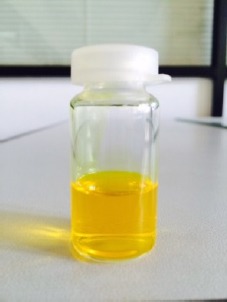
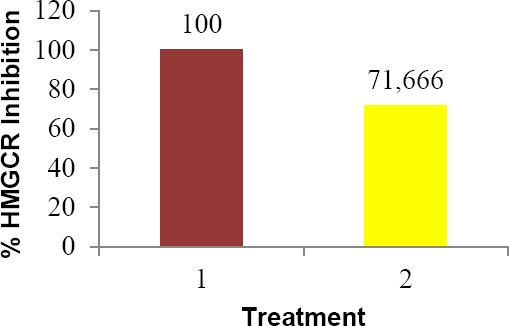
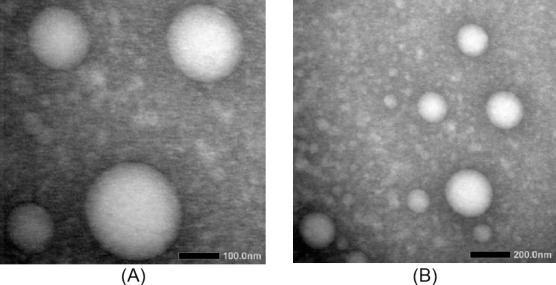
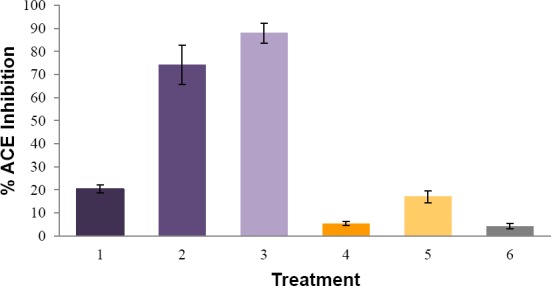
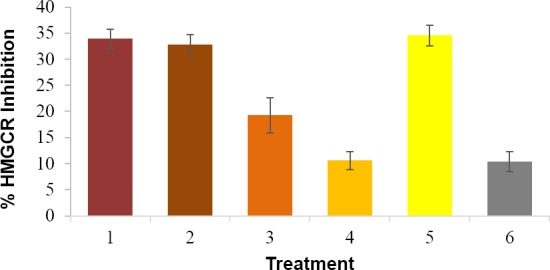
Atherosclerosis and hypertension can potentially progess into dangerous cardiovascular diseases such as myocardial infarction and stroke. Statins are widely used to lower cholesterol levels while antihypertensive agents such as captopril are widely prescribed to treat high blood pressure. Curcumin, a phenolic compound isolated from Curcuma domestica, has been proven effective for a broad spectrum of diseases, including hypertension and hypercholesterolemia. Therefore, curcumin is quite promising as an alternative therapeutic compound. Our previous studies have proven a significant increase in physical properties, bioavailability, and stability of curcumin when encapsulated in a nanoemulsion. The purpose of this study was to assess the ability of the nanoemulsion in enhancing curcumin activity as a antihypertensive and antihypercholesterolemic agent. The formulation and preparation method of the curcumin nanoemulsion have been developed in our previous study. Physical characterization was performed, including measurement of droplet size, polidispersity index, zeta potential, entrapment efficiency, and loading capacity. Antihypertensive activity of curcumin was evaluated by determining Angiotensin Converting Enzyme (ACE) inhibition in vitro. A substrate for ACE, hippuryl-L-histidyl-L-leucine was allowed to react with ACE, resulting in hippuric acid formation as the product. The degree of ACE inhibition by curcumin was represented by the amount of hippuric acid formed. Antihypercholesterolemic activity of curcumin was studied using the HMG-CoA reductase assay equipped with a 96-well UV plate. This assay was based on the spectrophotometric measurement of the decrease in absorbance which represents the oxidation of NADPH by the catalytic subunit of 3-hydroxy-3-methylglutaryl-CoA reductase (HMGR) in the presence of the substrate HMG-CoA. Curcumin is known to have no significant difference in inhibiting ACE compared to Captopril, but when it was incorporated in the self-nanoemulsifying carrier, it slightly increased the inhibitory effect on ACE. In contrast, the effect of curcumin in reducing cholesterol based on the HMGR assay was more pronounced. Curcumin encapsulated in a nanoemulsion showed significant cholesterol-lowering activity compared to a standard drug, pravastatin. Therefore, we conclude that curcumin does not show ACE inhibitory effects, but has potential use as an alternative therapeutic compound to treat hyperlipidaemia. Curcumin encapsulated in a nanoemulsion increased not only the HMGR inhibition, but also ACE inhibition of curcumin. These effects are suggested to be the result of improved solubility in the nanoemulsion system.
动脉粥样硬化和高血压可能会发展成危险的心血管疾病,如心肌梗死和中风。他汀类药物被广泛用于降低胆固醇水平,而抗高血压药物如卡托普利则被广泛用于治疗高血压。姜黄素是从姜黄中分离出的一种酚类化合物,已被证明对包括高血压和高胆固醇血症在内的多种疾病有效。因此,姜黄素作为一种替代治疗化合物很有前景。我们之前的研究已经证明,当姜黄素被包裹在纳米乳剂中时,其物理性质、生物利用度和稳定性会显著提高。本研究的目的是评估纳米乳剂增强姜黄素作为抗高血压和抗高胆固醇血症药物活性的能力。姜黄素纳米乳剂的配方和制备方法已在我们之前的研究中开发出来。进行了物理表征,包括液滴大小、多分散指数、zeta电位、包封率和载药量的测量。通过测定体外血管紧张素转换酶(ACE)抑制率来评估姜黄素的抗高血压活性。让ACE的一种底物马尿酰-L-组氨酰-L-亮氨酸与ACE反应,生成产物马尿酸。姜黄素对ACE的抑制程度由生成的马尿酸量表示。使用配备96孔紫外板的HMG-CoA还原酶测定法研究姜黄素的抗高胆固醇血症活性。该测定法基于分光光度法测量吸光度的降低,吸光度的降低代表在底物HMG-CoA存在下,3-羟基-3-甲基戊二酰辅酶A还原酶(HMGR)的催化亚基对NADPH的氧化。已知姜黄素在抑制ACE方面与卡托普利没有显著差异,但当它被纳入自纳米乳化载体中时,对ACE的抑制作用略有增加。相比之下,基于HMGR测定法,姜黄素在降低胆固醇方面的效果更明显。与标准药物普伐他汀相比,包裹在纳米乳剂中的姜黄素显示出显著的降胆固醇活性。因此,我们得出结论,姜黄素不显示ACE抑制作用,但有作为治疗高脂血症的替代治疗化合物的潜在用途。包裹在纳米乳剂中的姜黄素不仅增加了对HMGR的抑制作用,还增加了对姜黄素的ACE抑制作用。这些作用被认为是纳米乳剂系统中溶解度提高的结果。