Dasinger John Henry, Intapad Suttira, Rudsenske Benjamin R, Davis Gwendolyn K, Newsome Ashley D, Alexander Barbara T
From the Department of Physiology and Biophysics, University of Mississippi Medical Center, Jackson.
Hypertension. 2016 Jun;67(6):1281-90. doi: 10.1161/HYPERTENSIONAHA.116.07548. Epub 2016 Apr 25.
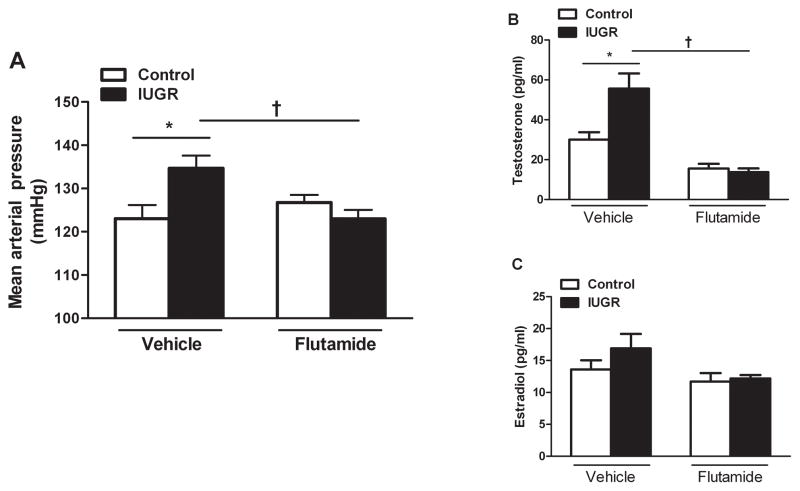
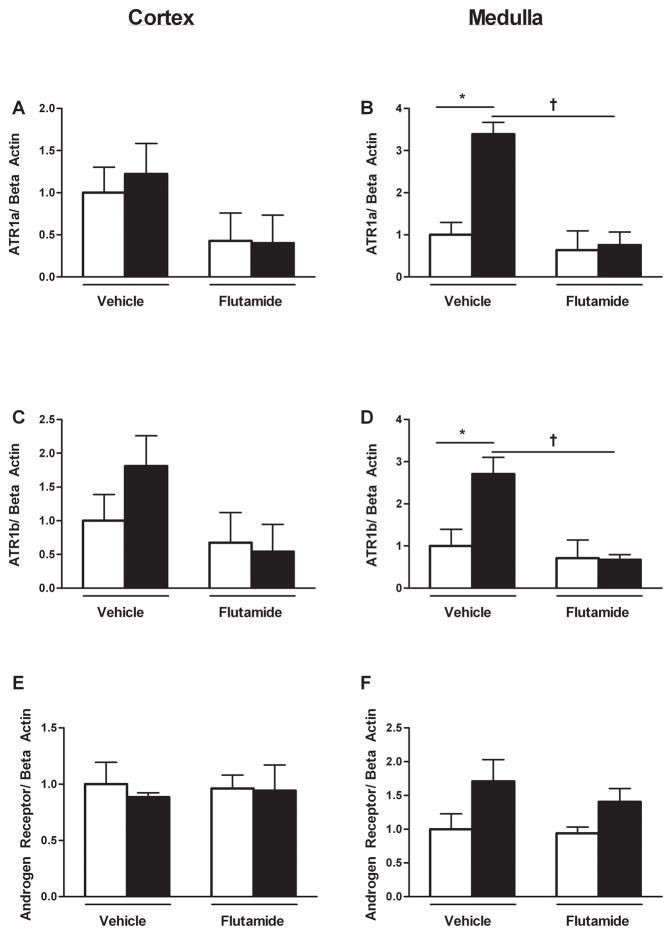
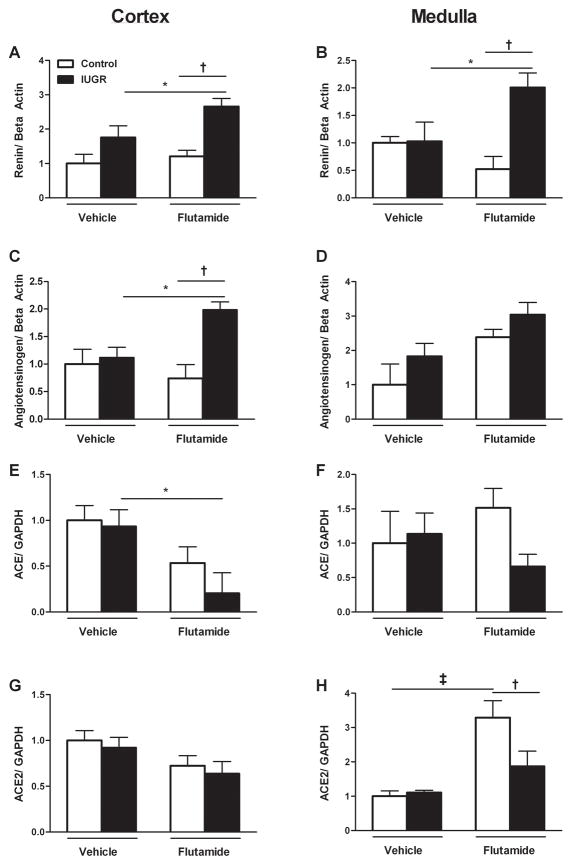
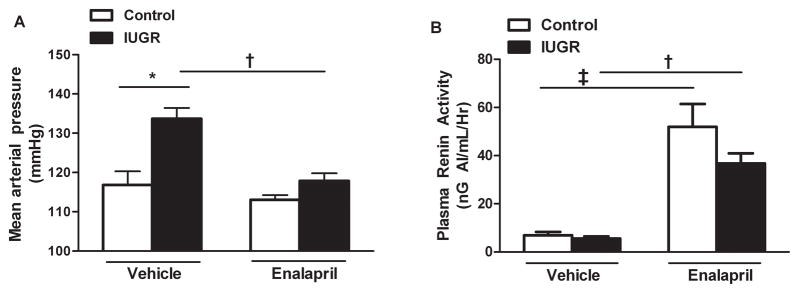
Intrauterine growth restriction induced via placental insufficiency programs a significant increase in blood pressure at 12 months of age in female growth-restricted rats that is associated with early cessation of estrous cyclicity, indicative of premature reproductive senescence. In addition, female growth-restricted rats at 12 months of age exhibit a significant increase in circulating testosterone with no change in circulating estradiol. Testosterone is positively associated with blood pressure after menopause in women. Thus, we tested the hypothesis that androgen receptor blockade would abolish the significant increase in blood pressure that develops with age in female growth-restricted rats. Mean arterial pressure was measured in animals pretreated with and without the androgen receptor antagonist, flutamide (8 mg/kg/day, SC for 2 weeks). Flutamide abolished the significant increase in blood pressure in growth-restricted rats relative to control at 12 months of age. To examine the mechanism(s) by which androgens contribute to increased blood pressure in growth-restricted rats, blood pressure was assessed in rats untreated or treated with enalapril (250 mg/L for 2 weeks). Enalapril eliminated the increase in blood pressure in growth-restricted relative to vehicle- and flutamide-treated controls. Furthermore, the increase in medullary angiotensin type 1 receptor mRNA expression was abolished in flutamide-treated growth-restricted relative to untreated counterparts and controls; cortical angiotensin-converting enzyme mRNA expression was reduced in flutamide-treated growth-restricted versus untreated counterparts. Thus, these data indicate that androgens, via activation of the renin-angiotensin system, are important mediators of increased blood pressure that develops by 12 months of age in female growth-restricted rats.
通过胎盘功能不全诱导的子宫内生长受限,会使生长受限的雌性大鼠在12个月大时血压显著升高,这与动情周期的过早停止有关,表明生殖早衰。此外,12个月大的生长受限雌性大鼠循环睾酮显著增加,而循环雌二醇没有变化。女性绝经后,睾酮与血压呈正相关。因此,我们检验了以下假设:雄激素受体阻断会消除生长受限雌性大鼠随着年龄增长而出现的血压显著升高。在用雄激素受体拮抗剂氟他胺(8毫克/千克/天,皮下注射2周)预处理和未预处理的动物中测量平均动脉压。与对照组相比,氟他胺消除了12个月大的生长受限大鼠血压的显著升高。为了研究雄激素导致生长受限大鼠血压升高的机制,对未治疗或用依那普利(250毫克/升,持续2周)治疗的大鼠进行血压评估。与载体和氟他胺治疗的对照组相比,依那普利消除了生长受限大鼠的血压升高。此外,与未治疗的生长受限大鼠和对照组相比,氟他胺治疗的生长受限大鼠髓质1型血管紧张素受体mRNA表达的增加被消除;与未治疗的生长受限大鼠相比,氟他胺治疗的生长受限大鼠皮质血管紧张素转换酶mRNA表达降低。因此,这些数据表明,雄激素通过激活肾素-血管紧张素系统,是12个月大的生长受限雌性大鼠血压升高的重要介质。