Chen Chen, Shen Hong, Zhang Li-Guo, Liu Jian, Cao Xiao-Ge, Yao An-Liang, Kang Shao-San, Gao Wei-Xing, Han Hui, Cao Feng-Hong, Li Zhi-Guo
Department of Urology, North China University of Science and Technology Affiliated Hospital, Tangshan, Hebei 063000, P.R. China.
Department of Modern Technology and Education Center, North China University of Science and Technology and International Science and Technology Cooperation Base of Geriatric Medicine, Tangshan, Hebei 063000, P.R. China.
Int J Mol Med. 2016 Jun;37(6):1576-86. doi: 10.3892/ijmm.2016.2577. Epub 2016 Apr 26.
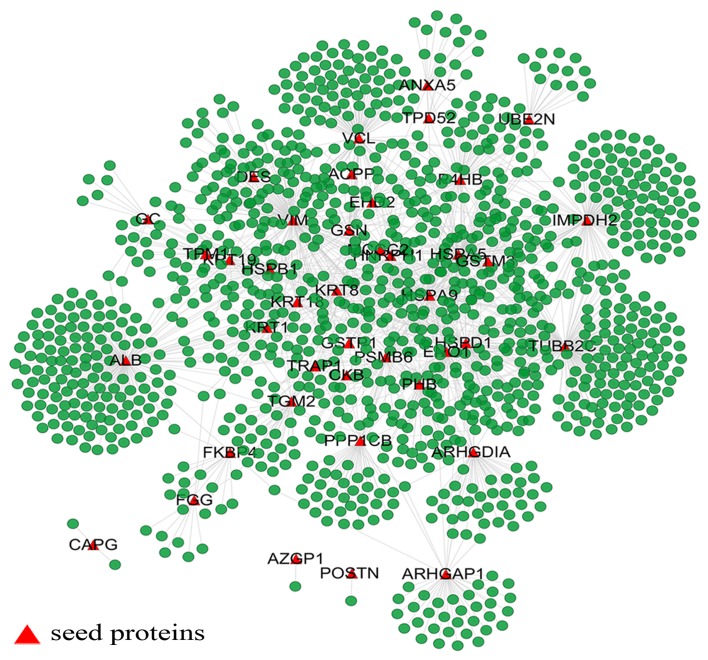
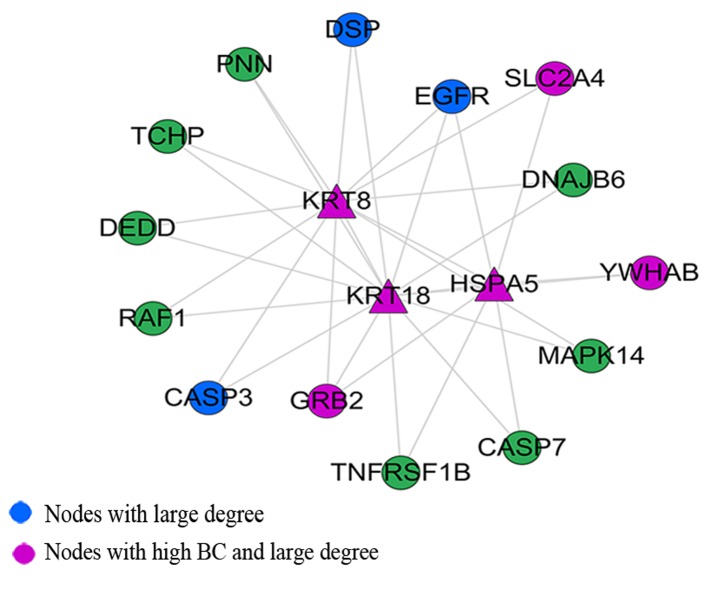
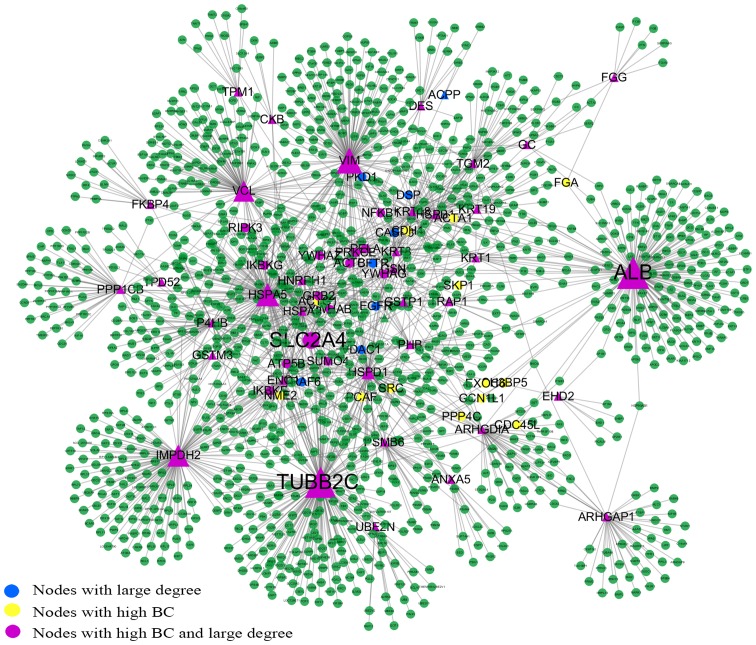
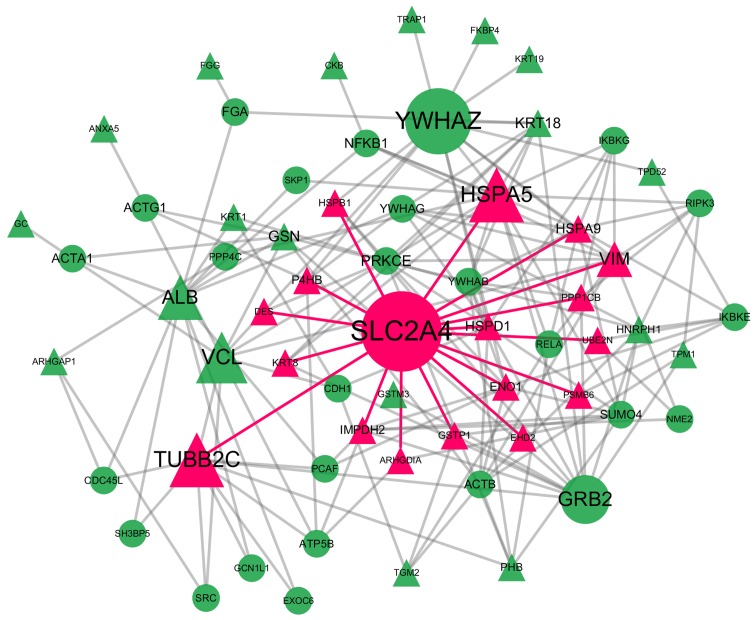
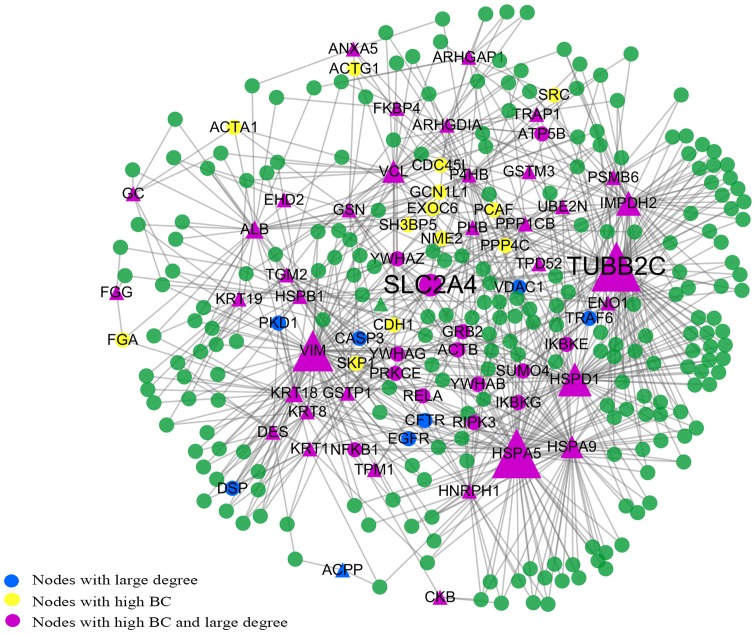
Currently, using human prostate cancer (PCa) tissue samples to conduct proteomics research has generated a large amount of data; however, only a very small amount has been thoroughly investigated. In this study, we manually carried out the mining of the full text of proteomics literature that involved comparisons between PCa and normal or benign tissue and identified 41 differentially expressed proteins verified or reported more than 2 times from different research studies. We regarded these proteins as seed proteins to construct a protein-protein interaction (PPI) network. The extended network included one giant network, which consisted of 1,264 nodes connected via 1,744 edges, and 3 small separate components. The backbone network was then constructed, which was derived from key nodes and the subnetwork consisting of the shortest path between seed proteins. Topological analyses of these networks were conducted to identify proteins essential for the genesis of PCa. Solute carrier family 2 (facilitated glucose transporter), member 4 (SLC2A4) had the highest closeness centrality located in the center of each network, and the highest betweenness centrality and largest degree in the backbone network. Tubulin, beta 2C (TUBB2C) had the largest degree in the giant network and subnetwork. In addition, using module analysis of the whole PPI network, we obtained a densely connected region. Functional annotation indicated that the Ras protein signal transduction biological process, mitogen-activated protein kinase (MAPK), neurotrophin and the gonadotropin-releasing hormone (GnRH) signaling pathway may play an important role in the genesis and development of PCa. Further investigation of the SLC2A4, TUBB2C proteins, and these biological processes and pathways may therefore provide a potential target for the diagnosis and treatment of PCa.
目前,利用人类前列腺癌(PCa)组织样本进行蛋白质组学研究已产生了大量数据;然而,只有极少部分得到了深入研究。在本研究中,我们人工挖掘了涉及PCa与正常或良性组织比较的蛋白质组学文献全文,并鉴定出41种在不同研究中被验证或报道超过2次的差异表达蛋白。我们将这些蛋白视为种子蛋白来构建蛋白质-蛋白质相互作用(PPI)网络。扩展后的网络包括一个巨型网络,它由1264个节点通过1744条边连接而成,以及3个小的独立组件。随后构建了骨干网络,其源自关键节点以及由种子蛋白之间最短路径组成的子网。对这些网络进行拓扑分析以鉴定PCa发生所必需的蛋白质。溶质载体家族2(促进性葡萄糖转运蛋白)成员4(SLC2A4)在每个网络中心具有最高的紧密中心性,在骨干网络中具有最高的介数中心性和最大的度。微管蛋白β2C(TUBB2C)在巨型网络和子网中具有最大的度。此外,通过对整个PPI网络进行模块分析,我们获得了一个紧密连接的区域。功能注释表明,Ras蛋白信号转导生物学过程、丝裂原活化蛋白激酶(MAPK)、神经营养因子和促性腺激素释放激素(GnRH)信号通路可能在PCa的发生和发展中起重要作用。因此,进一步研究SLC2A4、TUBB2C蛋白以及这些生物学过程和通路可能为PCa的诊断和治疗提供潜在靶点。