Neely Benjamin A, Wilkins Christopher E, Marlow Laura A, Malyarenko Dariya, Kim Yunee, Ignatchenko Alexandr, Sasinowska Heather, Sasinowski Maciek, Nyalwidhe Julius O, Kislinger Thomas, Copland John A, Drake Richard R
Department of Cell and Molecular Pharmacology and Experimental Therapeutics, Medical University of South Carolina, Charleston, South Carolina, United States of America.
Department of Microbiology and Molecular Cell Biology, Eastern Virginia Medical School, Norfolk, Virginia, United States of America.
PLoS One. 2016 Apr 29;11(4):e0154074. doi: 10.1371/journal.pone.0154074. eCollection 2016.
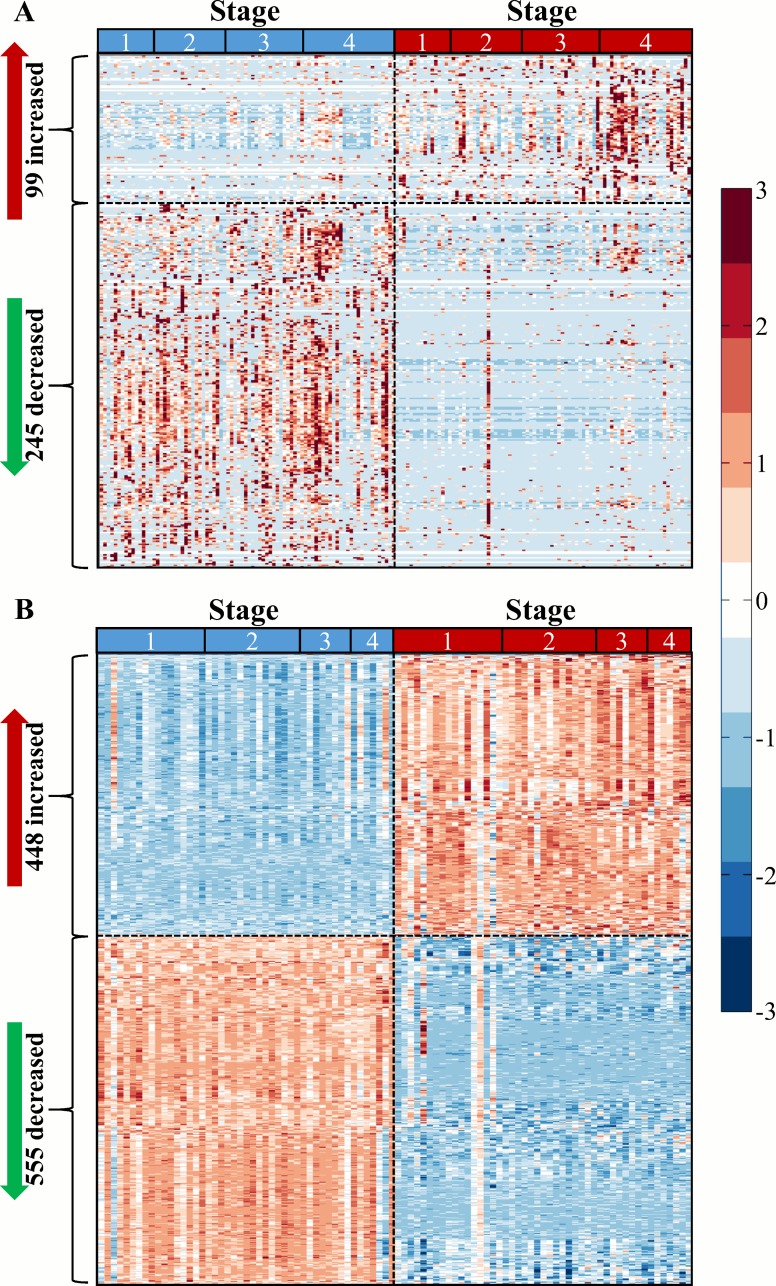
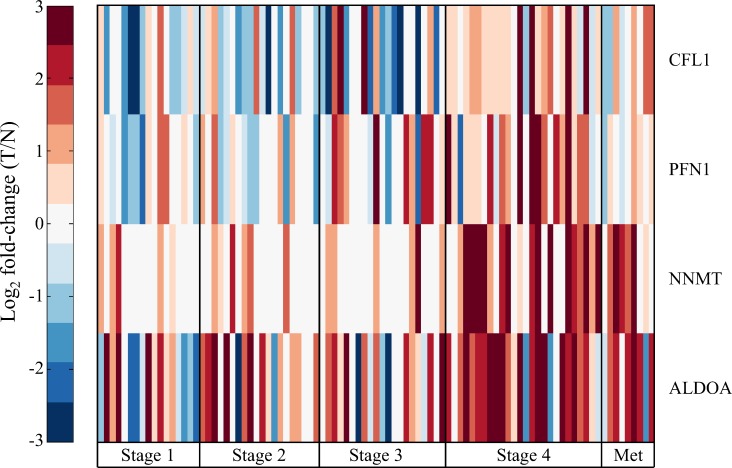
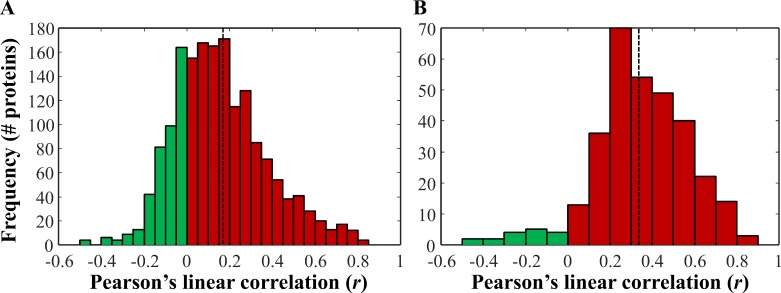
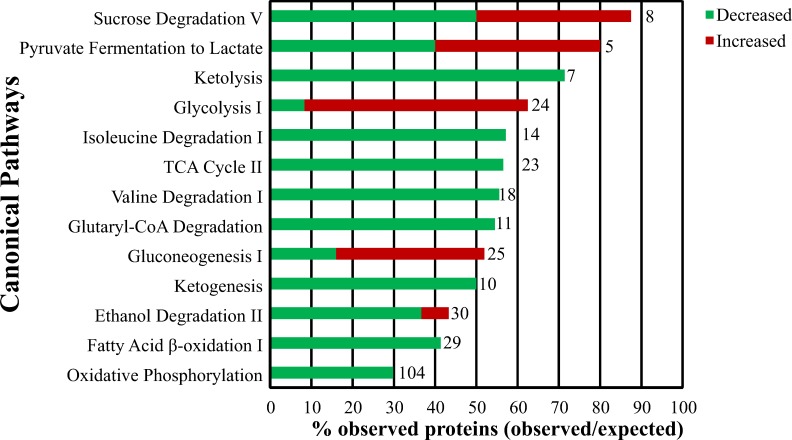
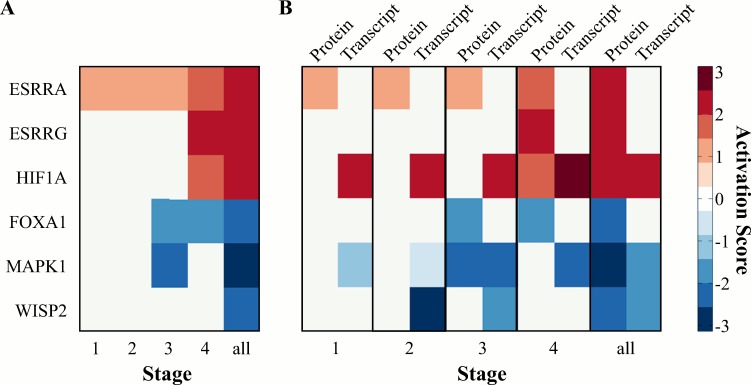
Renal cell carcinoma comprises 2 to 3% of malignancies in adults with the most prevalent subtype being clear-cell RCC (ccRCC). This type of cancer is well characterized at the genomic and transcriptomic level and is associated with a loss of VHL that results in stabilization of HIF1. The current study focused on evaluating ccRCC stage dependent changes at the proteome level to provide insight into the molecular pathogenesis of ccRCC progression. To accomplish this, label-free proteomics was used to characterize matched tumor and normal-adjacent tissues from 84 patients with stage I to IV ccRCC. Using pooled samples 1551 proteins were identified, of which 290 were differentially abundant, while 783 proteins were identified using individual samples, with 344 being differentially abundant. These 344 differentially abundant proteins were enriched in metabolic pathways and further examination revealed metabolic dysfunction consistent with the Warburg effect. Additionally, the protein data indicated activation of ESRRA and ESRRG, and HIF1A, as well as inhibition of FOXA1, MAPK1 and WISP2. A subset analysis of complementary gene expression array data on 47 pairs of these same tissues indicated similar upstream changes, such as increased HIF1A activation with stage, though ESRRA and ESRRG activation and FOXA1 inhibition were not predicted from the transcriptomic data. The activation of ESRRA and ESRRG implied that HIF2A may also be activated during later stages of ccRCC, which was confirmed in the transcriptional analysis. This combined analysis highlights the importance of HIF1A and HIF2A in developing the ccRCC molecular phenotype as well as the potential involvement of ESRRA and ESRRG in driving these changes. In addition, cofilin-1, profilin-1, nicotinamide N-methyltransferase, and fructose-bisphosphate aldolase A were identified as candidate markers of late stage ccRCC. Utilization of data collected from heterogeneous biological domains strengthened the findings from each domain, demonstrating the complementary nature of such an analysis. Together these results highlight the importance of the VHL/HIF1A/HIF2A axis and provide a foundation and therapeutic targets for future studies. (Data are available via ProteomeXchange with identifier PXD003271 and MassIVE with identifier MSV000079511.).
肾细胞癌占成人恶性肿瘤的2%至3%,最常见的亚型是透明细胞肾细胞癌(ccRCC)。这种癌症在基因组和转录组水平上有很好的特征,并且与VHL缺失相关,这导致HIF1稳定。当前的研究集中在评估ccRCC在蛋白质组水平上的分期依赖性变化,以深入了解ccRCC进展的分子发病机制。为了实现这一点,采用无标记蛋白质组学来表征84例I至IV期ccRCC患者的匹配肿瘤组织和癌旁正常组织。使用混合样本鉴定出1551种蛋白质,其中290种丰度有差异,而使用个体样本鉴定出783种蛋白质,其中344种丰度有差异。这344种丰度有差异的蛋白质在代谢途径中富集,进一步检查发现代谢功能障碍与瓦伯格效应一致。此外,蛋白质数据表明ESRRA、ESRRG和HIF1A被激活,以及FOXA1、MAPK1和WISP2受到抑制。对这些相同组织的47对样本进行的互补基因表达阵列数据的子集分析表明存在类似的上游变化,例如HIF1A激活随分期增加,尽管转录组数据未预测到ESRRA和ESRRG激活以及FOXA1抑制。ESRRA和ESRRG的激活意味着在ccRCC后期HIF2A也可能被激活,这在转录分析中得到了证实。这种综合分析突出了HIF1A和HIF2A在形成ccRCC分子表型中的重要性以及ESRRA和ESRRG在驱动这些变化中的潜在作用。此外,丝切蛋白-1、原肌球蛋白-1、烟酰胺N-甲基转移酶和果糖二磷酸醛缩酶A被鉴定为晚期ccRCC的候选标志物。利用从异质生物领域收集的数据加强了每个领域的研究结果,证明了这种分析的互补性。这些结果共同突出了VHL/HIF1A/HIF2A轴的重要性,并为未来研究提供了基础和治疗靶点。(数据可通过ProteomeXchange获得,标识符为PXD003271,通过MassIVE获得,标识符为MSV000079511。)