Capsel Randal T, Thoen Charles O, Reinhardt Timothy A, Lippolis John D, Olsen Renee, Stabel Judith R, Bannantine John P
National Veterinary Services Laboratories, U.S. Department of Agriculture-AHPIS, Ames, Iowa, United States of America.
Department of Veterinary Microbiology and Preventive Medicine, Iowa State University, College of Veterinary Medicine, Ames, Iowa, United States of America.
PLoS One. 2016 May 2;11(5):e0154685. doi: 10.1371/journal.pone.0154685. eCollection 2016.
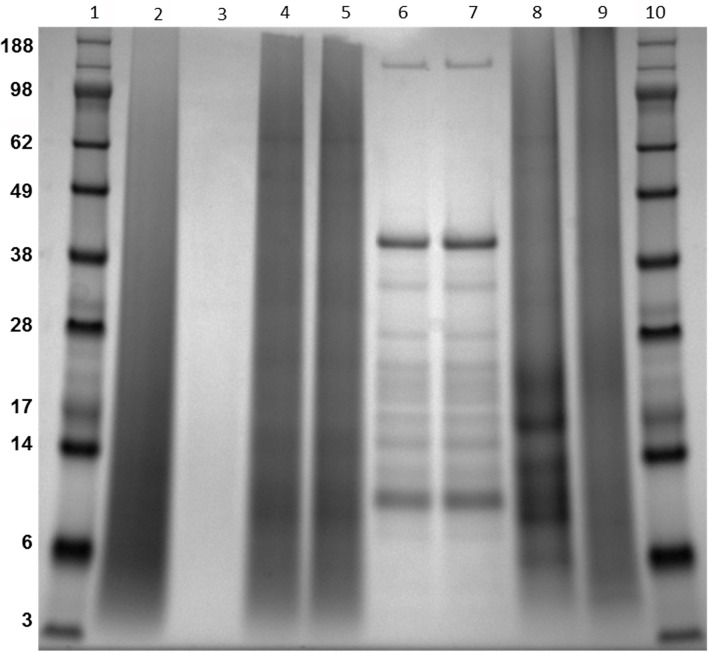
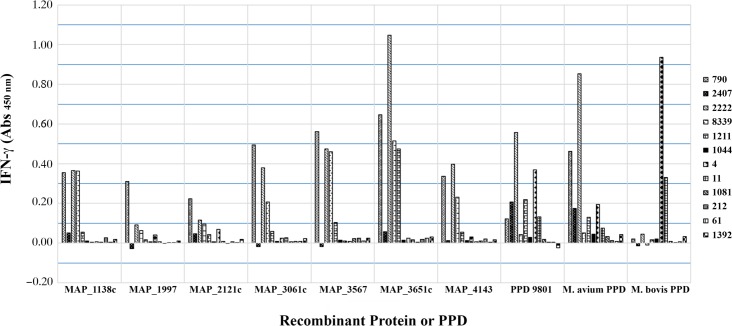
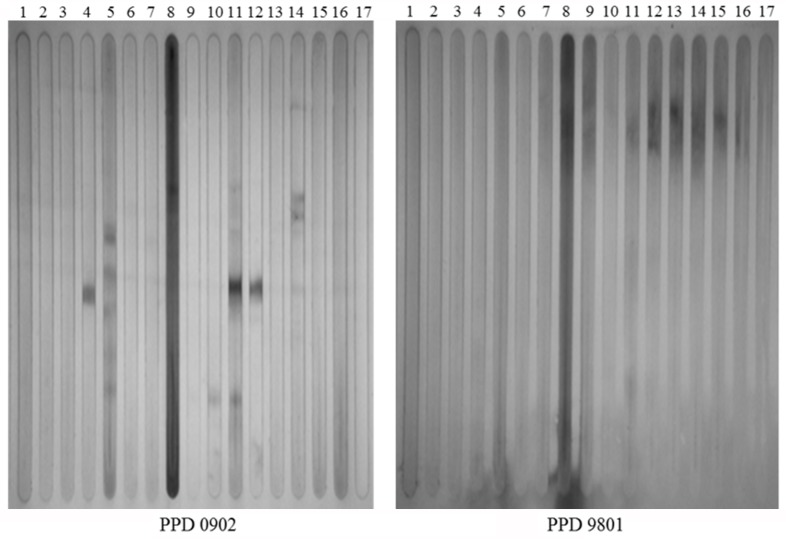
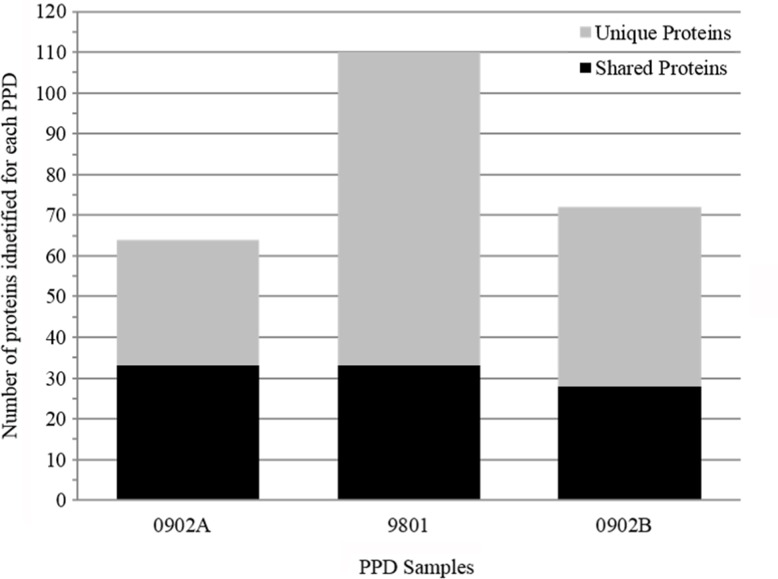
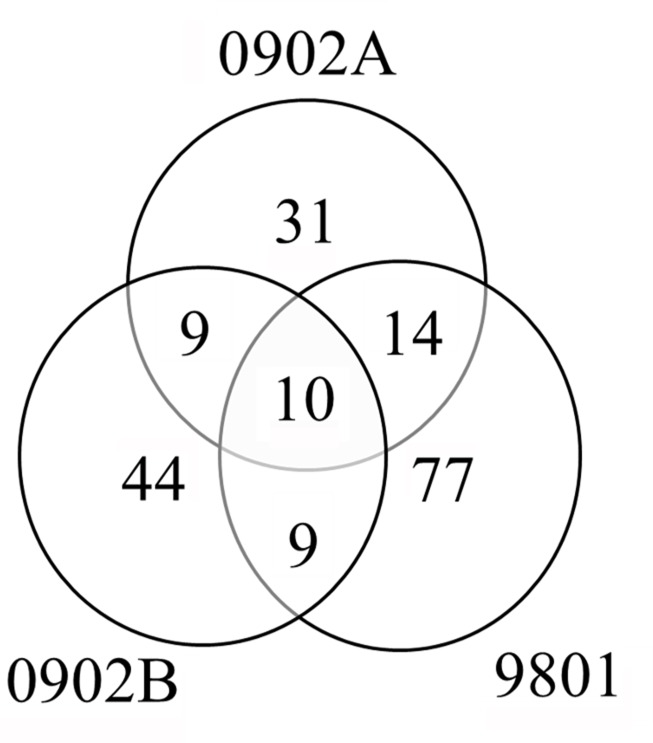
Mycobacterium avium subsp. paratuberculosis (MAP) purified protein derivatives (PPDs) are immunologic reagents prepared from cultured filtrates of the type strain. Traditional production consists of floating culture incubation at 37°C, organism inactivation by autoclaving, coarse filtration, and protein precipitation. Three traditional production PPDs were used in this study including lot 9801, which served as a reference and has been used in the field for decades. Alternative production PPDs (0902A and 0902B), in which the autoclaving step was removed, were also analyzed in this study. SDS-PAGE analysis revealed protein smearing in traditional PPDs, but distinct bands were observed in the alternative PPD preparations. Antibody bound distinct protein bands in the alternative PPDs by immunoblot analysis, whereas an immunoreactive smear was observed with the traditional PPDs. Mass spectrometry identified 194 proteins among three PPD lots representing the two different production methods, ten of which were present in all PPDs examined. Selected proteins identified by mass spectrometry were recombinantly expressed and purified from E. coli and evaluated by the guinea pig potency test. Seven recombinant proteins showed greater erythema as compared to the reference PPD lot 9801 in paired guinea pigs and were able to stimulate interferon-gamma production in blood from Johne's positive animals. These results suggest that autoclaving culture suspensions is not a necessary step in PPD production and specific proteins could supplant the PPD antigen for intradermal skin testing procedures and for use as in-vitro assay reagents.
副结核分枝杆菌(MAP)纯化蛋白衍生物(PPD)是由标准菌株的培养滤液制备的免疫试剂。传统生产方法包括在37°C下进行浮游培养、通过高压灭菌灭活微生物、粗过滤和蛋白质沉淀。本研究使用了三种传统生产的PPD,包括9801批次,该批次用作参考,已在该领域使用了数十年。本研究还分析了替代生产的PPD(0902A和0902B),其中去除了高压灭菌步骤。SDS-PAGE分析显示传统PPD中有蛋白质条带拖尾现象,但在替代PPD制剂中观察到明显的条带。通过免疫印迹分析,抗体与替代PPD中的不同蛋白条带结合,而传统PPD则观察到免疫反应性条带拖尾现象。质谱分析在代表两种不同生产方法的三个PPD批次中鉴定出194种蛋白质,其中十种存在于所有检测的PPD中。通过质谱鉴定的选定蛋白质在大肠杆菌中进行重组表达和纯化,并通过豚鼠效价试验进行评估。在配对的豚鼠中,七种重组蛋白与参考PPD批次9801相比显示出更大的红斑,并且能够刺激约内氏阳性动物血液中干扰素-γ的产生。这些结果表明,对培养悬浮液进行高压灭菌不是PPD生产中的必要步骤,特定蛋白质可以替代PPD抗原用于皮内皮肤试验程序以及用作体外检测试剂。