Hobert Oliver
Department of Biological Sciences, Howard Hughes Medical Institute, Columbia University, New York, NY, USA.
Wiley Interdiscip Rev Dev Biol. 2016 Jul;5(4):474-98. doi: 10.1002/wdev.233. Epub 2016 May 2.
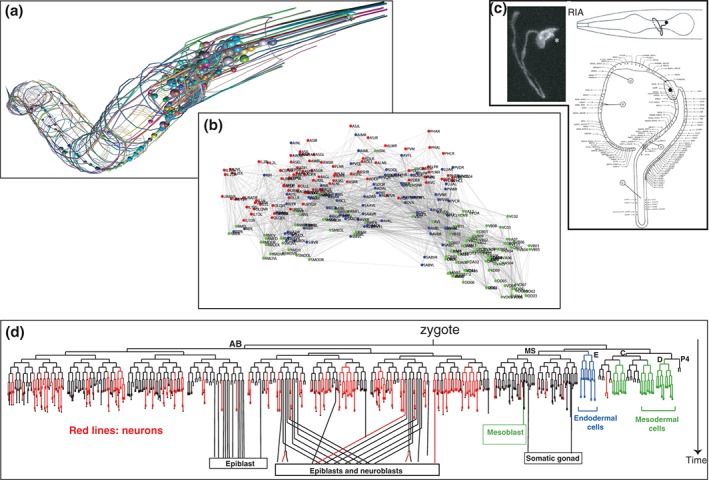
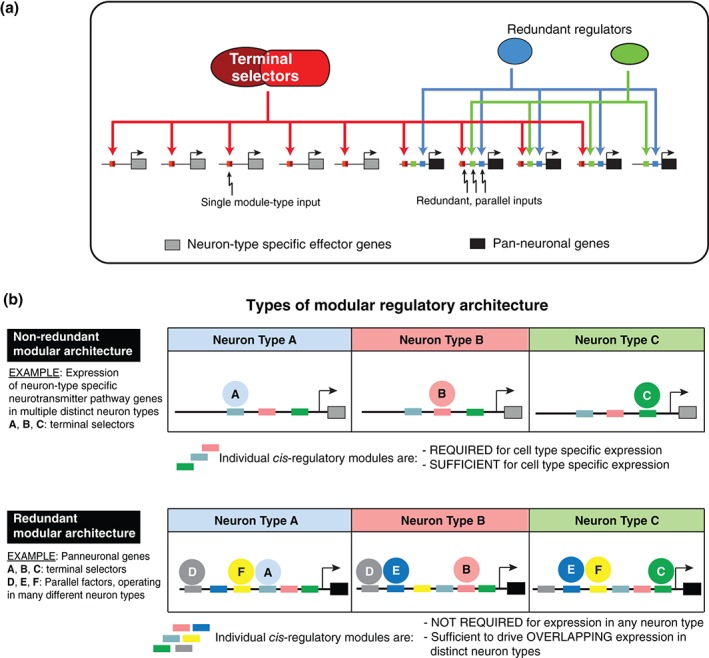
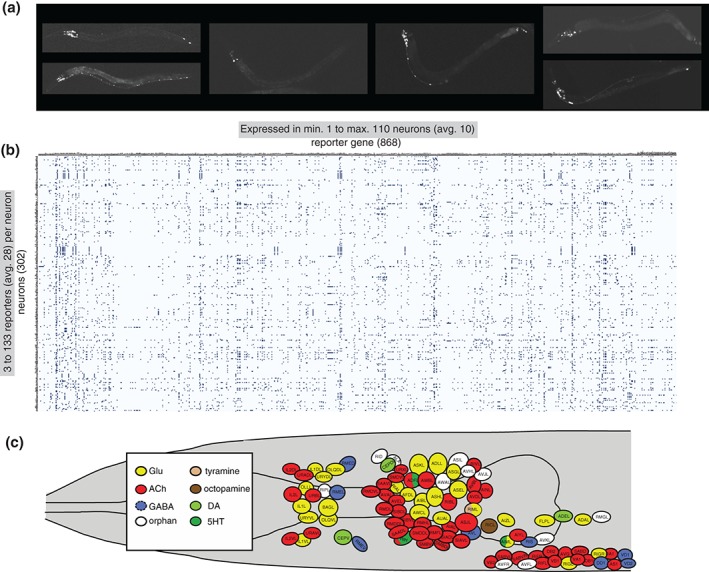
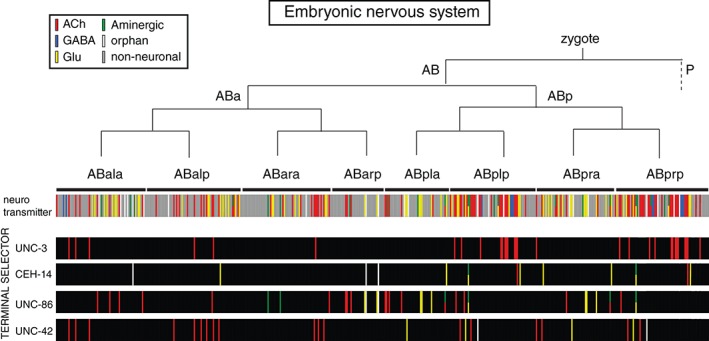
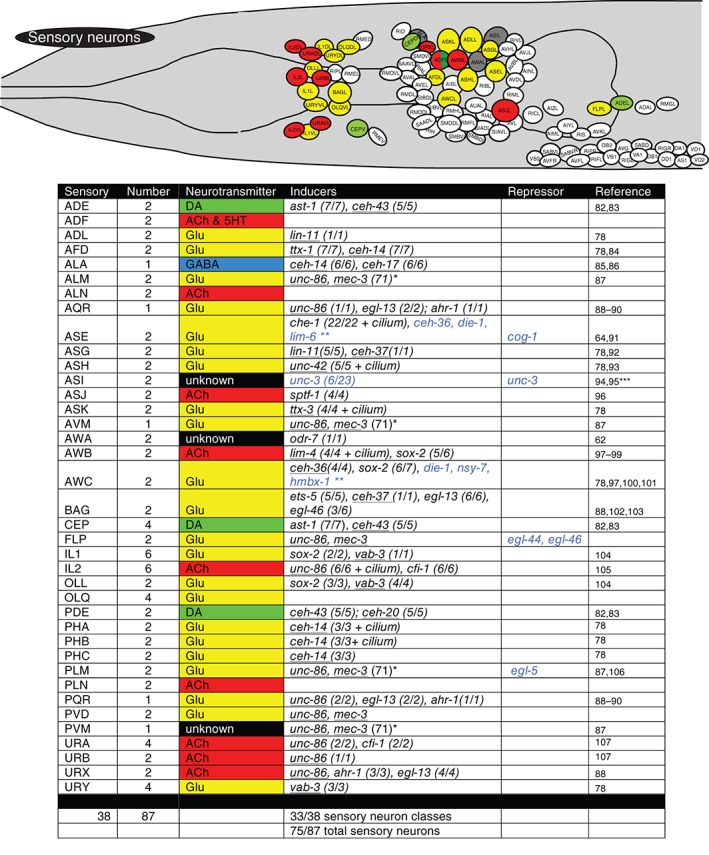
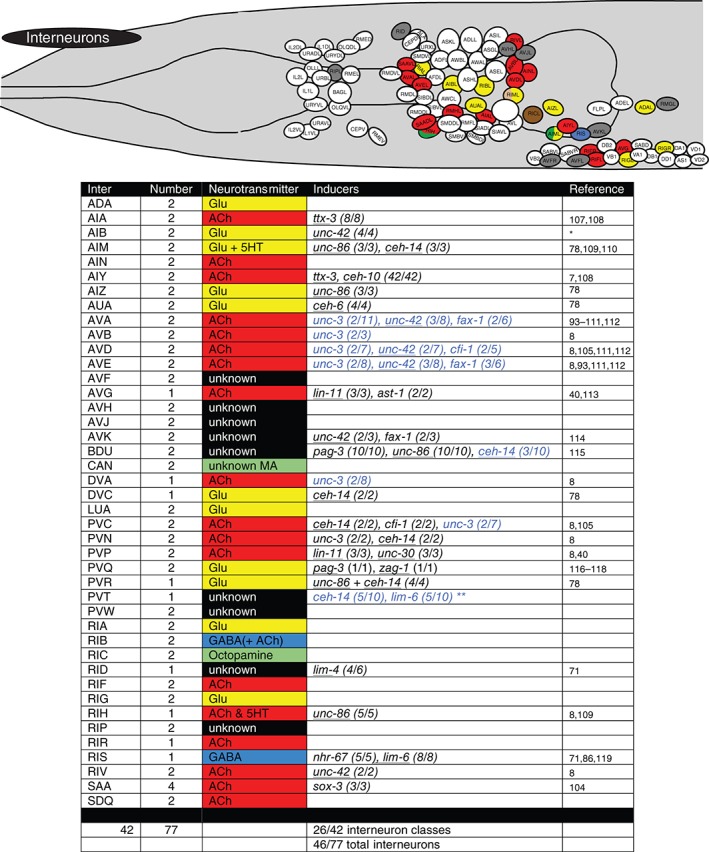
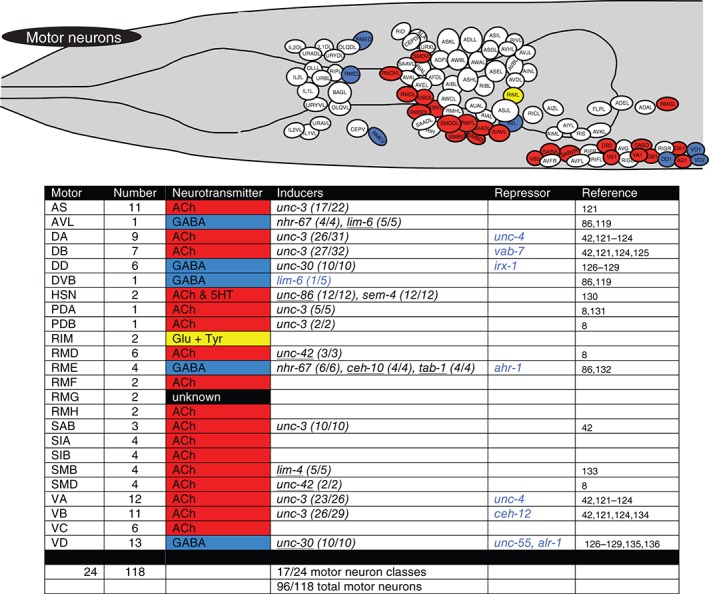
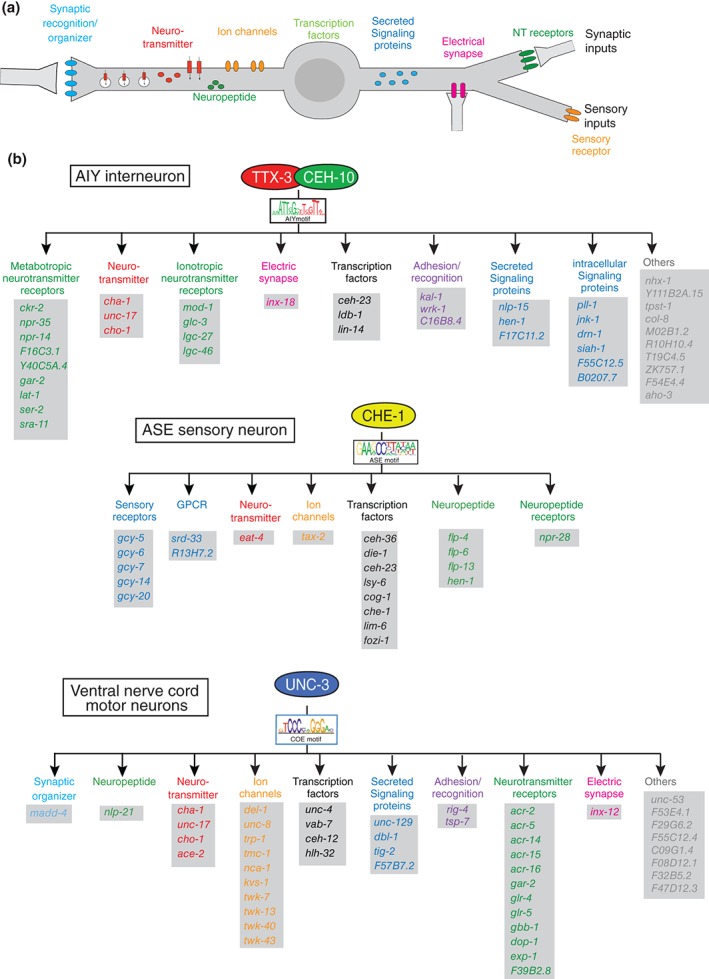
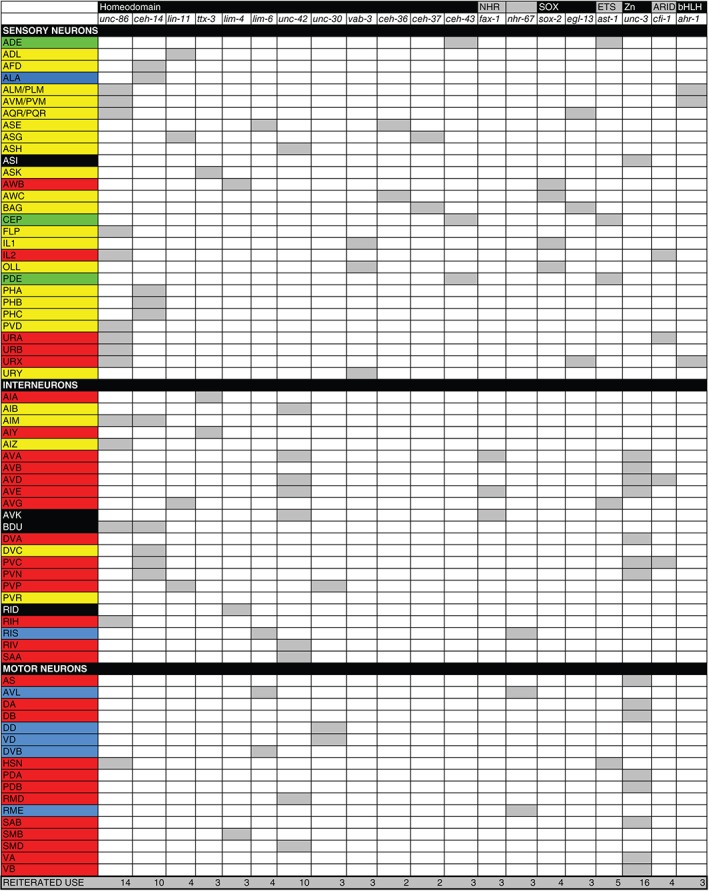
Our present day understanding of nervous system development is an amalgam of insights gained from studying different aspects and stages of nervous system development in a variety of invertebrate and vertebrate model systems, with each model system making its own distinctive set of contributions. One aspect of nervous system development that has been among the most extensively studied in the nematode Caenorhabditis elegans is the nature of the gene regulatory programs that specify hardwired, terminal cellular identities. I first summarize a number of maps (anatomical, functional, and molecular) that describe the terminal identity of individual neurons in the C. elegans nervous system. I then provide a comprehensive summary of regulatory factors that specify terminal identities in the nervous system, synthesizing these past studies into a regulatory map of cellular identities in the C. elegans nervous system. This map shows that for three quarters of all neurons in the C. elegans nervous system, regulatory factors that control terminal identity features are known. In-depth studies of specific neuron types have revealed that regulatory factors rarely act alone, but rather act cooperatively in neuron-type specific combinations. In most cases examined so far, distinct, biochemically unlinked terminal identity features are coregulated via cooperatively acting transcription factors, termed terminal selectors, but there are also cases in which distinct identity features are controlled in a piecemeal fashion by independent regulatory inputs. The regulatory map also illustrates that identity-defining transcription factors are reemployed in distinct combinations in different neuron types. However, the same transcription factor can drive terminal differentiation in neurons that are unrelated by lineage, unrelated by function, connectivity and neurotransmitter deployment. Lastly, the regulatory map illustrates the preponderance of homeodomain transcription factors in the control of terminal identities, suggesting that these factors have ancient, phylogenetically conserved roles in controlling terminal neuronal differentiation in the nervous system. WIREs Dev Biol 2016, 5:474-498. doi: 10.1002/wdev.233 For further resources related to this article, please visit the WIREs website.
我们如今对神经系统发育的理解,是通过研究各种无脊椎动物和脊椎动物模型系统中神经系统发育的不同方面和阶段所获得的见解的融合,每个模型系统都做出了自己独特的贡献。线虫秀丽隐杆线虫中研究最为广泛的神经系统发育的一个方面,是指定固定连接的终端细胞身份的基因调控程序的性质。我首先总结一些描述秀丽隐杆线虫神经系统中单个神经元终端身份的图谱(解剖学、功能和分子图谱)。然后,我全面总结了指定神经系统终端身份的调控因子,将这些过去的研究整合为秀丽隐杆线虫神经系统细胞身份的调控图谱。该图谱显示,对于秀丽隐杆线虫神经系统中四分之三的神经元,控制终端身份特征的调控因子是已知的。对特定神经元类型的深入研究表明,调控因子很少单独起作用,而是以神经元类型特异性组合协同作用。在迄今为止研究的大多数情况下,不同的、生化上无关联的终端身份特征通过协同作用的转录因子(称为终端选择因子)共同调控,但也有一些情况,不同的身份特征由独立的调控输入以零碎的方式控制。调控图谱还表明,定义身份的转录因子在不同的神经元类型中以不同的组合重新使用。然而,相同的转录因子可以驱动谱系无关、功能无关、连接性和神经递质分布无关的神经元的终端分化。最后,调控图谱说明了同源域转录因子在控制终端身份方面的优势,表明这些因子在控制神经系统中终端神经元分化方面具有古老的、系统发育上保守的作用。WIREs发育生物学2016年,5:474 - 498。doi:10.1002/wdev.233 有关本文的更多资源,请访问WIREs网站。