Alavi Shamir, Arsenault Dennis, Whitehead Anthony
Systems and Computer Engineering, Carleton University, Ottawa, ON K1S 5B6, Canada.
School of Information Technology, Carleton University, Ottawa, ON K1S 5B6, Canada.
Sensors (Basel). 2016 Apr 28;16(5):605. doi: 10.3390/s16050605.
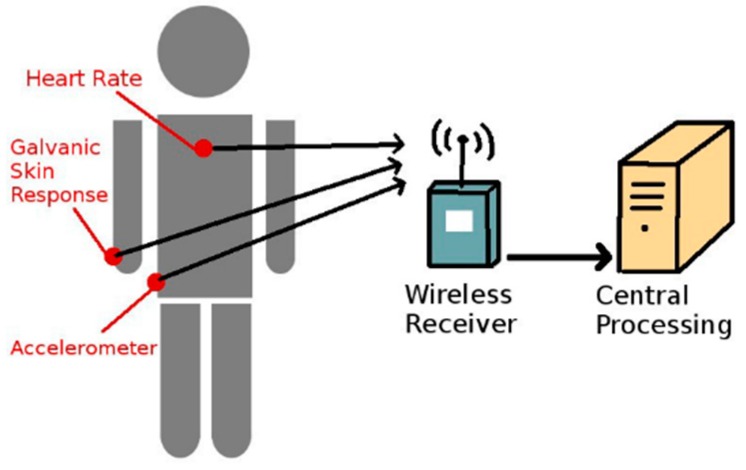
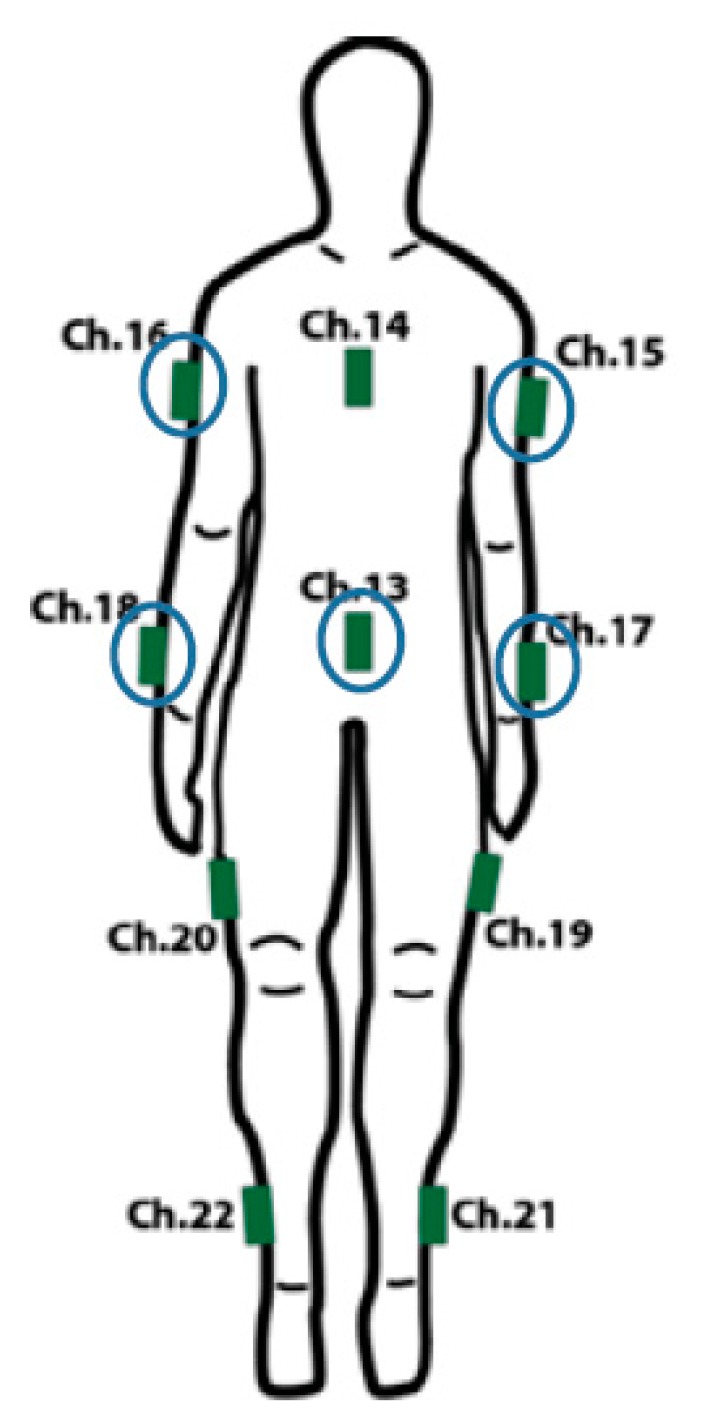
This work presents the development and implementation of a unified multi-sensor human motion capture and gesture recognition system that can distinguish between and classify six different gestures. Data was collected from eleven participants using a subset of five wireless motion sensors (inertial measurement units) attached to their arms and upper body from a complete motion capture system. We compare Support Vector Machines and Artificial Neural Networks on the same dataset under two different scenarios and evaluate the results. Our study indicates that near perfect classification accuracies are achievable for small gestures and that the speed of classification is sufficient to allow interactivity. However, such accuracies are more difficult to obtain when a participant does not participate in training, indicating that more work needs to be done in this area to create a system that can be used by the general population.
这项工作展示了一个统一的多传感器人体运动捕捉和手势识别系统的开发与实现,该系统能够区分并分类六种不同的手势。使用来自完整运动捕捉系统的五个无线运动传感器(惯性测量单元)的子集,从十一名参与者的手臂和上半身收集数据。我们在两种不同场景下,对同一数据集上的支持向量机和人工神经网络进行比较并评估结果。我们的研究表明,对于小幅度手势可实现近乎完美的分类准确率,并且分类速度足以实现交互性。然而,当参与者未参与训练时,更难获得这样的准确率,这表明在该领域需要开展更多工作,以创建一个可供普通人群使用的系统。