Ravidà Alessandra, Cwiklinski Krystyna, Aldridge Allison M, Clarke Paul, Thompson Roisin, Gerlach Jared Q, Kilcoyne Michelle, Hokke Cornelis H, Dalton John P, O'Neill Sandra M
From the ‡Fundamental and Translational Immunology, School of Biotechnology, Faculty of Science and Health, Dublin City University, Glasnevin, Dublin 9, Ireland.
§School of Biological Sciences, Medical Biology Centre (MBC), Queen's University Belfast, Belfast, Northern Ireland, UK.
Mol Cell Proteomics. 2016 Oct;15(10):3139-3153. doi: 10.1074/mcp.M116.059774. Epub 2016 Jul 27.
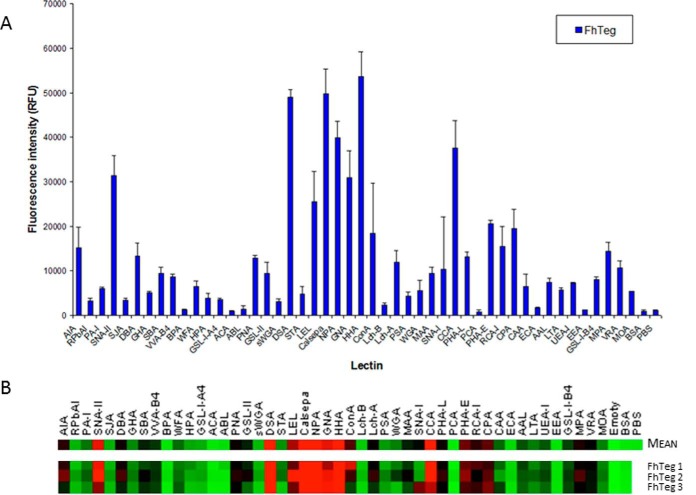
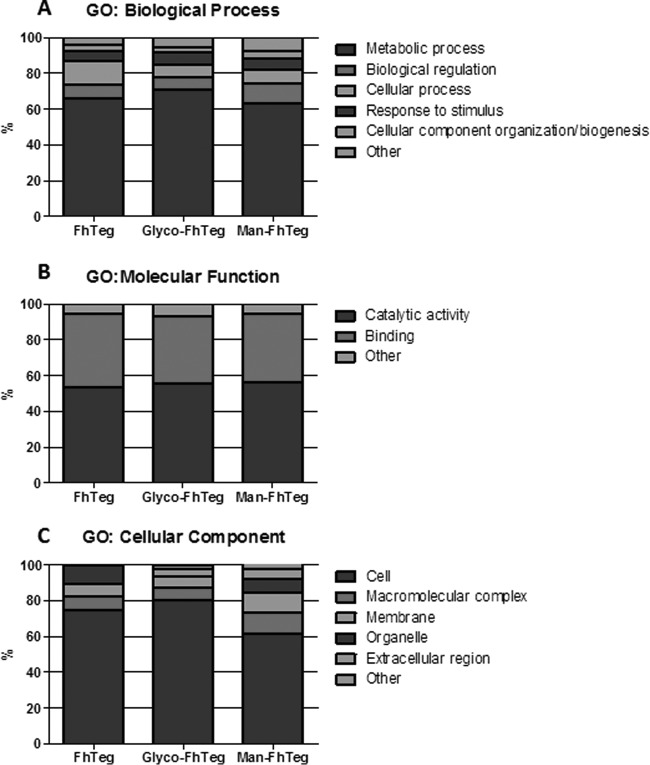
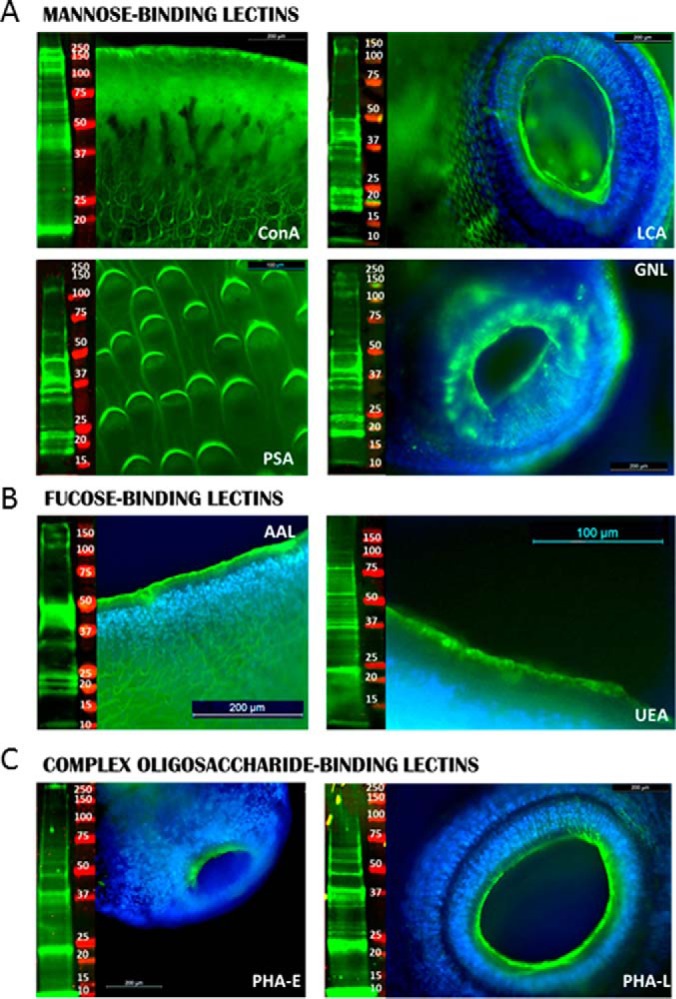
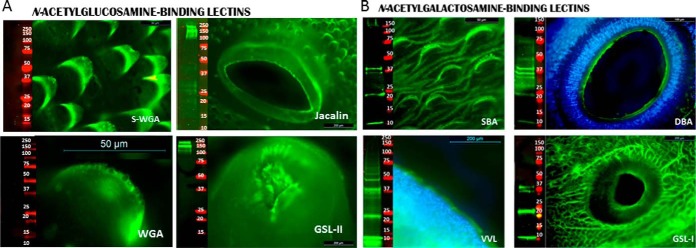
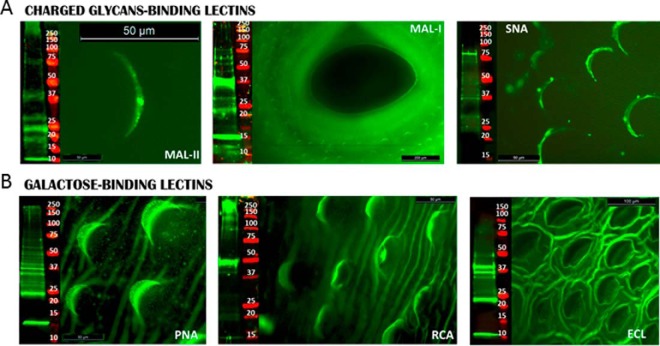
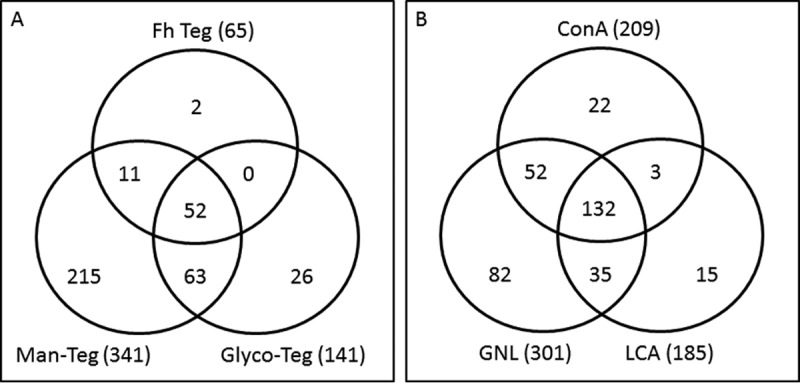
Fasciola hepatica, commonly known as liver fluke, is a trematode that causes Fasciolosis in ruminants and humans. The outer tegumental coat of F. hepatica (FhTeg) is a complex metabolically active biological matrix that is continually exposed to the host immune system and therefore makes a good vaccine target. F. hepatica tegumental coat is highly glycosylated and helminth-derived immunogenic oligosaccharide motifs and glycoproteins are currently being investigated as novel vaccine candidates. This report presents the first systematic characterization of FhTeg glycosylation using lectin microarrays to characterize carbohydrates motifs present, and lectin histochemistry to localize these on the F. hepatica tegument. We discovered that FhTeg glycoproteins are predominantly oligomannose oligosaccharides that are expressed on the spines, suckers and tegumental coat of F. hepatica and lectin blot analysis confirmed the abundance of N- glycosylated proteins. Although some oligosaccharides are widely distributed on the fluke surface other subsets are restricted to distinct anatomical regions. We selectively enriched for FhTeg mannosylated glycoprotein subsets using lectin affinity chromatography and identified 369 proteins by mass spectrometric analysis. Among these proteins are a number of potential vaccine candidates with known immune modulatory properties including proteases, protease inhibitors, paramyosin, Venom Allergen-like II, Enolase and two proteins, nardilysin and TRIL, that have not been previously associated with F. hepatica Furthermore, we provide a comprehensive insight regarding the putative glycosylation of FhTeg components that could highlight the importance of further studies examining glycoconjugates in host-parasite interactions in the context of F. hepatica infection and the development of an effective vaccine.
肝片吸虫,俗称肝蛭,是一种可导致反刍动物和人类患肝片吸虫病的吸虫。肝片吸虫的外皮层(FhTeg)是一种复杂的、具有代谢活性的生物基质,持续暴露于宿主免疫系统,因此是一个很好的疫苗靶点。肝片吸虫的皮层高度糖基化,目前正在研究源自蠕虫的免疫原性寡糖基序和糖蛋白作为新型疫苗候选物。本报告首次使用凝集素微阵列对FhTeg糖基化进行系统表征,以鉴定存在的碳水化合物基序,并使用凝集素组织化学将这些基序定位在肝片吸虫的皮层上。我们发现FhTeg糖蛋白主要是寡甘露糖寡糖,在肝片吸虫的棘、吸盘和皮层上表达,凝集素印迹分析证实了N-糖基化蛋白的丰度。虽然一些寡糖广泛分布在吸虫表面,但其他亚群则局限于不同的解剖区域。我们使用凝集素亲和色谱法选择性富集FhTeg甘露糖基化糖蛋白亚群,并通过质谱分析鉴定了369种蛋白质。这些蛋白质中包括一些具有已知免疫调节特性的潜在疫苗候选物,如蛋白酶、蛋白酶抑制剂、副肌球蛋白、类毒液变应原II、烯醇化酶,以及两种以前未与肝片吸虫相关联的蛋白质,即nardilysin和TRIL。此外,我们提供了关于FhTeg成分假定糖基化的全面见解,这可能突出了进一步研究在肝片吸虫感染和有效疫苗开发背景下宿主-寄生虫相互作用中糖缀合物的重要性。