Bijwaard Govert E, Van Kippersluis Hans
Netherlands Interdisciplinary Demographic Institute (NIDI-KNAW/University of Groningen), Groningen, The Netherlands.
IZA, Bonn, Germany.
Health Econ. 2016 Sep;25(9):1056-72. doi: 10.1002/hec.3356. Epub 2016 May 3.
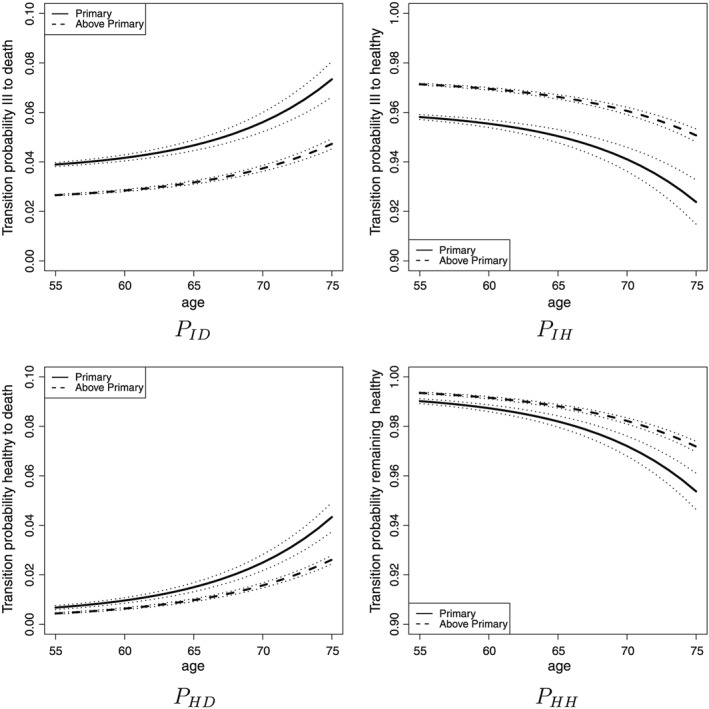
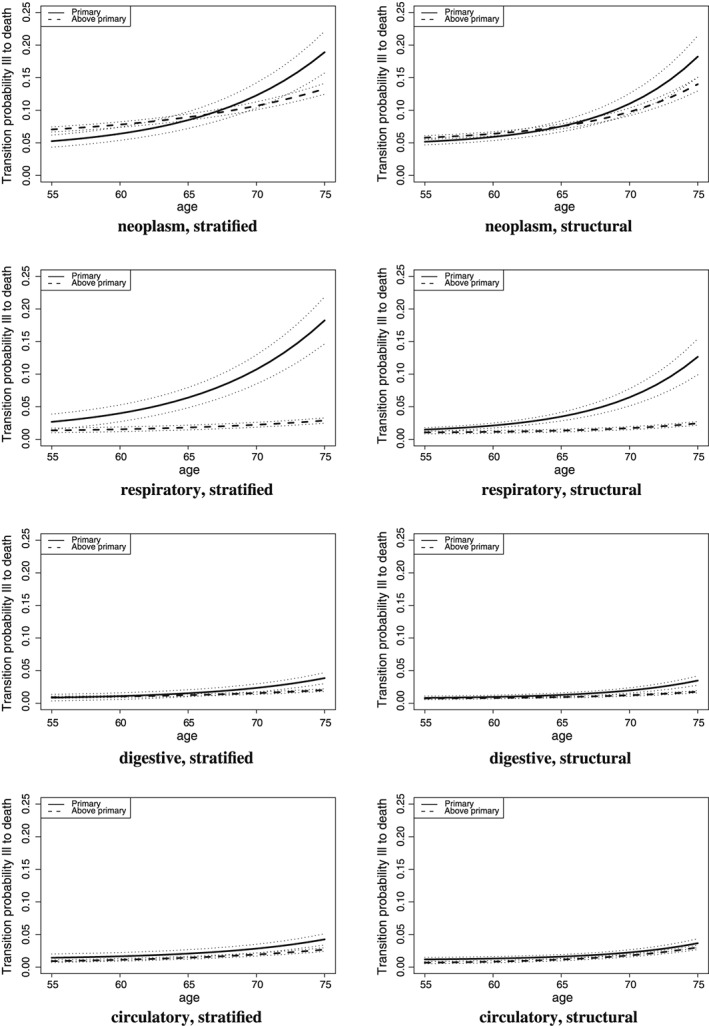
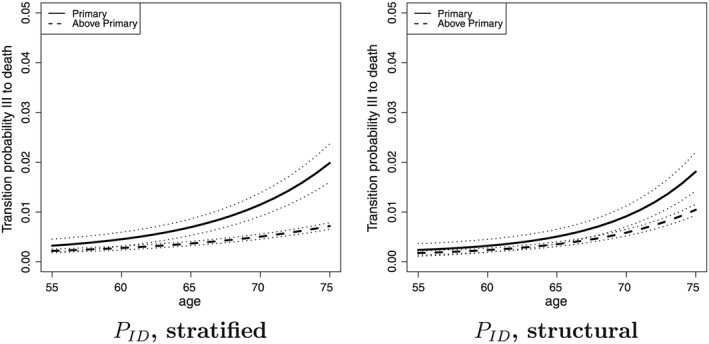
In this paper, we hypothesize that education is associated with a higher efficiency of health investment, yet that this efficiency advantage is solely driven by intelligence. We operationalize efficiency of health investment as the probability of dying conditional on a certain hospital diagnosis and estimate a multistate structural equation model with three states: (i) healthy, (ii) hospitalized, and (iii) death. We use data from a Dutch cohort born around 1940 that links intelligence tests at age 12 years to later-life hospitalization and mortality records. The results indicate that intelligent individuals have a clear survival advantage for most hospital diagnoses, while the remaining disparities across education groups are small and not statistically significant. © 2016 The Authors. Health Economics Published by John Wiley & Sons Ltd.
在本文中,我们假设教育与更高的健康投资效率相关,但这种效率优势完全由智力驱动。我们将健康投资效率定义为在特定医院诊断情况下的死亡概率,并估计一个具有三种状态的多状态结构方程模型:(i)健康,(ii)住院,以及(iii)死亡。我们使用了来自一群出生于1940年左右的荷兰人的数据,这些数据将12岁时的智力测试与晚年的住院和死亡记录联系起来。结果表明,对于大多数医院诊断而言,聪明的个体具有明显的生存优势,而教育群体之间其余的差异很小且无统计学意义。© 2016作者。《健康经济学》由约翰·威利父子有限公司出版。