Kretch Kari S, Adolph Karen E
Department of Psychology, New York University, USA.
Dev Sci. 2017 Jul;20(4). doi: 10.1111/desc.12421. Epub 2016 May 4.
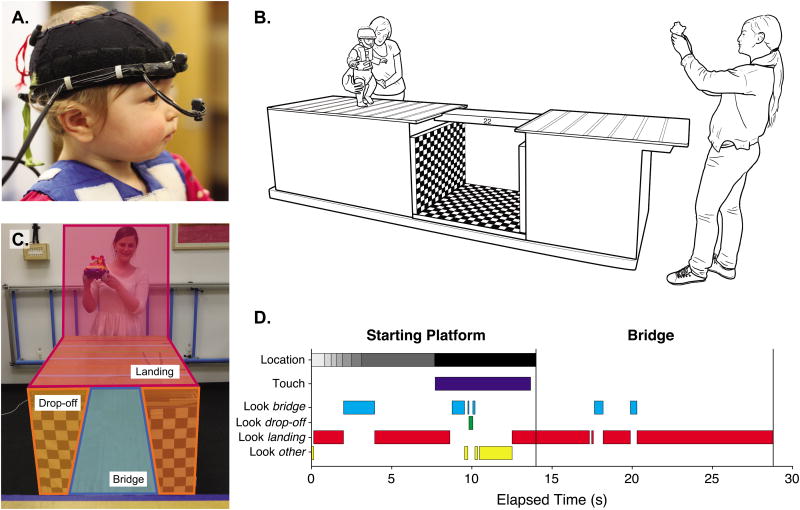
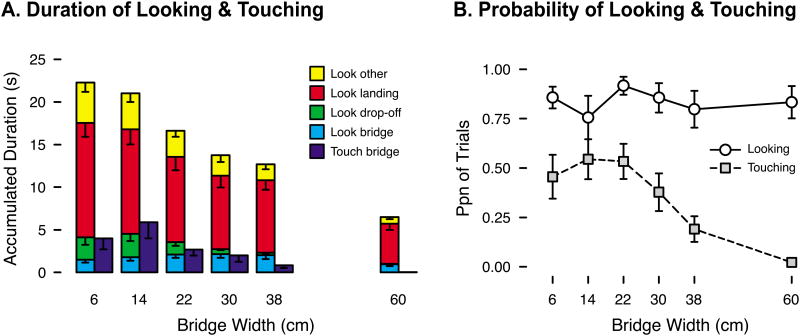
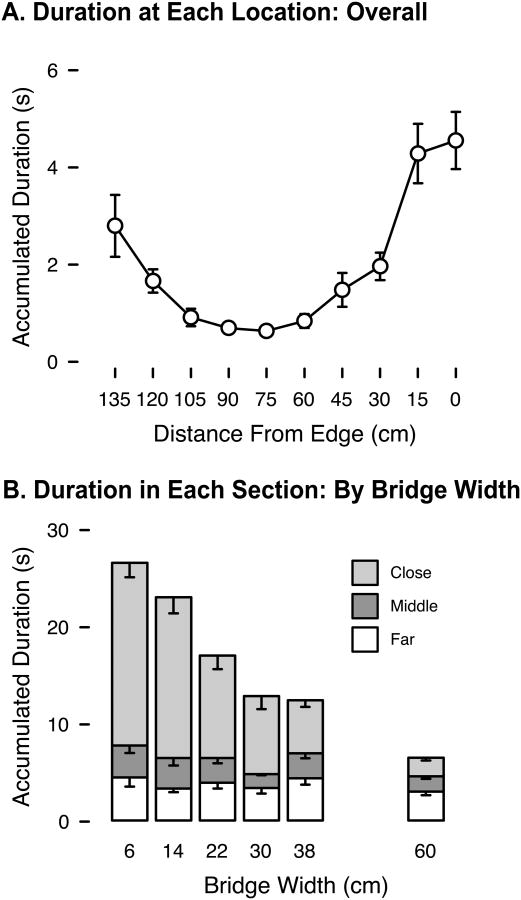
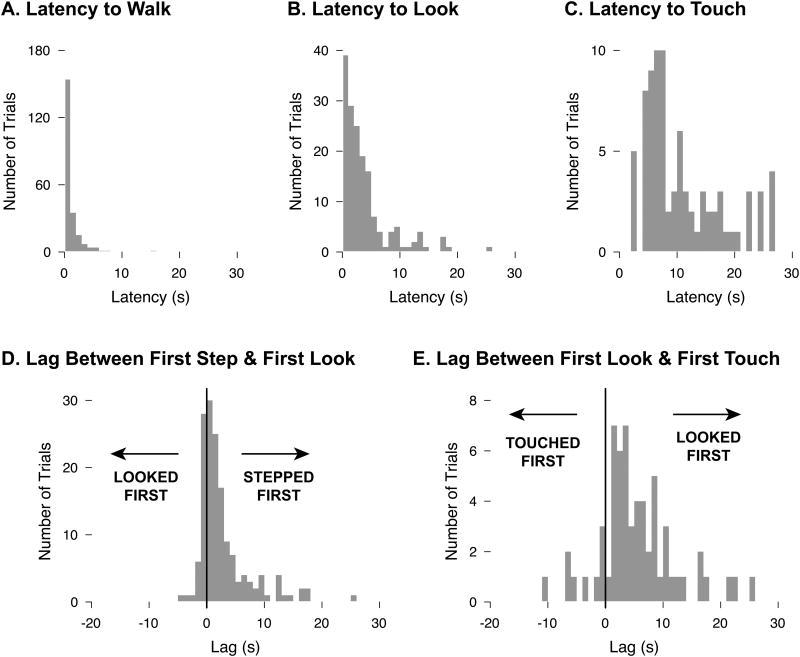
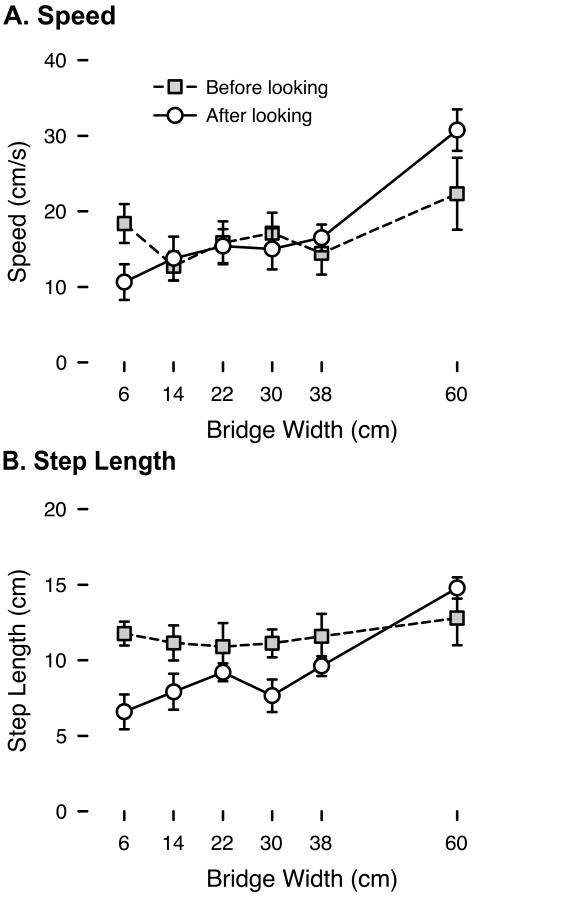
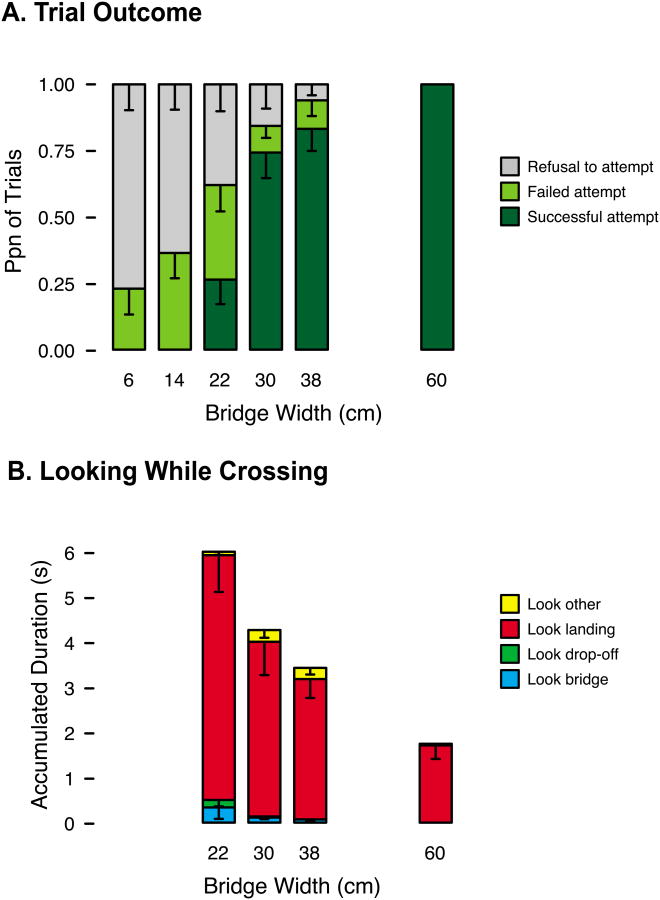
How do infants plan and guide locomotion under challenging conditions? This experiment investigated the real-time process of visual and haptic exploration in 14-month-old infants as they decided whether and how to walk over challenging terrain - a series of bridges varying in width. Infants' direction of gaze was recorded with a head-mounted eye tracker and their haptic exploration and locomotor actions were captured on video. Infants' exploration was an organized, efficient sequence of visual, haptic, and locomotor behaviors. They used visual exploration from a distance as an initial assessment on nearly every bridge. Visual information subsequently prompted gait modifications while approaching narrow bridges and haptic exploration at the edge of the bridge. Results confirm predictions about the sequential, ramping-up process of exploration and the distinct roles of vision and touch. Exploration, however, was not a guarantee of adaptive decisions. With walking experience, exploratory behaviors became increasingly efficient and infants were better able to interpret the resulting perceptual information in terms of whether it was safe to walk.
婴儿如何在具有挑战性的条件下规划和引导运动?本实验研究了14个月大婴儿在决定是否以及如何走过具有挑战性的地形(一系列宽度各异的桥梁)时视觉和触觉探索的实时过程。使用头戴式眼动仪记录婴儿的注视方向,并通过视频捕捉他们的触觉探索和运动行为。婴儿的探索是一系列有组织、高效的视觉、触觉和运动行为。他们几乎在每座桥上都将远距离的视觉探索作为初步评估。随后,视觉信息在接近窄桥时促使步态调整,并在桥边进行触觉探索。结果证实了关于探索的顺序性、逐步增强过程以及视觉和触觉不同作用的预测。然而,探索并不能保证做出适应性决策。随着行走经验的增加,探索行为变得越来越高效,婴儿能够更好地根据行走是否安全来解读所获得的感知信息。