Zutz Christoph, Bacher Markus, Parich Alexandra, Kluger Bernhard, Gacek-Matthews Agnieszka, Schuhmacher Rainer, Wagner Martin, Rychli Kathrin, Strauss Joseph
Institute for Milk Hygiene, University of Veterinary Medicine ViennaVienna, Austria; Research Platform Bioactive Microbial Metabolites, Bioresources and Technologies Campus in TullnTulln an der Donau, Austria.
Division of Chemistry of Renewables, Department of Chemistry, University of Natural Resources and Life Sciences, Vienna Tulln an der Donau, Austria.
Front Microbiol. 2016 Apr 13;7:510. doi: 10.3389/fmicb.2016.00510. eCollection 2016.
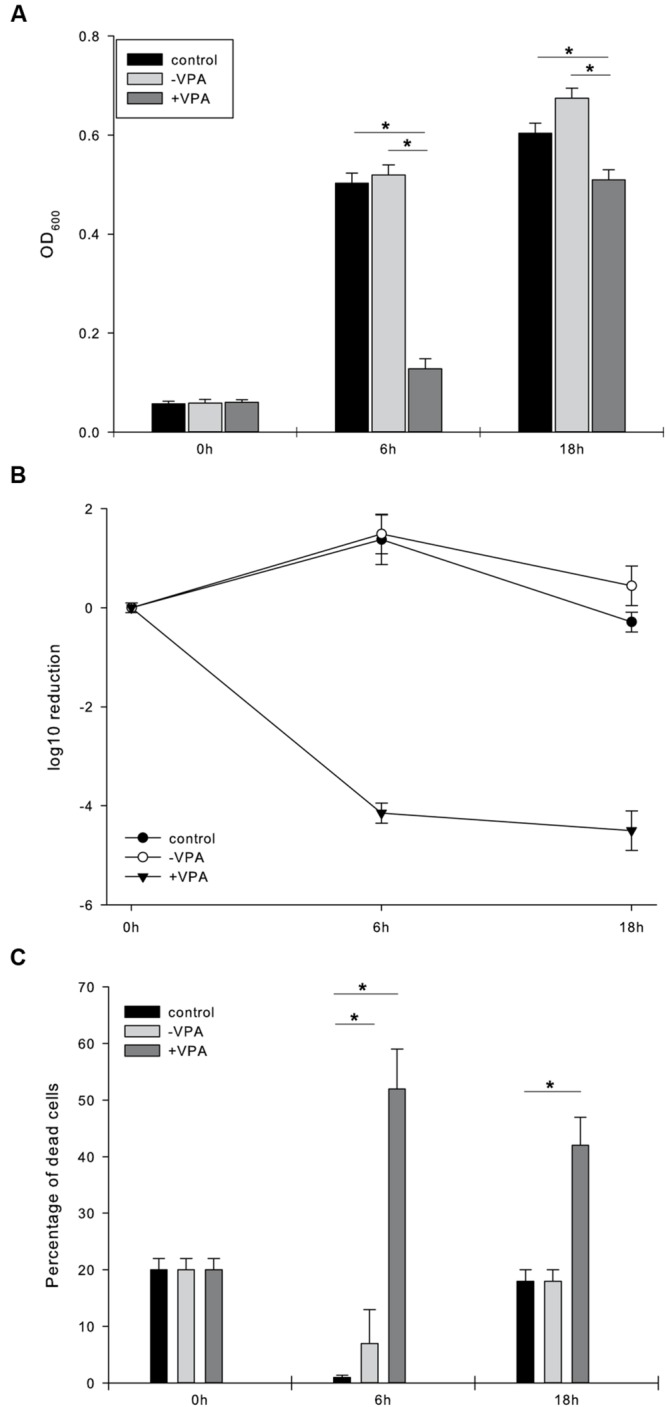
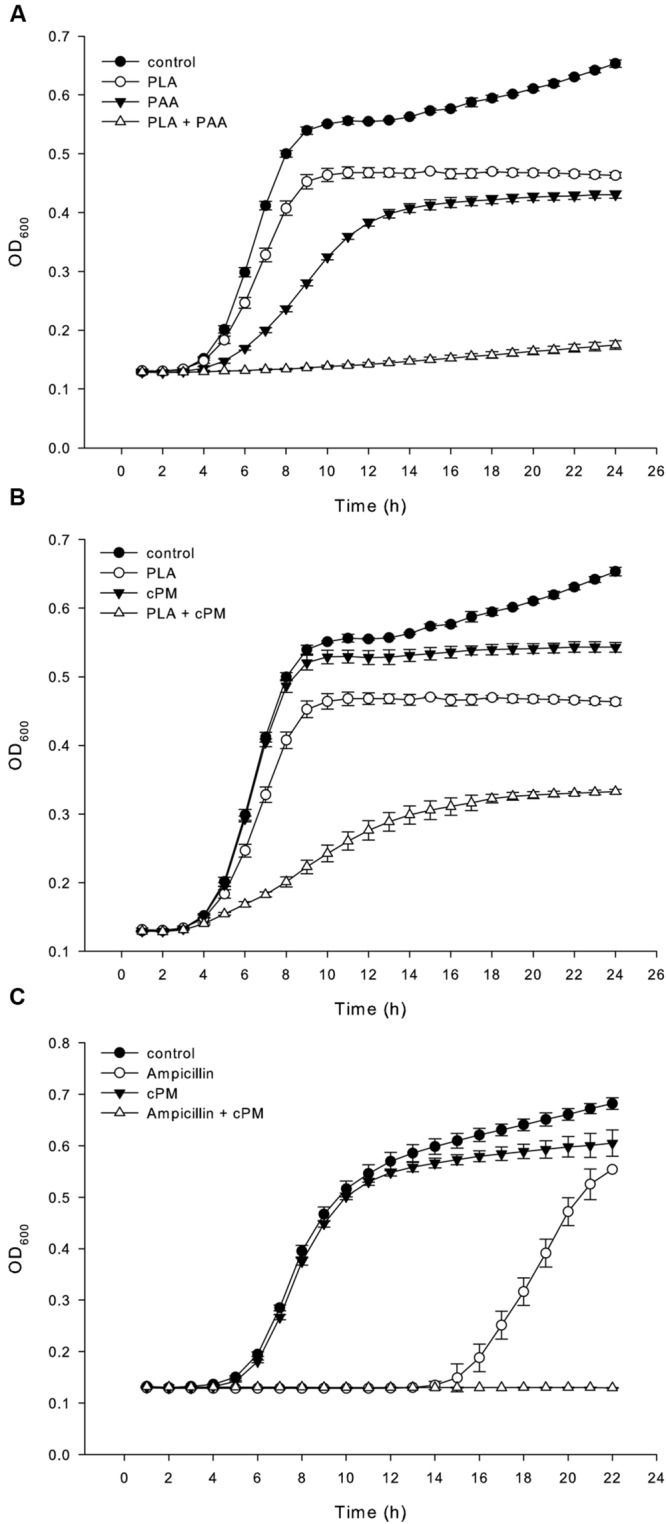
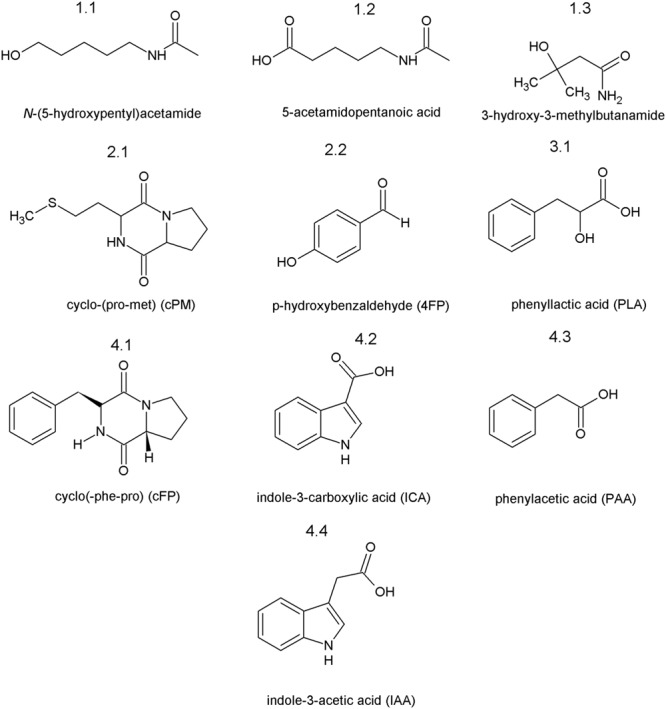
One of the biggest challenges in public health is the rising number of antibiotic resistant pathogens and the lack of novel antibiotics. In recent years there is a rising focus on fungi as sources of antimicrobial compounds due to their ability to produce a large variety of bioactive compounds and the observation that virtually every fungus may still contain yet unknown so called "cryptic," often silenced, compounds. These putative metabolites could include novel bioactive compounds. Considerable effort is spent on methods to induce production of these "cryptic" metabolites. One approach is the use of small molecule effectors, potentially influencing chromatin landscape in fungi. We observed that the supernatant of the fungus Doratomyces (D.) microsporus treated with valproic acid (VPA) displayed antimicrobial activity against Staphylococcus (S.) aureus and two methicillin resistant clinical S. aureus isolates. VPA treatment resulted in enhanced production of seven antimicrobial compounds: cyclo-(L-proline-L-methionine) (cPM), p-hydroxybenzaldehyde, cyclo-(phenylalanine-proline) (cFP), indole-3-carboxylic acid, phenylacetic acid (PAA) and indole-3-acetic acid. The production of the antimicrobial compound phenyllactic acid was exclusively detectable after VPA treatment. Furthermore three compounds, cPM, cFP, and PAA, were able to boost the antimicrobial activity of other antimicrobial compounds. cPM, for the first time isolated from fungi, and to a lesser extent PAA, are even able to decrease the minimal inhibitory concentration of ampicillin in MRSA strains. In conclusion we could show in this study that VPA treatment is a potent tool for induction of "cryptic" antimicrobial compound production in fungi, and that the induced compounds are not exclusively linked to the secondary metabolism. Furthermore this is the first discovery of the rare diketopiperazine cPM in fungi. Additionally we could demonstrate that cPM and PAA boost antibiotic activity against antibiotic resistant strains, suggesting a possible application in combinatorial antibiotic treatment against resistant pathogens.
公共卫生领域最大的挑战之一是抗生素耐药性病原体数量的不断增加以及新型抗生素的匮乏。近年来,由于真菌能够产生大量生物活性化合物,且几乎每种真菌可能仍含有未知的所谓“隐秘”(通常处于沉默状态)化合物,因此人们越来越关注将真菌作为抗菌化合物的来源。这些假定的代谢产物可能包括新型生物活性化合物。人们在诱导这些“隐秘”代谢产物产生的方法上投入了大量精力。一种方法是使用小分子效应物,其可能影响真菌中的染色质格局。我们观察到,用丙戊酸(VPA)处理的微小多孢菌(D. microsporus)的上清液对金黄色葡萄球菌(S. aureus)和两种耐甲氧西林临床金黄色葡萄球菌分离株具有抗菌活性。VPA处理导致七种抗菌化合物的产量增加:环(L-脯氨酸-L-甲硫氨酸)(cPM)、对羟基苯甲醛、环(苯丙氨酸-脯氨酸)(cFP)、吲哚-3-羧酸、苯乙酸(PAA)和吲哚-3-乙酸。仅在VPA处理后才能检测到抗菌化合物苯乳酸的产生。此外,三种化合物cPM、cFP和PAA能够增强其他抗菌化合物的抗菌活性。首次从真菌中分离出的cPM以及在较小程度上的PAA甚至能够降低MRSA菌株中氨苄青霉素的最低抑菌浓度。总之,我们在本研究中表明,VPA处理是诱导真菌中“隐秘”抗菌化合物产生的有效工具,并且诱导产生的化合物并非仅与次生代谢相关。此外,这是首次在真菌中发现罕见的二酮哌嗪cPM。此外,我们可以证明cPM和PAA增强了对抗生素耐药菌株的抗生素活性,这表明它们可能在针对耐药病原体的联合抗生素治疗中具有应用价值。