Liu Jun, Zhou Hengxing, Lu Lu, Li Xueying, Jia Jun, Shi Zhongju, Yao Xue, Wu Qiuli, Feng Shiqing
From the Department of Orthopedics (JL, HZ, LL, JJ, ZS, XY, QW, SF), Tianjin Medical University General Hospital, No. 154 Anshan Road; Key Laboratory of Immuno Microenvironment and Disease of the Educational Ministry of China (XL), Department of Immunology, Tianjin Medical University, No. 22 Qixiangtai Road, Heping District; and Department of Orthopedic Trauma (JJ), Tianjin Hospital, No. 406 Jiefangnan Road, Hexi District, Tianjin, PR China.
Medicine (Baltimore). 2016 May;95(18):e3373. doi: 10.1097/MD.0000000000003373.
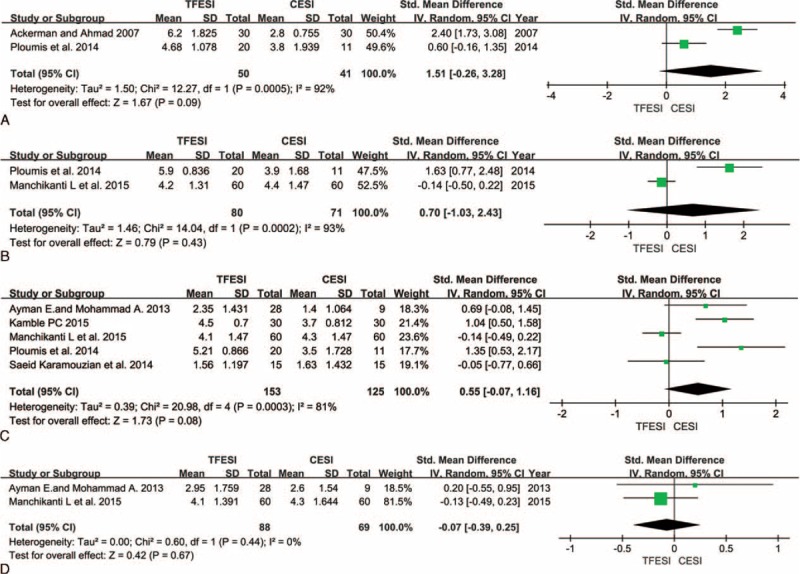
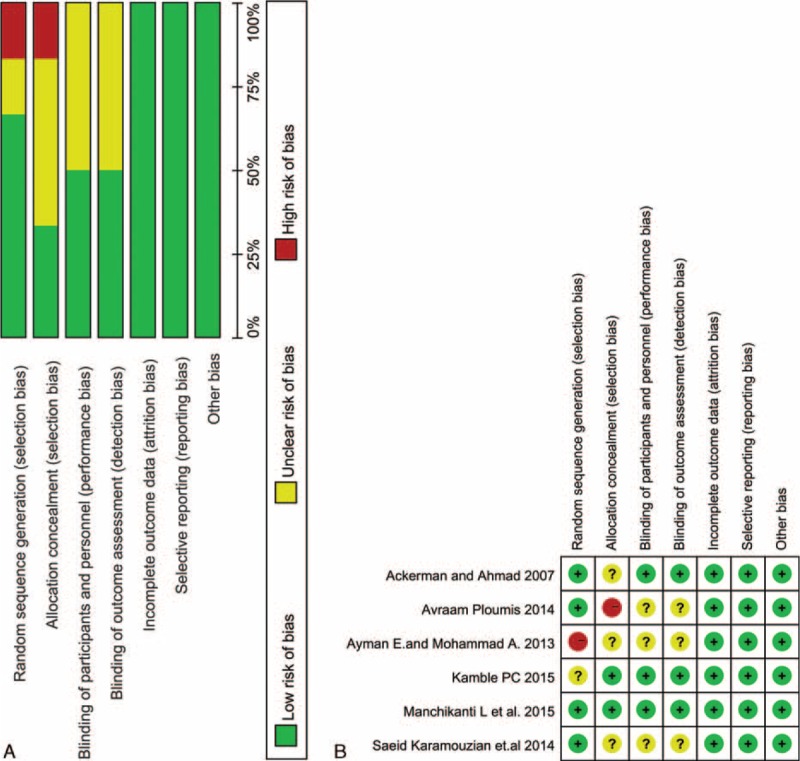
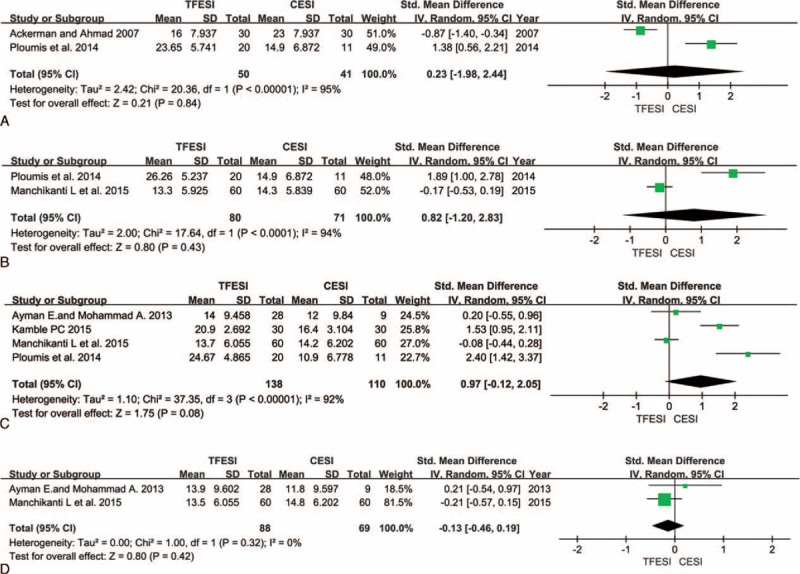
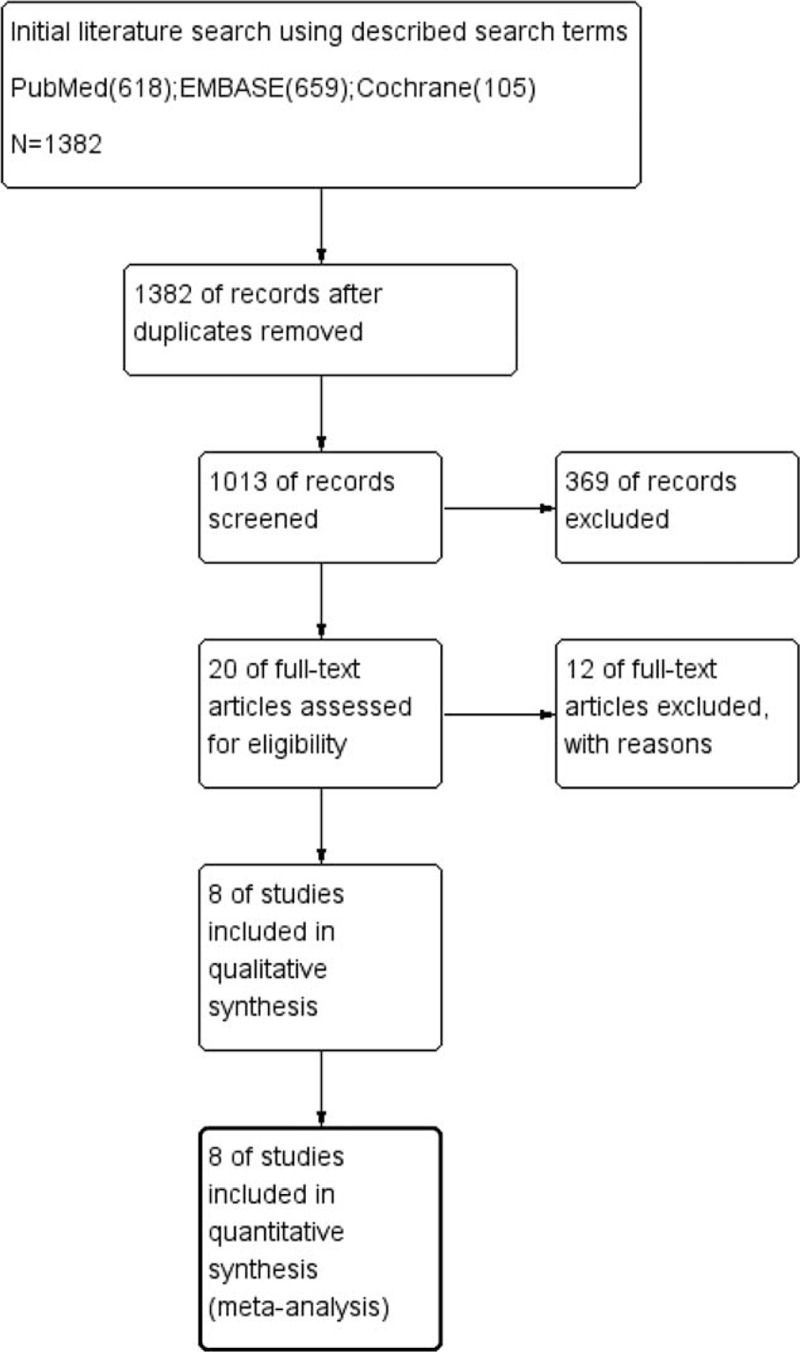
Epidural steroid injection (ESI) is one of the most commonly used treatments for radiculopathy. Previous studies have described the effectiveness of ESI in the management of radiculopathy. However, controversy exists regarding the route that is most beneficial and effective with respect to the administration of epidural steroids, as both transforaminal (TF) and caudal (C) routes are commonly used.This analysis reviewed studies comparing the effectiveness of TF-ESIs with that of C-ESIs in the treatment of radiculopathy as a means of providing pain relief and improving functionality. This meta-analysis was performed to guide clinical decision-making.The study was a systematic review of comparative studies.A systematic literature search was performed using the PubMed, EMBASE, and Cochrane Library databases for trials written in English. The randomized trials and observational studies that met our inclusion criteria were subsequently included. Two reviewers, respectively, extracted data and estimated the risk of bias. All statistical analyses were performed using Review Manager 5.3.Six prospective and 2 retrospective studies involving 664 patients were included. Statistical analysis was performed utilizing only the 6 prospective studies. Although slight pain and functional improvements were noted in the TF-ESI groups compared with the C-ESI groups, these improvements were neither clinically nor statistically significant.The limitations of this meta-analysis resulted primarily from the weaknesses of the comparative studies and the relative paucity of patients included in each study.Both the TF and C approaches are effective in reducing pain and improving functional scores, and they demonstrated similar efficacies in the management of lumbosacral radicular pain.
硬膜外类固醇注射(ESI)是神经根病最常用的治疗方法之一。既往研究描述了ESI在神经根病治疗中的有效性。然而,关于硬膜外类固醇给药最有益和有效的途径存在争议,因为经椎间孔(TF)和骶管(C)途径都常用。本分析回顾了比较TF-ESI与C-ESI治疗神经根病有效性的研究,以作为缓解疼痛和改善功能的一种手段。进行这项荟萃分析以指导临床决策。该研究是对比较研究的系统评价。使用PubMed、EMBASE和Cochrane图书馆数据库对英文撰写的试验进行系统的文献检索。随后纳入符合我们纳入标准的随机试验和观察性研究。两名评价者分别提取数据并评估偏倚风险。所有统计分析均使用Review Manager 5.3进行。纳入了6项前瞻性研究和2项回顾性研究,共664例患者。仅利用6项前瞻性研究进行统计分析。尽管与C-ESI组相比,TF-ESI组有轻微的疼痛和功能改善,但这些改善在临床和统计学上均无显著意义。这项荟萃分析的局限性主要源于比较研究的缺陷以及每项研究纳入患者相对较少。TF和C两种方法在减轻疼痛和改善功能评分方面均有效,并且它们在腰骶部神经根性疼痛的治疗中显示出相似的疗效。