McClanahan Timothy R, Maina Joseph M, Graham Nicholas A J, Jones Kendall R
Wildlife Conservation Society, Marine Programs, Coral Reef Conservation Project, Mombasa, Kenya.
Australian Research Council Centre of Excellence for Environment Decisions, Centre for Biodiversity and Conservation Science, School of Biological Sciences, The University of Queensland, St Lucia, Queensland 4072, Australia.
PLoS One. 2016 May 5;11(5):e0154585. doi: 10.1371/journal.pone.0154585. eCollection 2016.
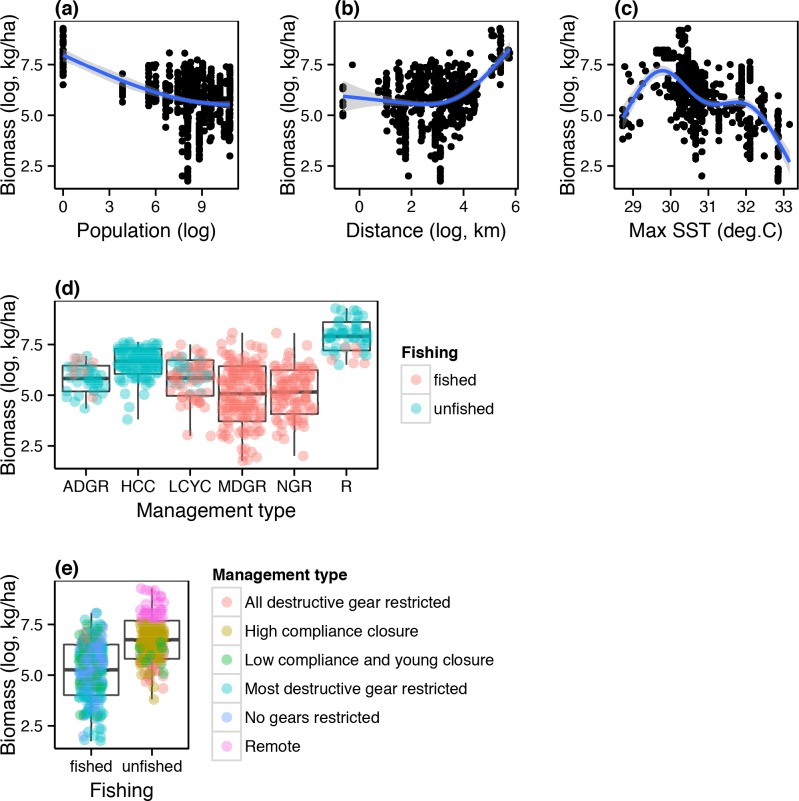
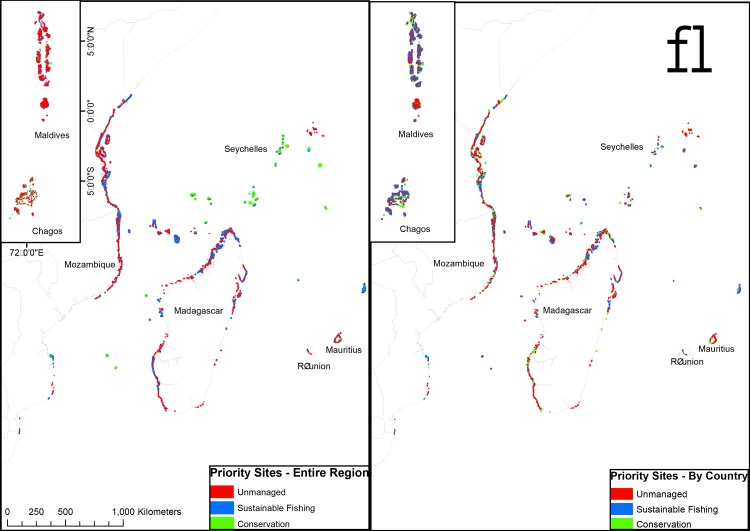
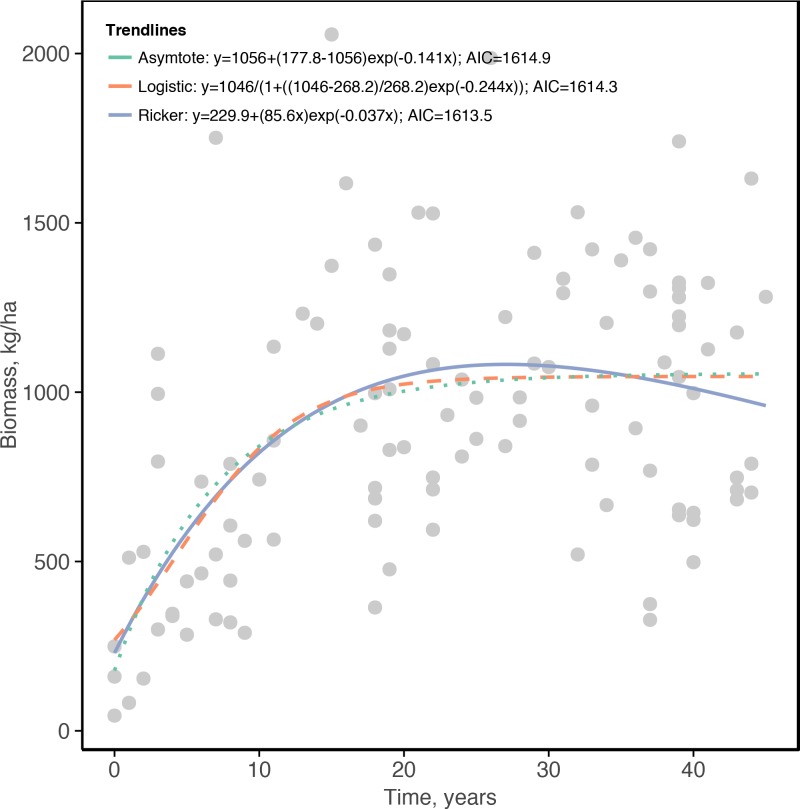
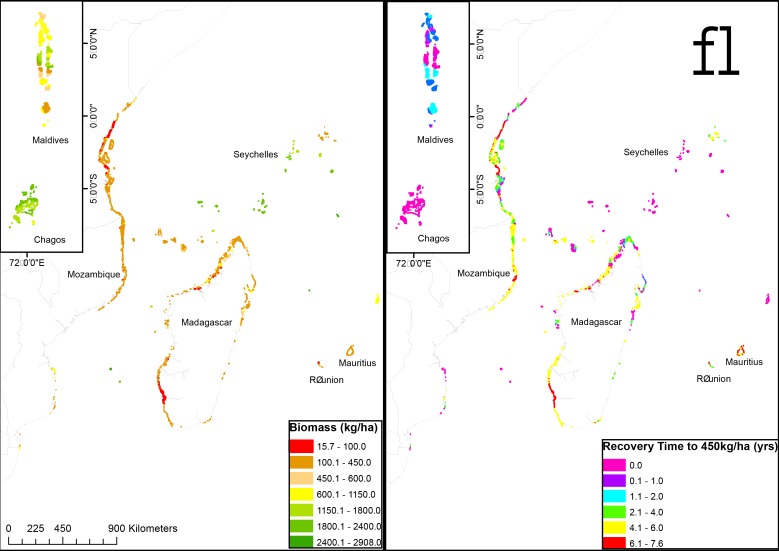
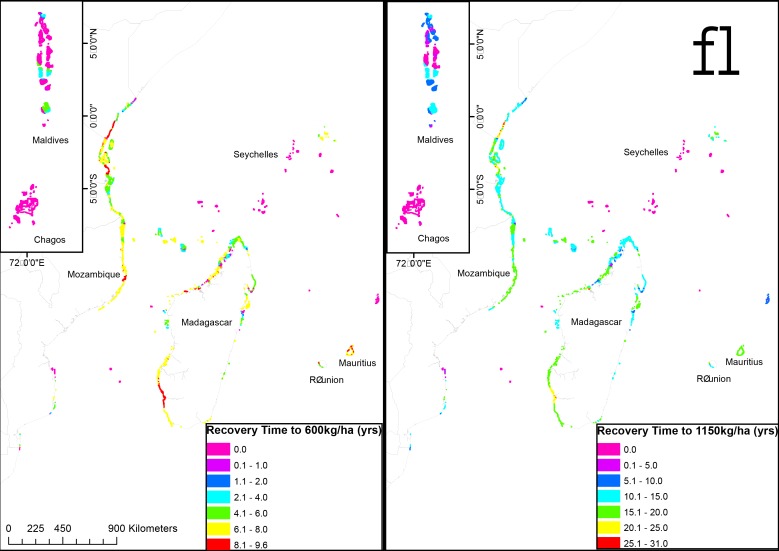
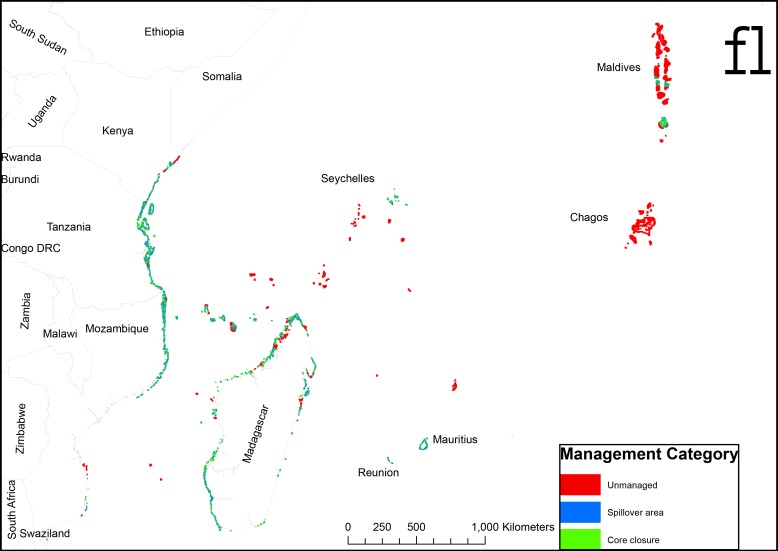
Fish biomass is a primary driver of coral reef ecosystem services and has high sensitivity to human disturbances, particularly fishing. Estimates of fish biomass, their spatial distribution, and recovery potential are important for evaluating reef status and crucial for setting management targets. Here we modeled fish biomass estimates across all reefs of the western Indian Ocean using key variables that predicted the empirical data collected from 337 sites. These variables were used to create biomass and recovery time maps to prioritize spatially explicit conservation actions. The resultant fish biomass map showed high variability ranging from ~15 to 2900 kg/ha, primarily driven by human populations, distance to markets, and fisheries management restrictions. Lastly, we assembled data based on the age of fisheries closures and showed that biomass takes ~ 25 years to recover to typical equilibrium values of ~1200 kg/ha. The recovery times to biomass levels for sustainable fishing yields, maximum diversity, and ecosystem stability or conservation targets once fishing is suspended was modeled to estimate temporal costs of restrictions. The mean time to recovery for the whole region to the conservation target was 8.1(± 3SD) years, while recovery to sustainable fishing thresholds was between 0.5 and 4 years, but with high spatial variation. Recovery prioritization scenario models included one where local governance prioritized recovery of degraded reefs and two that prioritized minimizing recovery time, where countries either operated independently or collaborated. The regional collaboration scenario selected remote areas for conservation with uneven national responsibilities and spatial coverage, which could undermine collaboration. There is the potential to achieve sustainable fisheries within a decade by promoting these pathways according to their social-ecological suitability.
鱼类生物量是珊瑚礁生态系统服务的主要驱动因素,并且对人类干扰(尤其是捕捞)高度敏感。鱼类生物量的估计、其空间分布以及恢复潜力对于评估珊瑚礁状况至关重要,也是设定管理目标的关键。在此,我们利用预测从337个地点收集的实证数据的关键变量,对西印度洋所有珊瑚礁的鱼类生物量估计进行了建模。这些变量被用于创建生物量和恢复时间地图,以便对空间明确的保护行动进行优先排序。由此产生的鱼类生物量地图显示出高度的变异性,范围从约15至2900千克/公顷,主要受人口、与市场的距离以及渔业管理限制的驱动。最后,我们根据渔业关闭的时间收集了数据,并表明生物量需要约25年才能恢复到约1200千克/公顷的典型平衡值。一旦停止捕捞,针对可持续捕捞产量、最大多样性以及生态系统稳定性或保护目标的生物量水平恢复时间进行了建模,以估计限制措施的时间成本。整个区域恢复到保护目标的平均时间为8.1(±3标准差)年,而恢复到可持续捕捞阈值的时间在0.5至4年之间,但空间差异很大。恢复优先排序情景模型包括一种地方治理优先考虑退化珊瑚礁恢复的模型,以及另外两种优先考虑将恢复时间降至最低的模型,即各国独立行动或开展合作的模型。区域合作情景选择偏远地区进行保护,各国的责任和空间覆盖不均衡,这可能会破坏合作。根据这些途径的社会生态适宜性来推广它们,有可能在十年内实现可持续渔业。