Oedegaard Ketil J, Alda Martin, Anand Anit, Andreassen Ole A, Balaraman Yokesh, Berrettini Wade H, Bhattacharjee Abesh, Brennand Kristen J, Burdick Katherine E, Calabrese Joseph R, Calkin Cynthia V, Claasen Ana, Coryell William H, Craig David, DeModena Anna, Frye Mark, Gage Fred H, Gao Keming, Garnham Julie, Gershon Elliot, Jakobsen Petter, Leckband Susan G, McCarthy Michael J, McInnis Melvin G, Maihofer Adam X, Mertens Jerome, Morken Gunnar, Nievergelt Caroline M, Nurnberger John, Pham Son, Schoeyen Helle, Shekhtman Tatyana, Shilling Paul D, Szelinger Szabolcs, Tarwater Bruce, Yao Jun, Zandi Peter P, Kelsoe John R
Department of Clinical Medicine, Section for Psychiatry, Faculty of Medicine, University of Bergen, Bergen, Norway.
Division of Psychiatry, Haukeland University Hospital, Bergen, Norway.
BMC Psychiatry. 2016 May 5;16:129. doi: 10.1186/s12888-016-0732-x.
Bipolar disorder is a serious and common psychiatric disorder characterized by manic and depressive mood switches and a relapsing and remitting course. The cornerstone of clinical management is stabilization and prophylaxis using mood-stabilizing medications to reduce both manic and depressive symptoms. Lithium remains the gold standard of treatment with the strongest data for both efficacy and suicide prevention. However, many patients do not respond to this medication, and clinically there is a great need for tools to aid the clinician in selecting the correct treatment. Large genome wide association studies (GWAS) investigating retrospectively the effect of lithium response are in the pipeline; however, few large prospective studies on genetic predictors to of lithium response have yet been conducted. The purpose of this project is to identify genes that are associated with lithium response in a large prospective cohort of bipolar patients and to better understand the mechanism of action of lithium and the variation in the genome that influences clinical response.
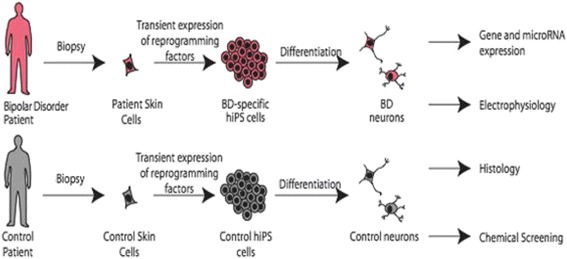
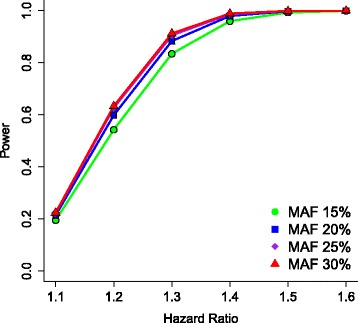
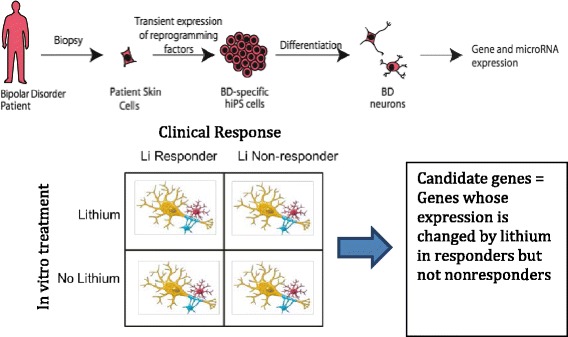
METHODS/DESIGN: This study is an 11-site prospective non-randomized open trial of lithium designed to ascertain a cohort of 700 subjects with bipolar I disorder who experience protocol-defined relapse prevention as a result of treatment with lithium monotherapy. All patients will be diagnosed using the Diagnostic Interview for Genetic Studies (DIGS) and will then enter a 2-year follow-up period on lithium monotherapy if and when they exhibit a score of 1 (normal, not ill), 2 (minimally ill) or 3 (mildly ill) on the Clinical Global Impressions of Severity Scale for Bipolar Disorder (CGI-S-BP Overall Bipolar Illness) for 4 of the 5 preceding weeks. Lithium will be titrated as clinically appropriate, not to exceed serum levels of 1.2 mEq/L. The sample will be evaluated longitudinally using a wide range of clinical scales, cognitive assessments and laboratory tests. On relapse, patients will be discontinued or crossed-over to treatment with valproic acid (VPA) or treatment as usual (TAU). Relapse is defined as a DSM-IV manic, major depressive or mixed episode or if the treating physician decides a change in medication is clinically necessary. The sample will be genotyped for GWAS. The outcome for lithium response will be analyzed as a time to event, where the event is defined as clinical relapse, using a Cox Proportional Hazards model. Positive single nucleotide polymorphisms (SNPs) from past genetic retrospective studies of lithium response, the Consortium on Lithium Genetics (ConLiGen), will be tested in this prospective study sample; a meta-analysis of these samples will then be performed. Finally, neurons will be derived from pluripotent stem cells from lithium responders and non-responders and tested in vivo for response to lithium by gene expression studies. SNPs in genes identified in these cellular studies will also be tested for association to response.
Lithium is an extraordinarily important therapeutic drug in the clinical management of patients suffering from bipolar disorder. However, a significant proportion of patients, 30-40 %, fail to respond, and there is currently no method to identify the good lithium responders before initiation of treatment. Converging evidence suggests that genetic factors play a strong role in the variation of response to lithium, but only a few genes have been tested and the samples have largely been retrospective or quite small. The current study will collect an entirely unique sample of 700 patients with bipolar disorder to be stabilized on lithium monotherapy and followed for up to 2 years. This study will produce useful information to improve the understanding of the mechanism of action of lithium and will add to the development of a method to predict individual response to lithium, thereby accelerating recovery and reducing suffering and cost.
ClinicalTrials.gov Identifier: NCT01272531 Registered: January 6, 2011.
双相情感障碍是一种严重且常见的精神疾病,其特征为躁狂和抑郁情绪的交替发作以及病情的复发和缓解。临床管理的基石是使用心境稳定剂进行病情稳定和预防,以减轻躁狂和抑郁症状。锂盐仍然是治疗的金标准,在疗效和预防自杀方面拥有最有力的数据支持。然而,许多患者对这种药物没有反应,临床上迫切需要工具来帮助临床医生选择正确的治疗方法。正在进行大规模全基因组关联研究(GWAS),以回顾性研究锂盐反应的影响;然而,关于锂盐反应的遗传预测因子的大型前瞻性研究尚未开展。本项目的目的是在一个大型双相情感障碍患者前瞻性队列中识别与锂盐反应相关的基因,并更好地理解锂盐的作用机制以及影响临床反应的基因组变异。
方法/设计:本研究是一项在11个地点进行的锂盐前瞻性非随机开放试验,旨在确定一组700名患有双相I型障碍的受试者,他们因接受锂盐单药治疗而经历符合方案定义的复发预防。所有患者将使用遗传研究诊断访谈(DIGS)进行诊断,然后在双相情感障碍临床总体印象严重程度量表(CGI-S-BP双相情感障碍总体疾病)上连续5周中有4周表现为1分(正常,无病)、2分(轻度疾病)或3分(中度疾病)时,进入为期2年的锂盐单药治疗随访期。锂盐将根据临床情况进行滴定,血清水平不超过1.2 mEq/L。将使用广泛的临床量表、认知评估和实验室检查对样本进行纵向评估。复发时,患者将停药或换用丙戊酸(VPA)治疗或接受常规治疗(TAU)。复发定义为DSM-IV躁狂、重度抑郁或混合发作,或者治疗医生决定临床上有必要改变药物治疗。将对样本进行GWAS基因分型。锂盐反应的结果将作为事件发生时间进行分析,事件定义为临床复发,使用Cox比例风险模型。来自既往锂盐反应遗传回顾性研究锂盐遗传学联盟(ConLiGen)的阳性单核苷酸多态性(SNP)将在本前瞻性研究样本中进行测试;然后将对这些样本进行荟萃分析。最后,将从锂盐反应者和无反应者的多能干细胞中提取神经元,并通过基因表达研究在体内测试对锂盐的反应。在这些细胞研究中鉴定出的基因中的SNP也将进行反应相关性测试。
锂盐是双相情感障碍患者临床管理中极其重要的治疗药物。然而,相当一部分患者(30%-40%)没有反应,目前在开始治疗前没有方法识别对锂盐反应良好的患者。越来越多的证据表明,遗传因素在锂盐反应的个体差异中起重要作用,但仅测试了少数基因,且样本大多是回顾性的或规模较小。当前的研究将收集一个完全独特的样本,包括700名接受锂盐单药治疗病情稳定并随访长达2年的双相情感障碍患者。本研究将产生有用信息,以增进对锂盐作用机制的理解,并有助于开发预测个体对锂盐反应的方法,从而加速康复、减轻痛苦并降低成本。
ClinicalTrials.gov标识符:NCT01272531 注册时间:2011年1月6日。