Zhang Li, Wang Shi-Bo, Li Qi-Gang, Song Jian, Hao Yu-Qi, Zhou Ling, Zheng Huan-Quan, Dunwell Jim M, Zhang Yuan-Ming
State Key Laboratory of Crop Genetics and Germplasm Enhancement, Nanjing Agricultural University, Nanjing 210095, People's Republic of China.
Statistical Genomics Laboratory, College of Plant Science and Technology, Huazhong Agricultural University, Wuhan 430070, People's Republic of China.
PLoS One. 2016 May 9;11(5):e0154882. doi: 10.1371/journal.pone.0154882. eCollection 2016.
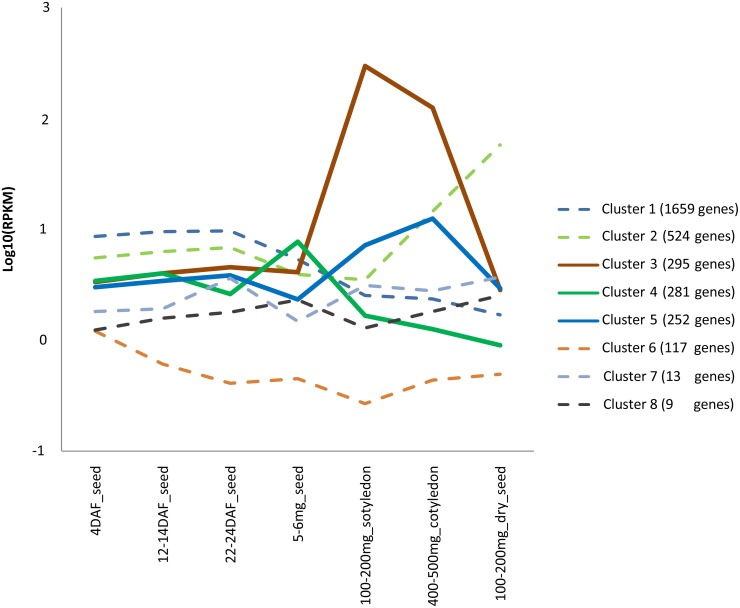
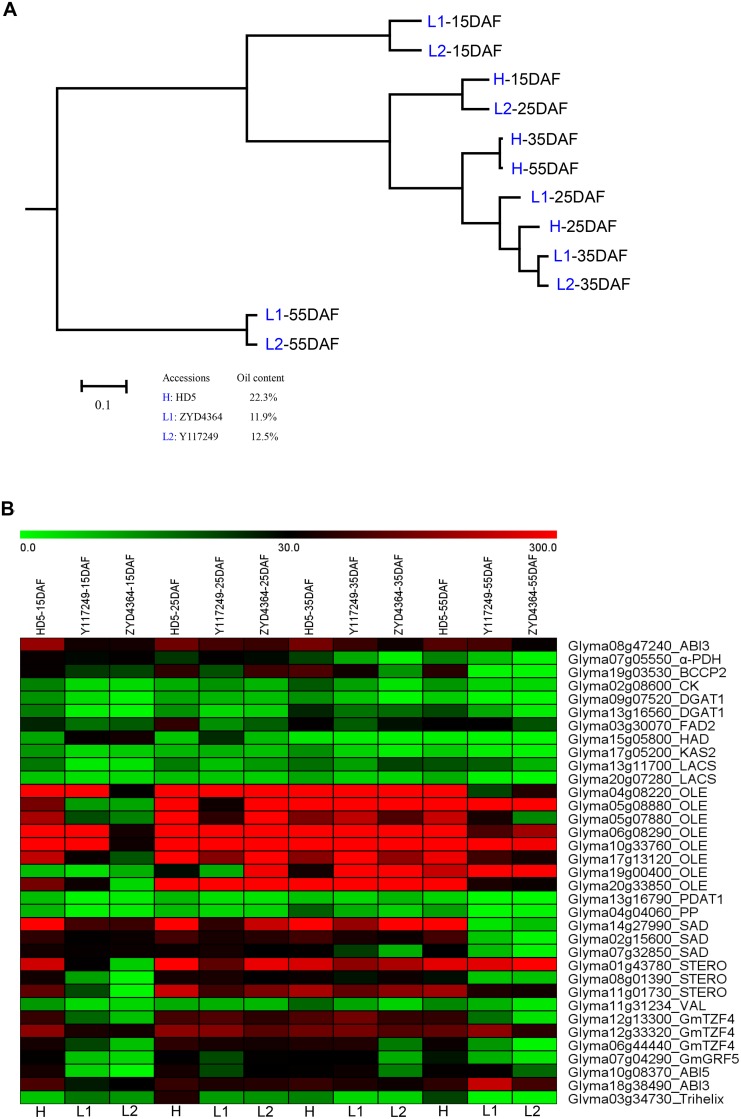
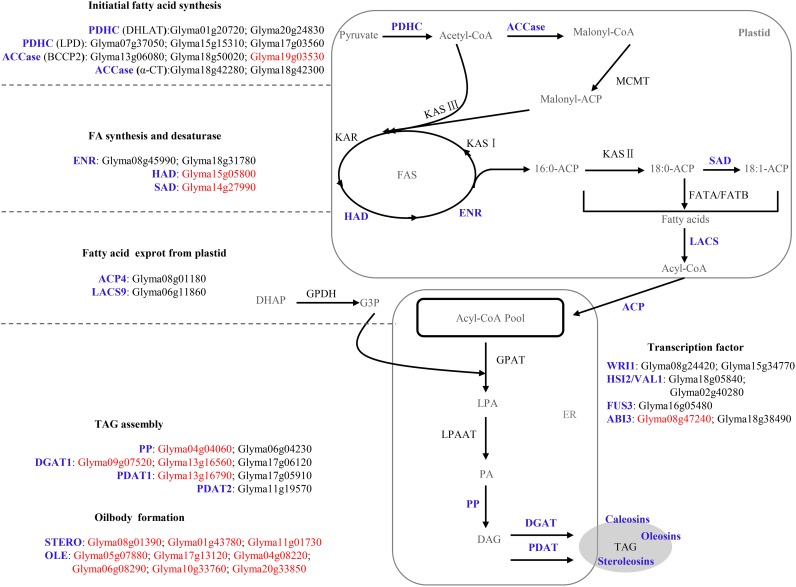
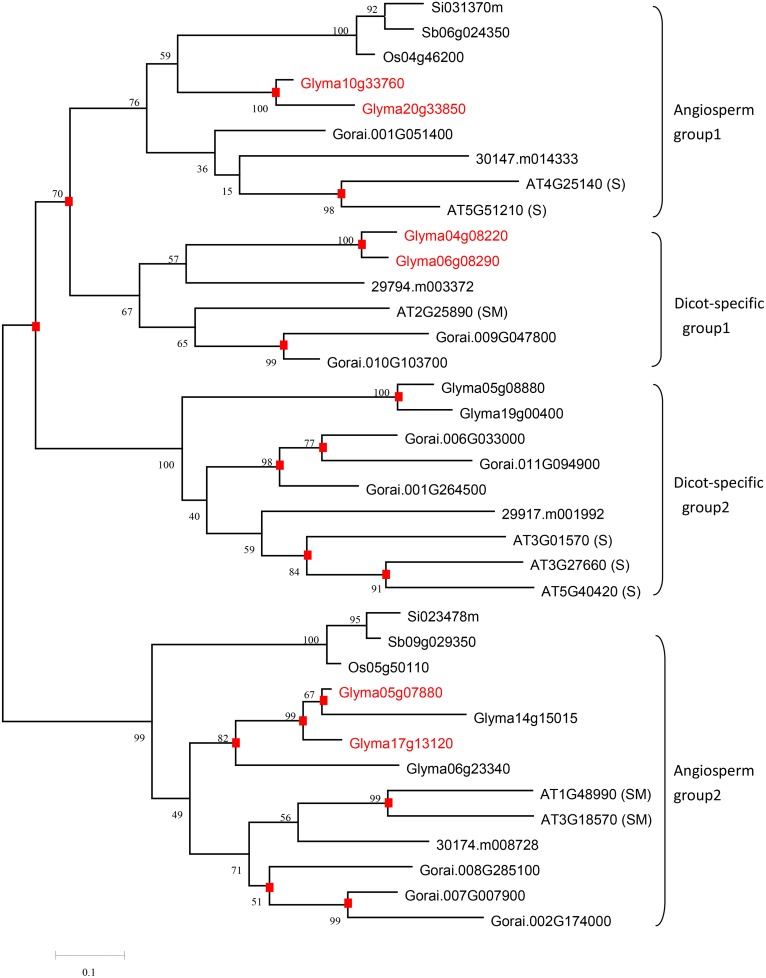
Seed oils provide a renewable source of food, biofuel and industrial raw materials that is important for humans. Although many genes and pathways for acyl-lipid metabolism have been identified, little is known about whether there is a specific mechanism for high-oil content in high-oil plants. Based on the distinct differences in seed oil content between four high-oil dicots (20~50%) and three low-oil grasses (<3%), comparative genome, transcriptome and differential expression analyses were used to investigate this mechanism. Among 4,051 dicot-specific soybean genes identified from 252,443 genes in the seven species, 54 genes were shown to directly participate in acyl-lipid metabolism, and 93 genes were found to be associated with acyl-lipid metabolism. Among the 93 dicot-specific genes, 42 and 27 genes, including CBM20-like SBDs and GPT2, participate in carbohydrate degradation and transport, respectively. 40 genes highly up-regulated during seed oil rapid accumulation period are mainly involved in initial fatty acid synthesis, triacylglyceride assembly and oil-body formation, for example, ACCase, PP, DGAT1, PDAT1, OLEs and STEROs, which were also found to be differentially expressed between high- and low-oil soybean accessions. Phylogenetic analysis revealed distinct differences of oleosin in patterns of gene duplication and loss between high-oil dicots and low-oil grasses. In addition, seed-specific GmGRF5, ABI5 and GmTZF4 were predicted to be candidate regulators in seed oil accumulation. This study facilitates future research on lipid biosynthesis and potential genetic improvement of seed oil content.
种子油为人类提供了一种重要的可再生食物、生物燃料和工业原料来源。尽管已经鉴定出许多参与酰基脂质代谢的基因和途径,但对于高油植物中高油含量是否存在特定机制却知之甚少。基于四种高油双子叶植物(20%~50%)和三种低油禾本科植物(<3%)种子油含量的显著差异,利用比较基因组学、转录组学和差异表达分析来研究这一机制。在从七个物种的252,443个基因中鉴定出的4051个双子叶植物特有的大豆基因中,有54个基因被证明直接参与酰基脂质代谢,93个基因被发现与酰基脂质代谢相关。在这93个双子叶植物特有的基因中,分别有42个和27个基因,包括类CBM20 SBD和GPT2,参与碳水化合物的降解和运输。在种子油快速积累期高度上调的40个基因主要参与脂肪酸的初始合成、三酰甘油组装和油体形成,例如ACCase、PP、DGAT1、PDAT1、OLEs和STEROs,这些基因在高油和低油大豆品种之间也存在差异表达。系统发育分析揭示了高油双子叶植物和低油禾本科植物在油质蛋白基因重复和丢失模式上的明显差异。此外,种子特异性的GmGRF5、ABI5和GmTZF4被预测为种子油积累的候选调节因子。本研究有助于未来对脂质生物合成以及种子油含量潜在遗传改良的研究。