London School of Hygiene and Tropical Medicine, London, United Kingdom.
JMIR Mhealth Uhealth. 2016 May 9;4(2):e30. doi: 10.2196/mhealth.4746.
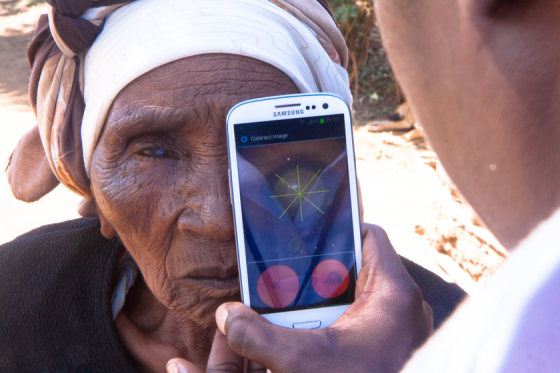
The Portable Eye Examination Kit (Peek) is a mobile phone-based ophthalmic testing system that has been developed to perform comprehensive eye examinations. Shortages in ophthalmic personnel, the high cost, and the difficulty in transporting equipment have made it challenging to offer services, particularly in rural areas. Peek offers a solution for overcoming barriers of limited access to traditional ophthalmic testing methods and has been pilot tested on adults in Nakuru, Kenya, and compared with traditional eye examination tools.
This qualitative study evaluated the acceptability and usability of Peek in addition to perceptions regarding its adoption and nationwide deployment.
Semistructured interviews were conducted with patients and analyzed using a framework approach. This included analysis of interviews from 20 patients, 8 health care providers (HCPs), and 4 key decision makers in ophthalmic health care provision in Kenya. The participants were purposefully sampled. The coding structure involved predefined themes for assessing the following: (1) the context, that is, environment, user, task, and technology; (2) patient acceptability, that is, patients' perceived benefits, patient preference, and patient satisfaction; (3) usability, that is, efficiency, effectiveness, learnability, and flexibility and operability of Peek; and (4) the benefits of Peek in strengthening eye care provision, that is, capabilities enhancer, opportunity creator, social enabler, and knowledge generator. Emerging themes relating to the objectives were explored from the data using thematic analysis.
Patients found Peek to be acceptable because of its benefits in overcoming the barriers to accessing ophthalmic services. Most thought it to be fast, convenient, and able to reach a large population. All patients expressed being satisfied with Peek. The HCPs perceived it to satisfy the criteria for usability and found Peek to be acceptable based on the technology acceptance model. Peek was also found to have features required for strengthening ophthalmic delivery by aiding detection and diagnosis, provision of decision support, improving communication between provider and patient and among providers, linking patients to services, monitoring, and assisting in education and training. Some of the deployment-related issues included the need for government and community involvement, communication and awareness creation, data protection, infrastructure development including capacity creation, and training and maintenance support.
According to all parties interviewed, Peek is an acceptable solution, as it provides a beneficial service, supports patients' needs, and fulfills HCPs' roles, overall contributing to strengthening eye health.
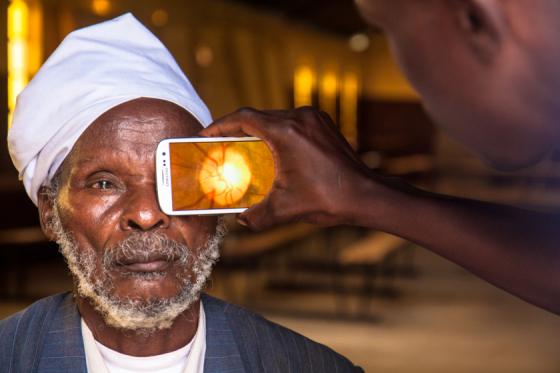
便携式眼部检查套件(Peek)是一种基于手机的眼科测试系统,旨在进行全面的眼部检查。由于眼科人员短缺、成本高以及设备运输困难,因此在提供服务方面面临挑战,特别是在农村地区。Peek 提供了一种克服传统眼科测试方法获取障碍的解决方案,并且已经在肯尼亚纳库鲁的成年人中进行了试点测试,并与传统的眼部检查工具进行了比较。
本定性研究评估了 Peek 的可接受性和可用性,以及对其采用和全国部署的看法。
对肯尼亚的 20 名患者、8 名医疗保健提供者(HCP)和 4 名眼科保健提供者中的关键决策者进行了半结构化访谈,并使用框架方法进行了分析。参与者是有目的抽样的。编码结构包括评估以下内容的预设主题:(1)背景,即环境、用户、任务和技术;(2)患者可接受性,即患者感知的益处、患者偏好和患者满意度;(3)可用性,即效率、有效性、可学习性以及 Peek 的灵活性和可操作性;(4)Peek 在加强眼科保健服务方面的益处,即增强能力、创造机会、促进社会和产生知识。使用主题分析从数据中探讨与目标相关的新兴主题。
患者认为 Peek 是可以接受的,因为它有助于克服获取眼科服务的障碍。大多数人认为它快速、方便且能够覆盖大量人群。所有患者都对 Peek 表示满意。HCP 认为它符合可用性标准,并根据技术接受模型认为 Peek 是可以接受的。Peek 还具有通过辅助检测和诊断、提供决策支持、改善提供者与患者之间以及提供者之间的沟通、将患者与服务联系起来、监测以及协助教育和培训来加强眼科服务的功能。一些与部署相关的问题包括需要政府和社区的参与、沟通和意识的创造、数据保护、基础设施的发展,包括能力的创造、培训和维护支持。
根据所有接受采访的人员,Peek 是一个可以接受的解决方案,因为它提供了有益的服务,满足了患者的需求,并满足了 HCP 的角色,总体上有助于加强眼健康。