
改善印度农村基层医疗环境中安全堕胎服务的可及性:一项服务提供干预措施的经验
Improving access to safe abortion in a rural primary care setting in India: experience of a service delivery intervention.
作者信息
Iyengar Kirti, Iyengar Sharad D
机构信息
Action Research & Training for Health, Satyam, Ramgiri, Badgaon, Udaipur, Rajasthan, 313011, India.
Department of Women's & Children's Health, Karolinska Institutet, Solna, Stockholm, 17176, Sweden.
出版信息
Reprod Health. 2016 May 10;13(1):54. doi: 10.1186/s12978-016-0157-5.
BACKGROUND
Abortion services were legalized in India in 1972, however, the access to safe abortion services is restricted, especially in rural areas. In 2002, medical abortion using mifepristone- misoprostol was approved for termination of pregnancy, however, its use has been limited in primary care settings.
METHODS
This paper describes a service delivery intervention for women attending with unwanted pregnancies over 14 years in four primary care clinics of Rajasthan, India. Prospective data was collected to document the profile of women, method of abortion provided, contraceptive use and follow-up rates after abortion. This analysis includes data collected during August 2001-March 2015.
RESULTS
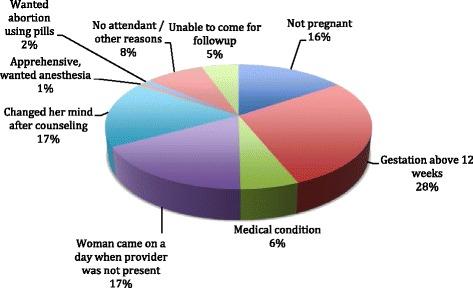
A total of 9076 women with unwanted pregnancies sought care from these clinics, and abortion services were provided to 70 % of these. Most abortion seekers were married, had one or more children. After 2003, the use of medical abortion increased over the years and ultimately accounted for 99 % of all abortions in 2014. About half the women returned for a follow-up visit, while the proportion using contraceptives declined from 74 % to 52 % from 2001 to 2014.
CONCLUSIONS
The results of our intervention indicate that integrating medical abortion into primary care settings is feasible and has a potential to improve access to safe abortion services in rural areas. Our experience can be used to guide program managers and service providers about reducing barriers and making abortion services more accessible to women.
背景
1972年印度堕胎服务合法化,但安全堕胎服务的可及性受到限制,尤其是在农村地区。2002年,米非司酮-米索前列醇用于药物流产被批准用于终止妊娠,但其在初级保健机构中的使用有限。
方法
本文描述了在印度拉贾斯坦邦的四家初级保健诊所对意外怀孕女性进行的为期14年的服务提供干预措施。收集前瞻性数据以记录女性的概况、所提供的堕胎方法、避孕措施的使用情况以及堕胎后的随访率。该分析包括2001年8月至2015年3月期间收集的数据。
结果
共有9076名意外怀孕女性到这些诊所寻求治疗,其中70%的女性获得了堕胎服务。大多数寻求堕胎者已婚,育有一个或多个孩子。2003年后,药物流产的使用逐年增加,最终在2014年占所有堕胎的99%。约一半的女性返回进行随访,而使用避孕药具的比例从2001年的74%降至2014年的52%。
结论
我们干预措施的结果表明,将药物流产纳入初级保健机构是可行的,并且有可能改善农村地区安全堕胎服务的可及性。我们的经验可用于指导项目管理人员和服务提供者减少障碍,使女性更容易获得堕胎服务。




 Zotero 插件