Mouti Mai Abdel, Dee Christopher, Coupland Sarah E, Hurlstone Adam F L
Faculty of Life Sciences, The University of Manchester, Manchester, United Kingdom.
Department of Molecular and Clinical Cancer Medicine, Institute of Translational Medicine, University of Liverpool, Liverpool, United Kingdom.
Oncotarget. 2016 Jun 28;7(26):39654-39670. doi: 10.18632/oncotarget.9207.
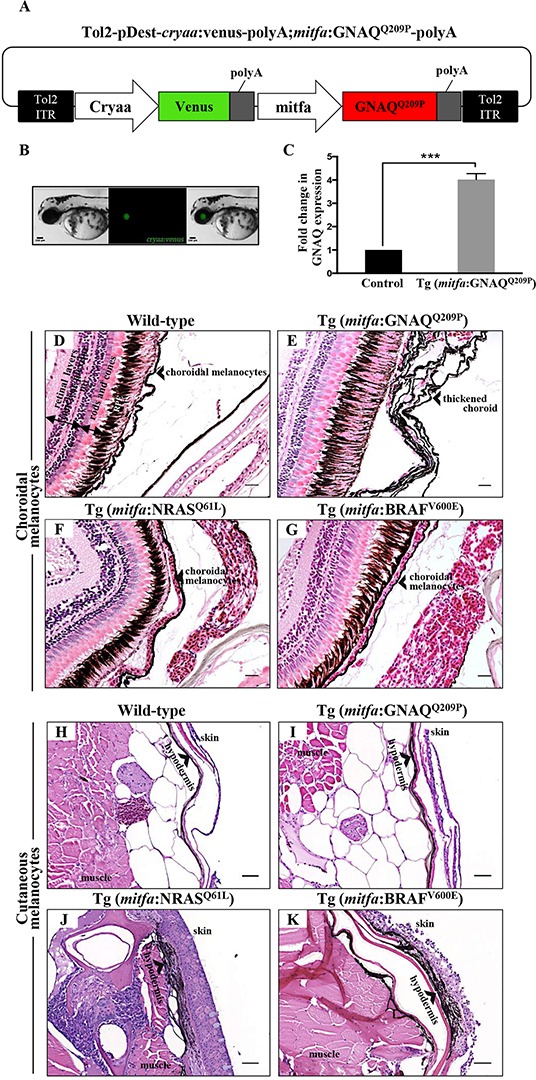
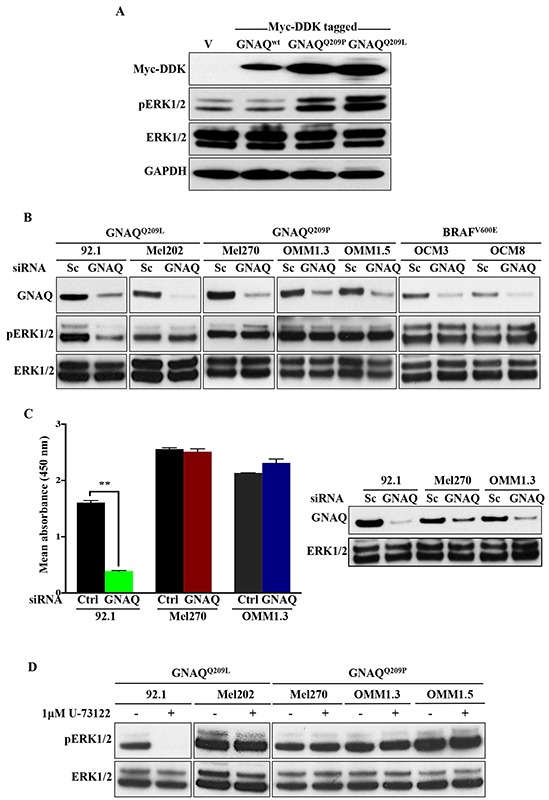
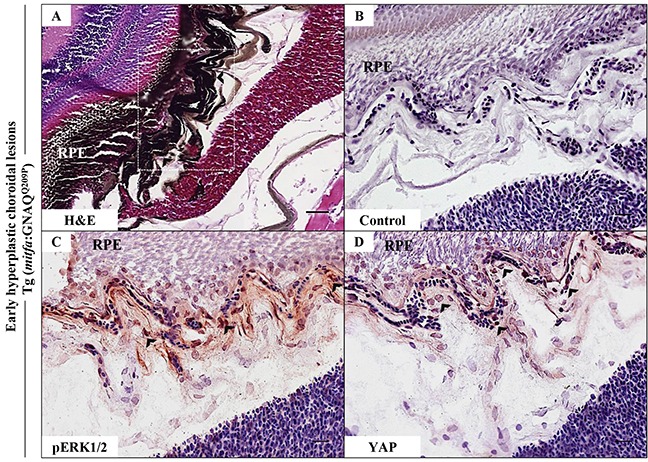
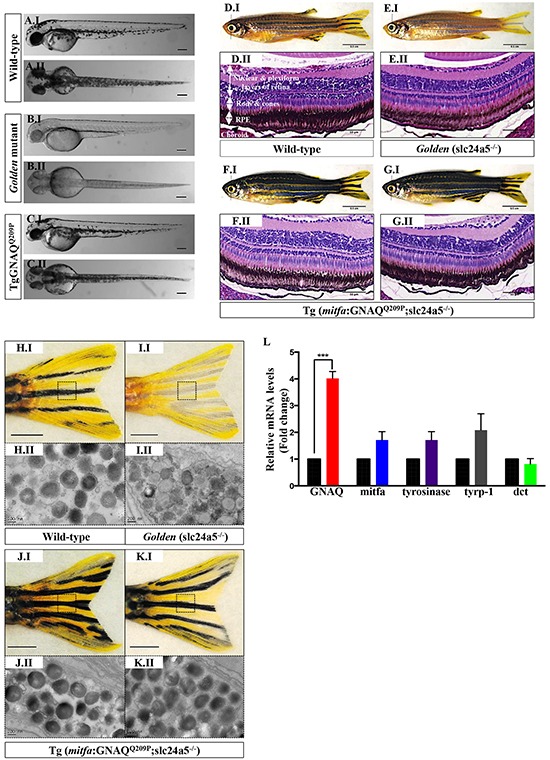
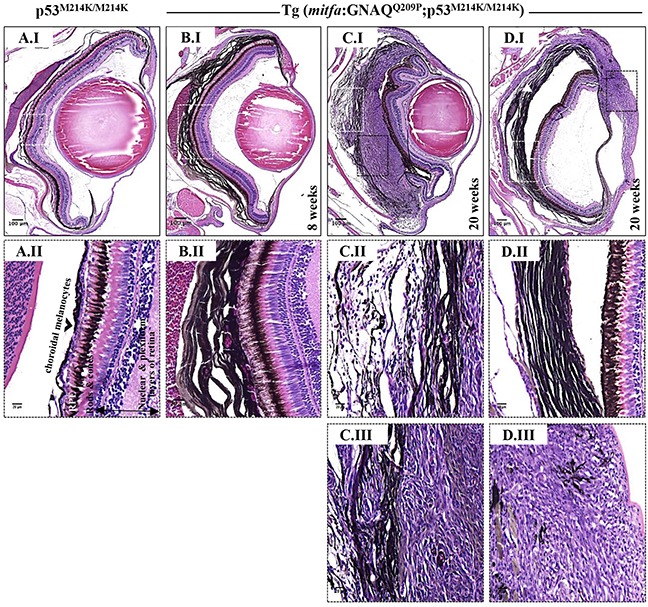
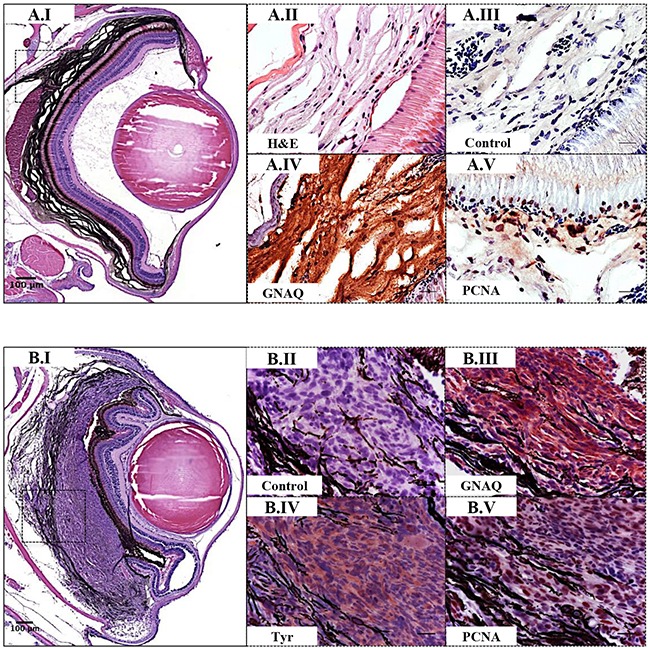
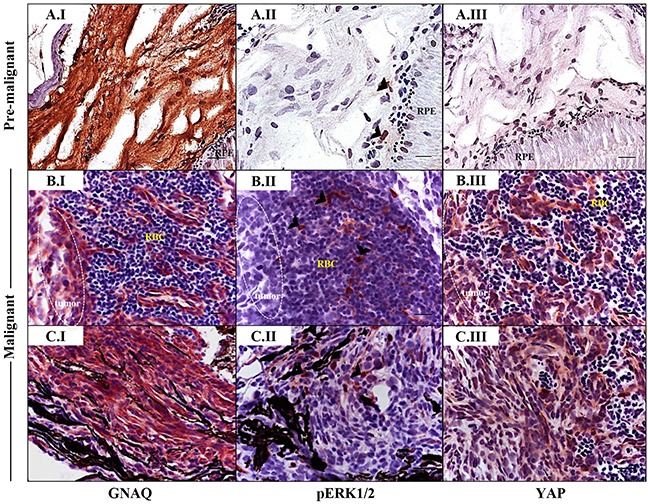
Mutations affecting Gαq proteins are pervasive in uveal melanoma (UM), suggesting they 'drive' UM pathogenesis. The ERK1/2-MAPK pathway is critical for cutaneous melanoma development and consequently an important therapeutic target. Defining the contribution of ERK1/2-MAPK signalling to UM development has been hampered by the lack of an informative animal model that spontaneously develops UM. Towards this end, we engineered transgenic zebrafish to express oncogenic GNAQQ209P in the melanocyte lineage. This resulted in hyperplasia of uveal melanocytes, but with no evidence of malignant progression, nor perturbation of skin melanocytes. Combining expression of oncogenic GNAQQ209P with p53 inactivation resulted in earlier onset and even more extensive hyperplasia of uveal melanocytes that progressed to UM. Immunohistochemistry revealed only weak immunoreactivity to phosphorylated (p)ERK1/2 in established uveal tumours-in contrast to strong immunoreactivity in oncogenic RAS-driven skin lesions-but ubiquitous positive staining for nuclear Yes-associated protein (YAP). Moreover, no changes were observed in pERK1/2 levels upon transient knockdown of GNAQ or phospholipase C-beta (PLC-β) inhibition in the majority of human UM cell lines we tested harbouring GNAQ mutations. In summary, our findings demonstrate a weak correlation between oncogenic GNAQQ209P mutation and sustained ERK1/2-MAPK activation, implying that ERK1/2 signalling is unlikely to be instrumental in the maintenance of GNAQQ209P-driven UMs.
影响Gαq蛋白的突变在葡萄膜黑色素瘤(UM)中普遍存在,提示它们“驱动”了UM的发病机制。ERK1/2-MAPK通路对皮肤黑色素瘤的发展至关重要,因此是一个重要的治疗靶点。由于缺乏能自发发生UM的信息丰富的动物模型,确定ERK1/2-MAPK信号对UM发展的作用受到了阻碍。为此,我们构建了转基因斑马鱼,使其在黑素细胞谱系中表达致癌性GNAQQ209P。这导致了葡萄膜黑素细胞增生,但没有恶性进展的证据,也没有皮肤黑素细胞的紊乱。将致癌性GNAQQ209P的表达与p53失活相结合,导致葡萄膜黑素细胞更早发病且增生更为广泛,并进展为UM。免疫组织化学显示,在已形成的葡萄膜肿瘤中,磷酸化(p)ERK1/2的免疫反应性较弱——与致癌性RAS驱动的皮肤病变中的强免疫反应性形成对比——但核Yes相关蛋白(YAP)普遍呈阳性染色。此外,在我们测试的大多数携带GNAQ突变的人UM细胞系中,短暂敲低GNAQ或抑制磷脂酶C-β(PLC-β)后,pERK1/2水平没有变化。总之,我们的研究结果表明致癌性GNAQQ209P突变与持续的ERK1/2-MAPK激活之间存在弱相关性,这意味着ERK1/2信号不太可能在维持GNAQQ209P驱动的UM中起作用。