Human Oncology and Pathogenesis Program, Memorial Sloan Kettering Cancer Center, 1275 York Avenue, New York, NY 10065, USA; Weill Cornell Graduate School of Medical Sciences, Cornell University, 1300 York Avenue, New York, NY 10065, USA.
Human Oncology and Pathogenesis Program, Memorial Sloan Kettering Cancer Center, 1275 York Avenue, New York, NY 10065, USA; Gerstner Sloan Kettering Graduate School of Biomedical Sciences, Memorial Sloan Kettering Cancer Center, 1275 York Avenue, New York, NY 10065, USA.
Cell Rep. 2018 Feb 27;22(9):2455-2468. doi: 10.1016/j.celrep.2018.01.081.
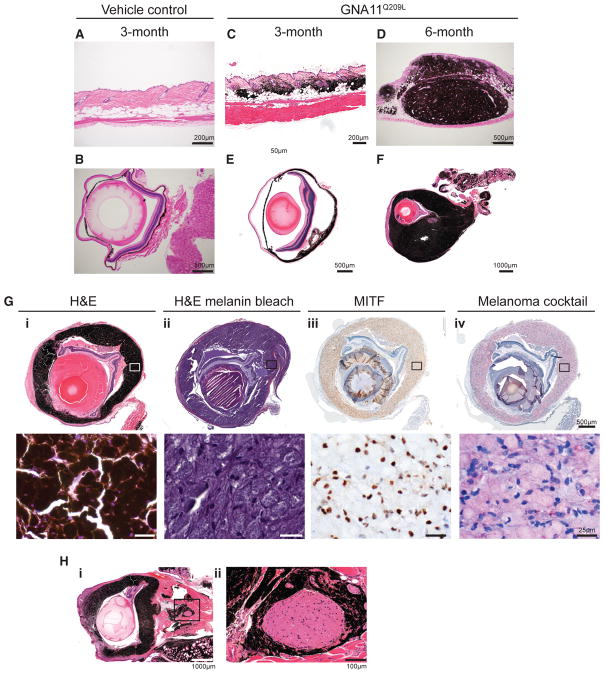
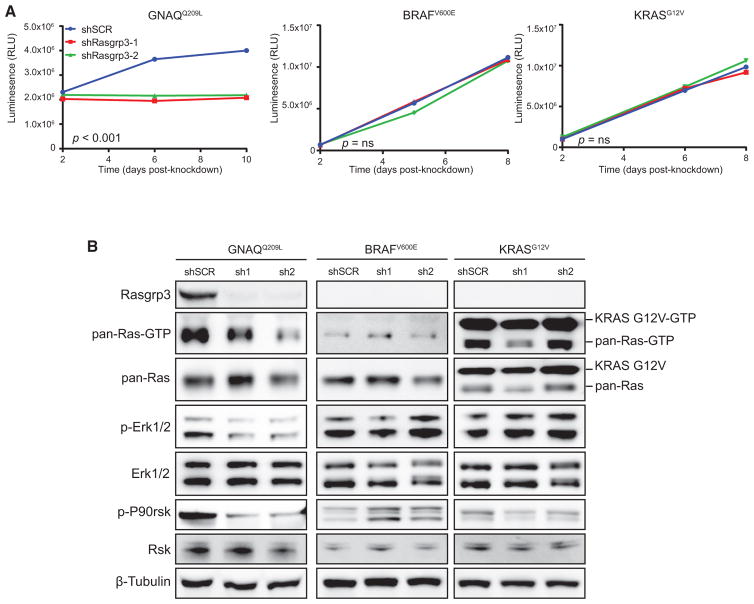
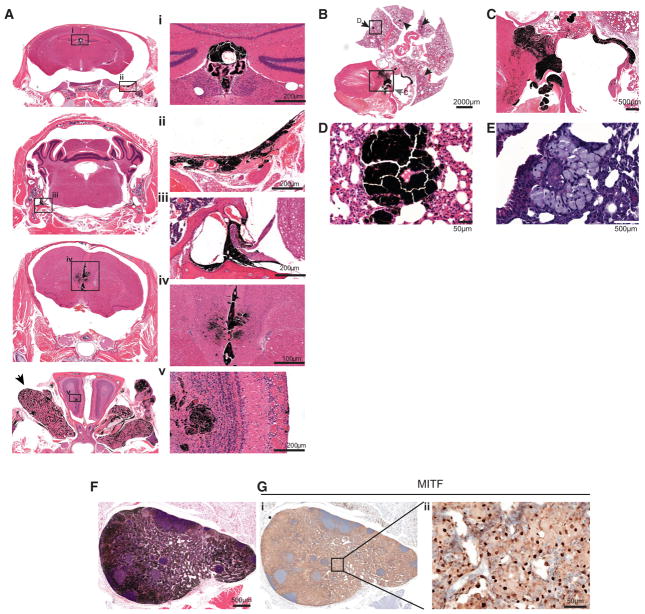
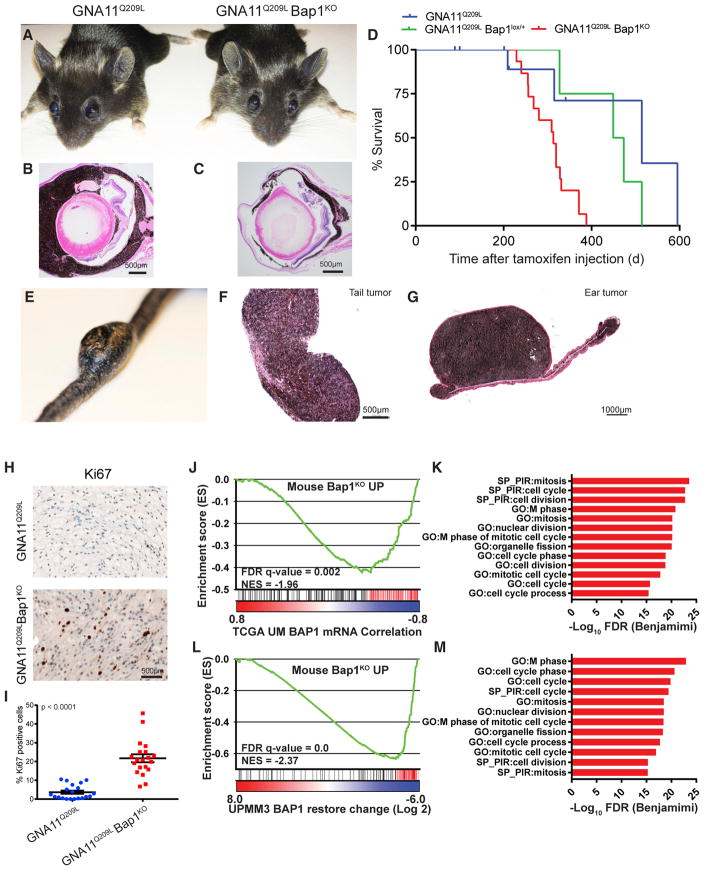
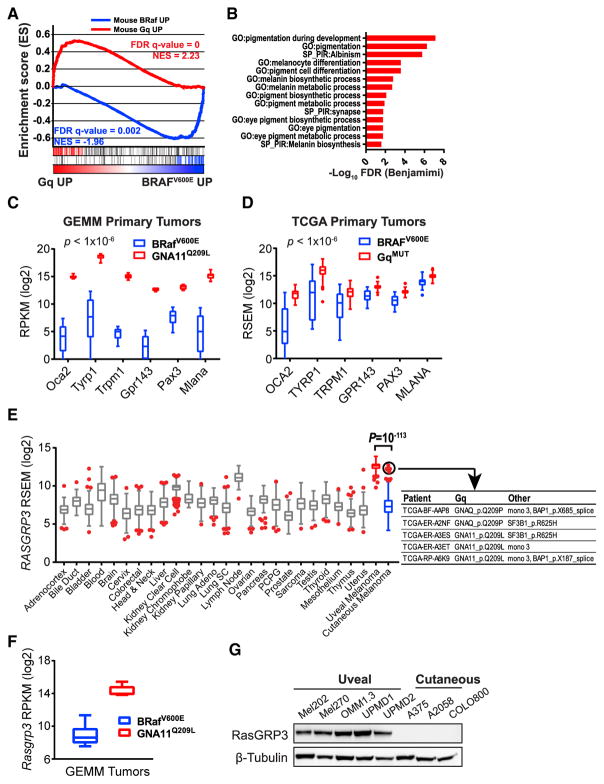
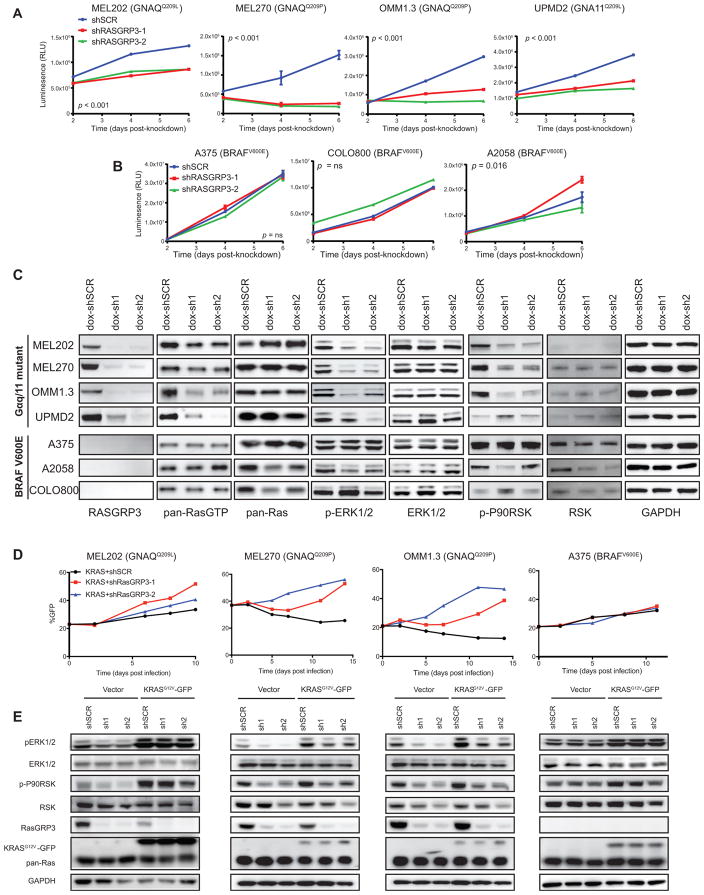
Uveal melanoma (UM) is characterized by mutually exclusive activating mutations in GNAQ, GNA11, CYSLTR2, and PLCB4, four genes in a linear pathway to activation of PLCβ in almost all tumors and loss of BAP1 in the aggressive subset. We generated mice with melanocyte-specific expression of GNA11 with and without homozygous Bap1 loss. The GNA11 mice recapitulated human Gq-associated melanomas, and they developed pigmented neoplastic lesions from melanocytes of the skin and non-cutaneous organs, including the eye and leptomeninges, as well as at atypical sites, including the lymph nodes and lungs. The addition of Bap1 loss increased tumor proliferation and cutaneous melanoma size. Integrative transcriptome analysis of human and murine melanomas identified RasGRP3 to be specifically expressed in GNAQ/GNA11-driven melanomas. In human UM cell lines and murine models, RasGRP3 is specifically required for GNAQ/GNA11-driven Ras activation and tumorigenesis. This implicates RasGRP3 as a critical node and a potential target in UM.
葡萄膜黑色素瘤(UM)的特征是 GNAQ、GNA11、CYSLTR2 和 PLCB4 这四个基因中的相互排斥的激活突变,这些基因在几乎所有肿瘤中激活 PLCβ,并在侵袭性亚组中丢失 BAP1。我们生成了具有黑素细胞特异性表达 GNA11 且具有或不具有纯合性 Bap1 缺失的小鼠。GNA11 小鼠重现了人类与 Gq 相关的黑色素瘤,它们从皮肤和非皮肤器官(包括眼睛和软脑膜)以及非典型部位(包括淋巴结和肺部)的黑素细胞中发展出色素性肿瘤病变,以及皮肤黑色素瘤的大小。Bap1 缺失的增加增加了肿瘤的增殖和皮肤黑色素瘤的大小。人类和鼠黑色素瘤的综合转录组分析确定 RasGRP3 在 GNAQ/GNA11 驱动的黑色素瘤中特异性表达。在人 UM 细胞系和鼠模型中,RasGRP3 特异性地需要 GNAQ/GNA11 驱动的 Ras 激活和肿瘤发生。这表明 RasGRP3 是 UM 中的一个关键节点和潜在靶标。