Esguerra Mauricio, Siretskiy Alexey, Bello Xabier, Sallander Jessica, Gutiérrez-de-Terán Hugo
Department of Cell and Molecular Biology, Uppsala University, Biomedical Center, Box 596, SE-751 24, Uppsala, Sweden.
Fundación Pública Galega de Medicina Xenómica, Hospital Clínico Universitario de Santiago, Santiago de Compostela, 15706, Spain.
Nucleic Acids Res. 2016 Jul 8;44(W1):W455-62. doi: 10.1093/nar/gkw403. Epub 2016 May 10.
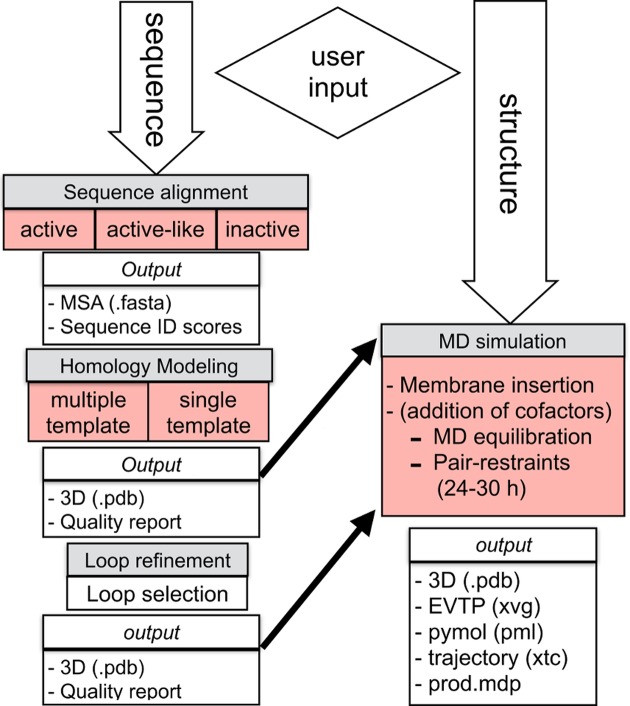
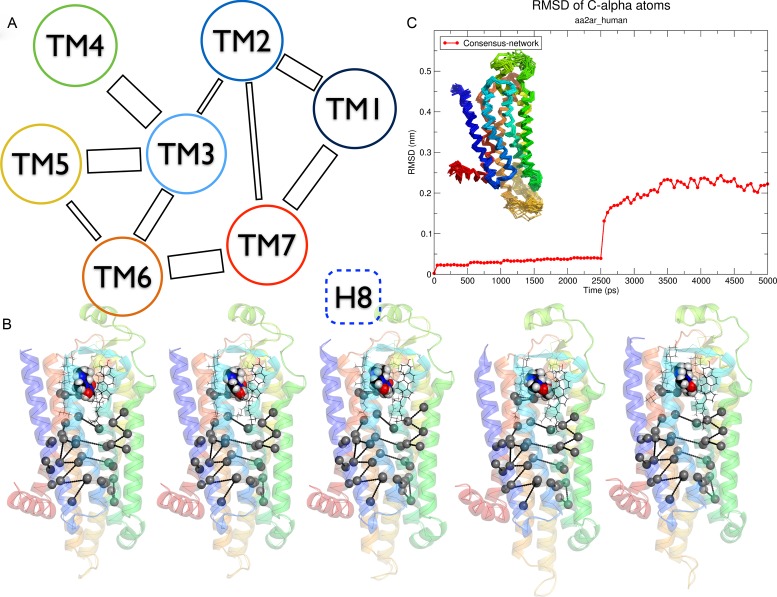
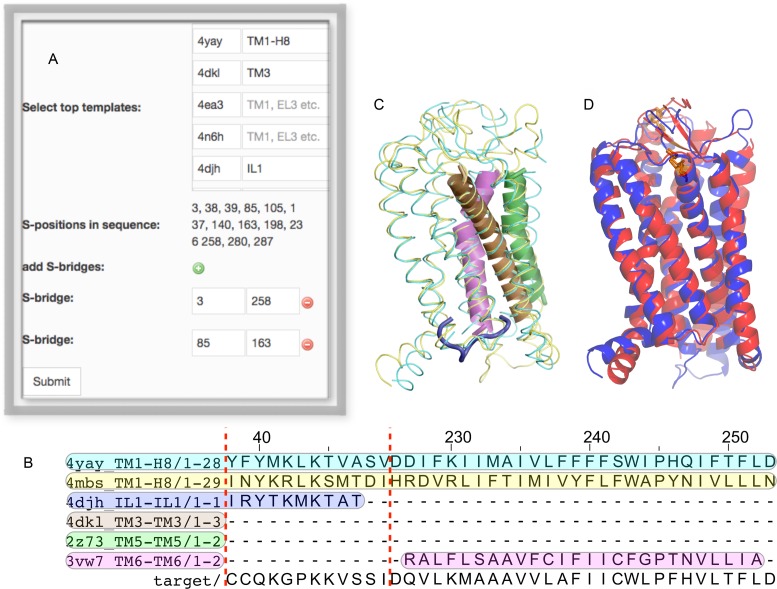
GPCR-ModSim (http://open.gpcr-modsim.org) is a centralized and easy to use service dedicated to the structural modeling of G-protein Coupled Receptors (GPCRs). 3D molecular models can be generated from amino acid sequence by homology-modeling techniques, considering different receptor conformations. GPCR-ModSim includes a membrane insertion and molecular dynamics (MD) equilibration protocol, which can be used to refine the generated model or any GPCR structure uploaded to the server, including if desired non-protein elements such as orthosteric or allosteric ligands, structural waters or ions. We herein revise the main characteristics of GPCR-ModSim and present new functionalities. The templates used for homology modeling have been updated considering the latest structural data, with separate profile structural alignments built for inactive, partially-active and active groups of templates. We have also added the possibility to perform multiple-template homology modeling in a unique and flexible way. Finally, our new MD protocol considers a series of distance restraints derived from a recently identified conserved network of helical contacts, allowing for a smoother refinement of the generated models which is particularly advised when there is low homology to the available templates. GPCR- ModSim has been tested on the GPCR Dock 2013 competition with satisfactory results.