Komuta Yukari, Ishii Toshiyuki, Kaneda Makoto, Ueda Yasuji, Miyamoto Kiyoko, Toyoda Masashi, Umezawa Akihiro, Seko Yuko
Visual Functions Section, Department of Rehabilitation for Sensory Functions, Research Institute, National Rehabilitation Center for Persons with Disabilities, Tokorozawa, Saitama 359-8555, Japan.
Department of Physiology, Nippon Medical School, Sendagi, Bunkyo, Tokyo 113-8602, Japan.
Biol Open. 2016 Jun 15;5(6):709-19. doi: 10.1242/bio.016477.
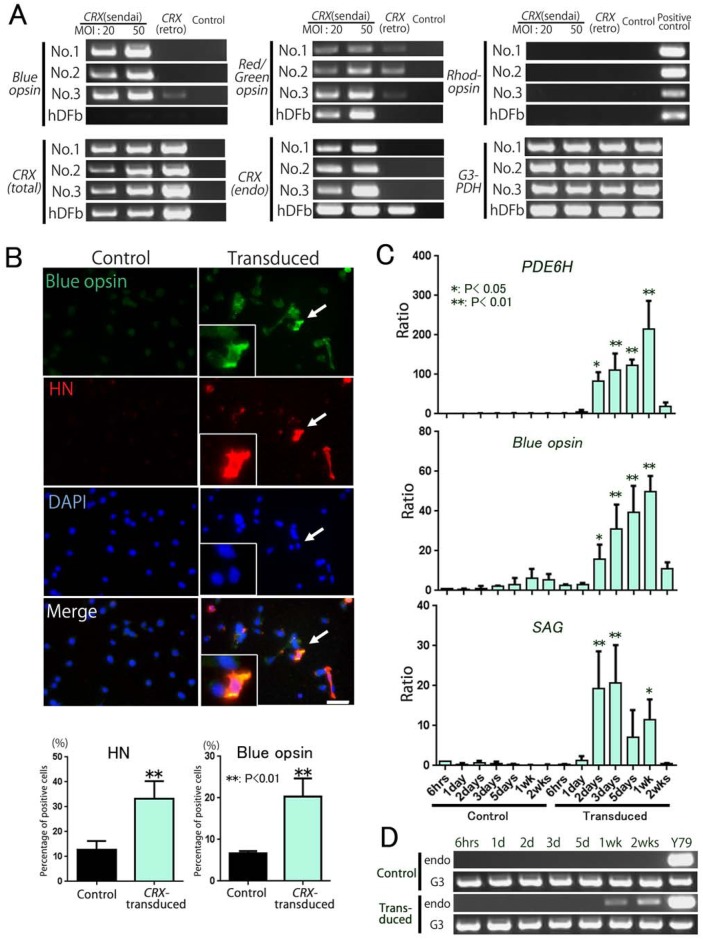
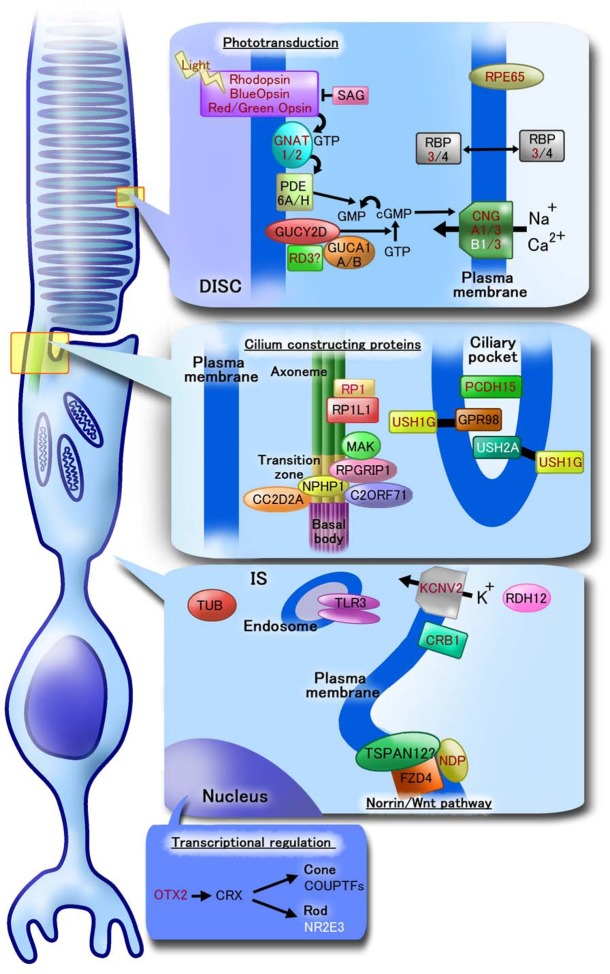
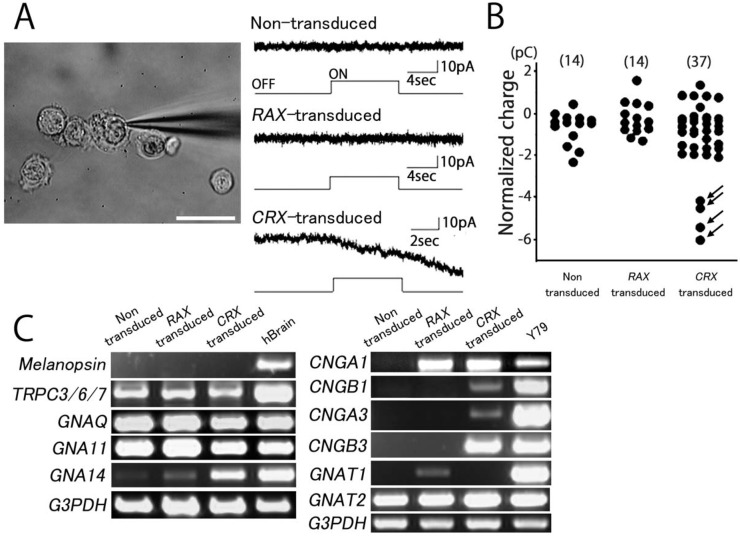
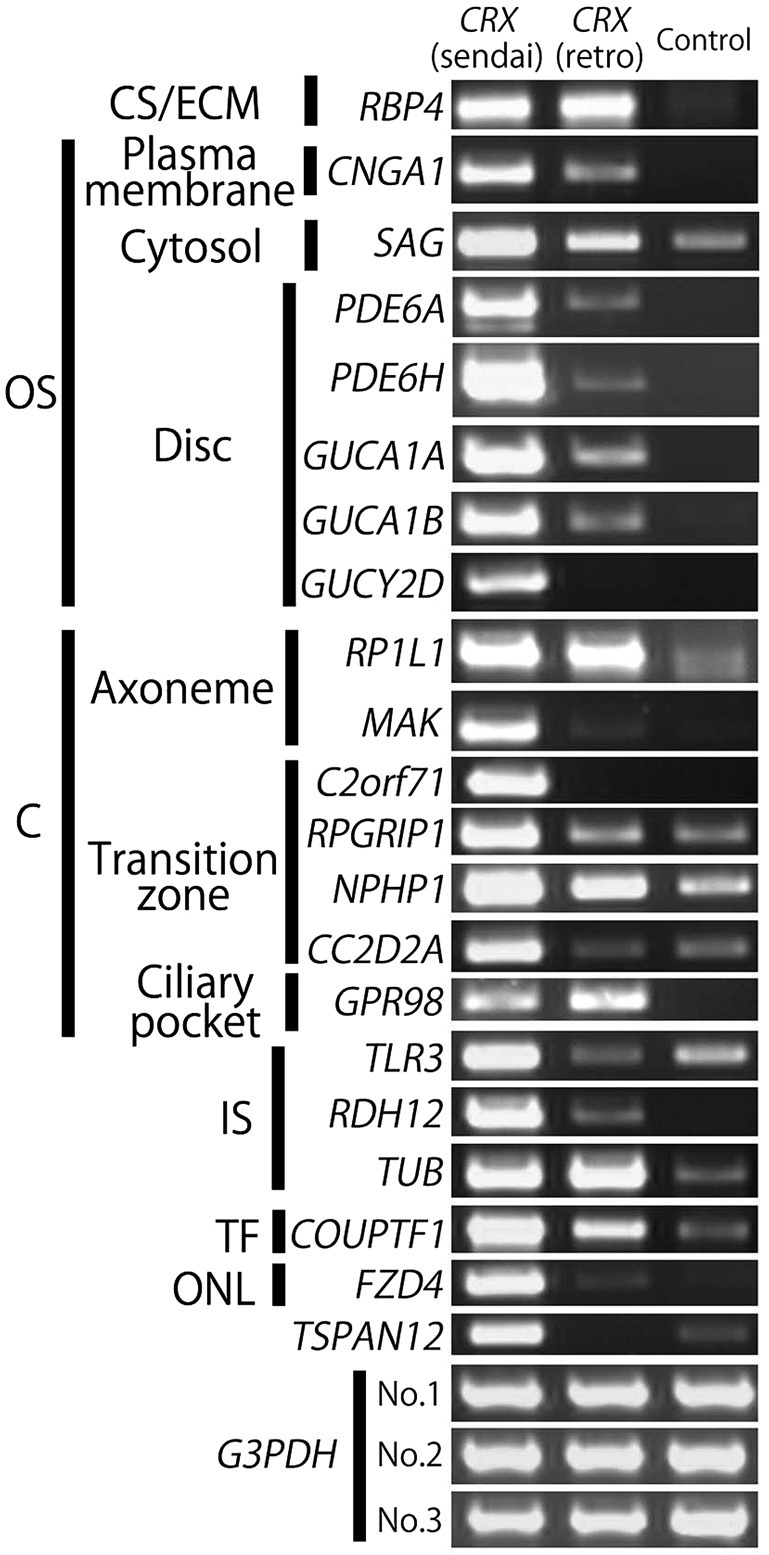
Direct reprogramming is a promising, simple and low-cost approach to generate target cells from somatic cells without using induced pluripotent stem cells. Recently, peripheral blood mononuclear cells (PBMCs) have attracted considerable attention as a somatic cell source for reprogramming. As a cell source, PBMCs have an advantage over dermal fibroblasts with respect to the ease of collecting tissues. Based on our studies involving generation of photosensitive photoreceptor cells from human iris cells and human dermal fibroblasts by transduction of photoreceptor-related transcription factors via retrovirus vectors, we transduced these transcription factors into PBMCs via Sendai virus vectors. We found that retinal disease-related genes were efficiently detected in CRX-transduced cells, most of which are crucial to photoreceptor functions. In functional studies, a light-induced inward current was detected in some CRX-transduced cells. Moreover, by modification of the culture conditions including additional transduction of RAX1 and NEUROD1, we found a greater variety of retinal disease-related genes than that observed in CRX-transduced PBMCs. These data suggest that CRX acts as a master control gene for reprogramming PBMCs into photoreceptor-like cells and that our induced photoreceptor-like cells might contribute to individualized drug screening and disease modeling of inherited retinal degeneration.
直接重编程是一种有前景的、简单且低成本的方法,可在不使用诱导多能干细胞的情况下从体细胞生成靶细胞。最近,外周血单个核细胞(PBMCs)作为重编程的体细胞来源受到了广泛关注。作为一种细胞来源,PBMCs在组织采集的便利性方面优于真皮成纤维细胞。基于我们通过逆转录病毒载体转导光感受器相关转录因子,从人虹膜细胞和人真皮成纤维细胞生成光敏光感受器细胞的研究,我们通过仙台病毒载体将这些转录因子转导到PBMCs中。我们发现,在转导了CRX的细胞中能有效检测到与视网膜疾病相关的基因,其中大多数对光感受器功能至关重要。在功能研究中,在一些转导了CRX的细胞中检测到了光诱导内向电流。此外,通过改变培养条件,包括额外转导RAX1和NEUROD1,我们发现与视网膜疾病相关的基因种类比在转导了CRX的PBMCs中观察到的更多。这些数据表明,CRX作为将PBMCs重编程为类光感受器细胞的主控基因,并且我们诱导生成的类光感受器细胞可能有助于遗传性视网膜变性的个体化药物筛选和疾病建模。