Nduati Eunice W, Nkumama Irene N, Gambo Faith K, Muema Daniel M, Knight Miguel G, Hassan Amin S, Jahangir Margaret N, Etyang Timothy J, Berkley James A, Urban Britta C
Kenya Medical Research Institute/Wellcome Trust Research Programme, Centre for Geographic Medicine Research Coast, Kilifi, Kenya
Kenya Medical Research Institute/Wellcome Trust Research Programme, Centre for Geographic Medicine Research Coast, Kilifi, Kenya.
Clin Vaccine Immunol. 2016 Jul 5;23(7):576-85. doi: 10.1128/CVI.00149-16. Print 2016 Jul.
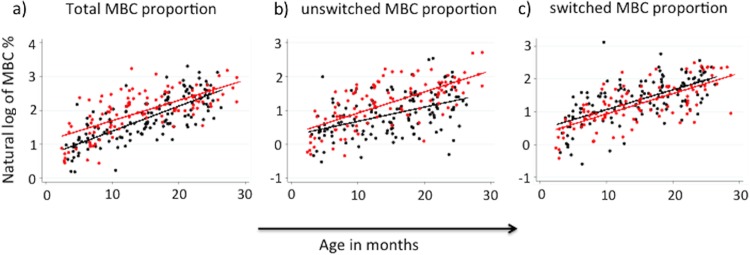
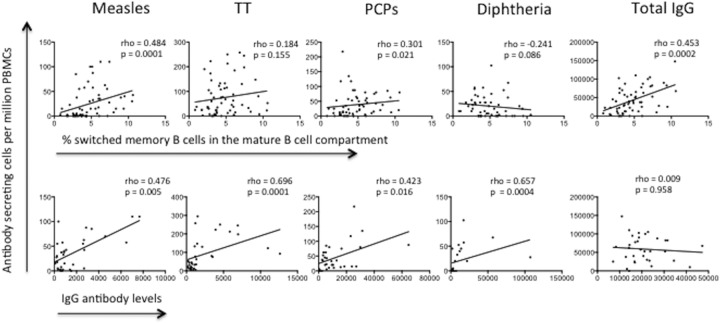
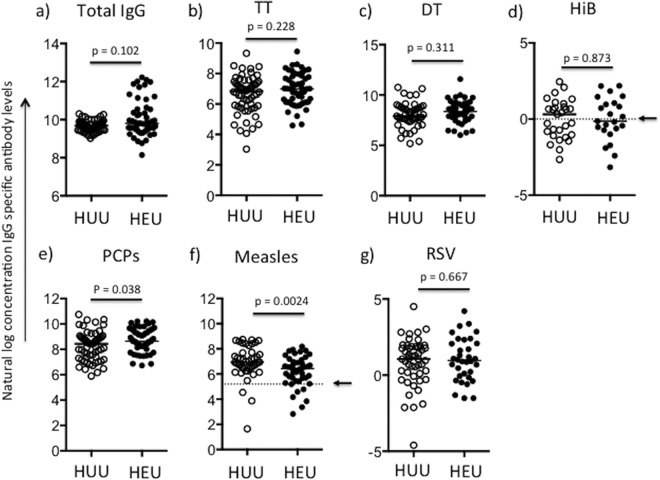
Improved HIV care has led to an increase in the number of HIV-exposed uninfected (HEU) infants born to HIV-infected women. Although they are uninfected, these infants experience increased morbidity and mortality. One explanation may be that their developing immune system is altered by HIV exposure, predisposing them to increased postnatal infections. We explored the impact of HIV exposure on the B-cell compartment by determining the B-cell subset distribution, the frequency of common vaccine antigen-specific memory B cells (MBCs), and the levels of antibodies to the respective antigens in HEU and HIV-unexposed uninfected (HUU) infants born to uninfected mothers, using flow cytometry, a B-cell enzyme-linked immunosorbent spot assay, and an enzyme-linked immunosorbent assay, respectively, during the first 2 years of life. For the majority of the B-cell subsets, there were no differences between HEU and HUU infants. However, HIV exposure was associated with a lower proportion of B cells in general and MBCs in particular, largely due to a lower proportion of unswitched memory B cells. This reduction was maintained even after correcting for age. These phenotypic differences in the MBC compartment did not affect the ability of HEU infants to generate recall responses to previously encountered antigens or reduce the antigen-specific antibody levels at 18 months of life. Although HIV exposure was associated with a transient reduction in the proportion of MBCs, we found that the ability of HEU infants to mount robust MBC and serological responses was unaffected.
改善后的艾滋病护理使得感染艾滋病病毒的女性所生育的未感染艾滋病病毒(HEU)婴儿数量有所增加。尽管这些婴儿未被感染,但他们的发病率和死亡率却有所上升。一种解释可能是,他们正在发育的免疫系统因接触艾滋病病毒而发生改变,使他们更易在出生后受到感染。我们通过分别使用流式细胞术、B细胞酶联免疫斑点试验和酶联免疫吸附试验,测定了未感染母亲所生的HEU婴儿和未接触艾滋病病毒的未感染(HUU)婴儿在出生后头两年内的B细胞亚群分布、常见疫苗抗原特异性记忆B细胞(MBC)的频率以及针对相应抗原的抗体水平,以此来探究接触艾滋病病毒对B细胞区室的影响。对于大多数B细胞亚群而言,HEU婴儿和HUU婴儿之间并无差异。然而,接触艾滋病病毒总体上与较低比例的B细胞相关,尤其是MBC,这主要是由于未转换记忆B细胞的比例较低。即便校正年龄后,这种降低仍持续存在。MBC区室的这些表型差异并未影响HEU婴儿对先前接触过的抗原产生回忆反应的能力,也未降低其18个月大时的抗原特异性抗体水平。尽管接触艾滋病病毒与MBC比例的短暂降低有关,但我们发现HEU婴儿产生强大的MBC和血清学反应的能力并未受到影响。