• 文献检索
  • 文档翻译
  • 深度研究
  • 学术资讯
  • Suppr Zotero 插件Zotero 插件
  • 邀请有礼
  • 套餐&价格
  • 历史记录
应用&插件
Suppr Zotero 插件Zotero 插件浏览器插件Mac 客户端Windows 客户端微信小程序
定价
高级版会员购买积分包购买API积分包
服务
文献检索文档翻译深度研究API 文档MCP 服务
关于我们
关于 Suppr公司介绍联系我们用户协议隐私条款
关注我们

Suppr 超能文献

核心技术专利:CN118964589B侵权必究
粤ICP备2023148730 号-1Suppr @ 2026

文献检索

告别复杂PubMed语法,用中文像聊天一样搜索,搜遍4000万医学文献。AI智能推荐,让科研检索更轻松。

立即免费搜索

文件翻译

保留排版,准确专业,支持PDF/Word/PPT等文件格式,支持 12+语言互译。

免费翻译文档

深度研究

AI帮你快速写综述,25分钟生成高质量综述,智能提取关键信息,辅助科研写作。

立即免费体验

利用智能手机传感器提高能量消耗估算。

Using Smartphone Sensors for Improving Energy Expenditure Estimation.

出版信息

IEEE J Transl Eng Health Med. 2015 Sep 18;3:2700212. doi: 10.1109/JTEHM.2015.2480082. eCollection 2015.

DOI:10.1109/JTEHM.2015.2480082
PMID:27170901
原文链接:https://pmc.ncbi.nlm.nih.gov/articles/PMC4848104/
Abstract

Energy expenditure (EE) estimation is an important factor in tracking personal activity and preventing chronic diseases, such as obesity and diabetes. Accurate and real-time EE estimation utilizing small wearable sensors is a difficult task, primarily because the most existing schemes work offline or use heuristics. In this paper, we focus on accurate EE estimation for tracking ambulatory activities (walking, standing, climbing upstairs, or downstairs) of a typical smartphone user. We used built-in smartphone sensors (accelerometer and barometer sensor), sampled at low frequency, to accurately estimate EE. Using a barometer sensor, in addition to an accelerometer sensor, greatly increases the accuracy of EE estimation. Using bagged regression trees, a machine learning technique, we developed a generic regression model for EE estimation that yields upto 96% correlation with actual EE. We compare our results against the state-of-the-art calorimetry equations and consumer electronics devices (Fitbit and Nike+ FuelBand). The newly developed EE estimation algorithm demonstrated superior accuracy compared with currently available methods. The results were calibrated against COSMED K4b2 calorimeter readings.

摘要

能量消耗(EE)估计是跟踪个人活动和预防肥胖症和糖尿病等慢性病的一个重要因素。利用小型可穿戴传感器进行准确和实时的 EE 估计是一项艰巨的任务,主要是因为大多数现有方案是离线工作或使用启发式方法。在本文中,我们专注于准确估计智能手机用户日常活动(步行、站立、爬楼上或下楼)的 EE。我们使用内置智能手机传感器(加速度计和气压计传感器)以低频率采样,以准确估计 EE。除了加速度计传感器外,使用气压计传感器可大大提高 EE 估计的准确性。我们使用袋装回归树,一种机器学习技术,为 EE 估计开发了一个通用的回归模型,其与实际 EE 的相关性高达 96%。我们将结果与最先进的量热法方程和消费类电子产品(Fitbit 和 Nike+ FuelBand)进行了比较。与当前可用的方法相比,新开发的 EE 估计算法具有更高的准确性。结果经过 COSMED K4b2 量热计读数校准。
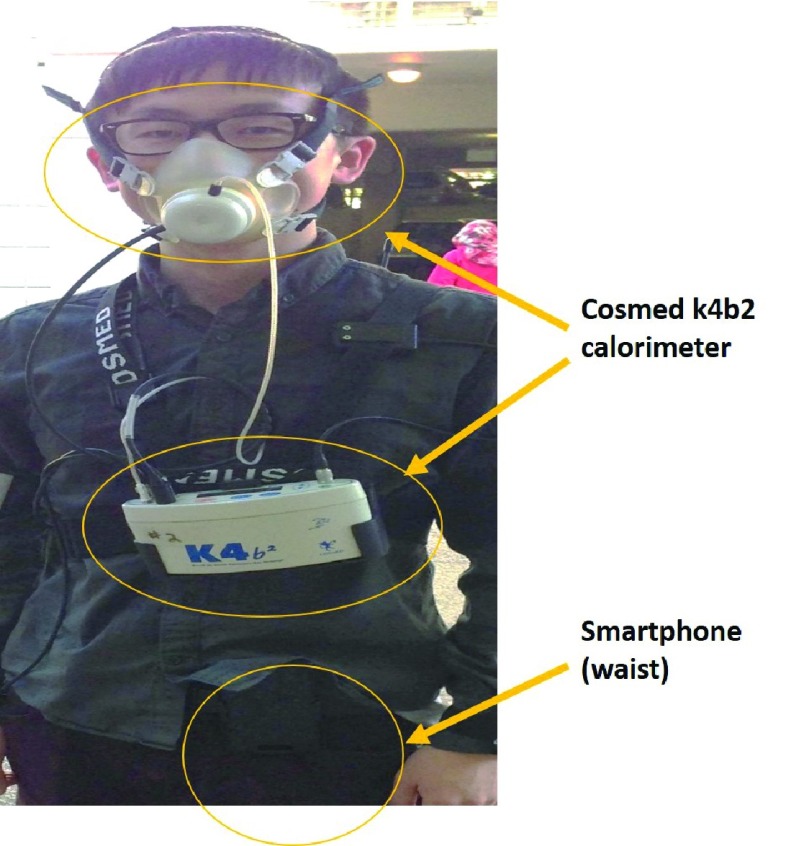
https://cdn.ncbi.nlm.nih.gov/pmc/blobs/8cfc/4848104/5e0db9d512f1/pande9-2480082.jpg
https://cdn.ncbi.nlm.nih.gov/pmc/blobs/8cfc/4848104/e1521e9fbf66/pande1-2480082.jpg
https://cdn.ncbi.nlm.nih.gov/pmc/blobs/8cfc/4848104/32513249802c/pande2-2480082.jpg
https://cdn.ncbi.nlm.nih.gov/pmc/blobs/8cfc/4848104/d48cea845e22/pande3-2480082.jpg
https://cdn.ncbi.nlm.nih.gov/pmc/blobs/8cfc/4848104/09528fd2f7b6/pande4-2480082.jpg
https://cdn.ncbi.nlm.nih.gov/pmc/blobs/8cfc/4848104/a088b6d9f379/pande5-2480082.jpg
https://cdn.ncbi.nlm.nih.gov/pmc/blobs/8cfc/4848104/f2d797540094/pande6-2480082.jpg
https://cdn.ncbi.nlm.nih.gov/pmc/blobs/8cfc/4848104/1649bb22e514/pande7-2480082.jpg
https://cdn.ncbi.nlm.nih.gov/pmc/blobs/8cfc/4848104/312c9191e493/pande8-2480082.jpg
https://cdn.ncbi.nlm.nih.gov/pmc/blobs/8cfc/4848104/5e0db9d512f1/pande9-2480082.jpg
https://cdn.ncbi.nlm.nih.gov/pmc/blobs/8cfc/4848104/e1521e9fbf66/pande1-2480082.jpg
https://cdn.ncbi.nlm.nih.gov/pmc/blobs/8cfc/4848104/32513249802c/pande2-2480082.jpg
https://cdn.ncbi.nlm.nih.gov/pmc/blobs/8cfc/4848104/d48cea845e22/pande3-2480082.jpg
https://cdn.ncbi.nlm.nih.gov/pmc/blobs/8cfc/4848104/09528fd2f7b6/pande4-2480082.jpg
https://cdn.ncbi.nlm.nih.gov/pmc/blobs/8cfc/4848104/a088b6d9f379/pande5-2480082.jpg
https://cdn.ncbi.nlm.nih.gov/pmc/blobs/8cfc/4848104/f2d797540094/pande6-2480082.jpg
https://cdn.ncbi.nlm.nih.gov/pmc/blobs/8cfc/4848104/1649bb22e514/pande7-2480082.jpg
https://cdn.ncbi.nlm.nih.gov/pmc/blobs/8cfc/4848104/312c9191e493/pande8-2480082.jpg
https://cdn.ncbi.nlm.nih.gov/pmc/blobs/8cfc/4848104/5e0db9d512f1/pande9-2480082.jpg

相似文献

1
Using Smartphone Sensors for Improving Energy Expenditure Estimation.利用智能手机传感器提高能量消耗估算。
IEEE J Transl Eng Health Med. 2015 Sep 18;3:2700212. doi: 10.1109/JTEHM.2015.2480082. eCollection 2015.
2
Machine Learning to Improve Energy Expenditure Estimation in Children With Disabilities: A Pilot Study in Duchenne Muscular Dystrophy.机器学习改善残疾儿童能量消耗估计:杜氏肌营养不良症的一项初步研究
JMIR Rehabil Assist Technol. 2016 Jul 19;3(2):e7. doi: 10.2196/rehab.4340.
3
Improving Energy Expenditure Estimation through Activity Classification and Walking Speed Estimation Using a Smartwatch.通过使用智能手表进行活动分类和步行速度估计来改进能量消耗估计
Annu Int Conf IEEE Eng Med Biol Soc. 2020 Jul;2020:3940-3944. doi: 10.1109/EMBC44109.2020.9176562.
4
Automatic heart rate normalization for accurate energy expenditure estimation. An analysis of activities of daily living and heart rate features.用于准确估计能量消耗的自动心率归一化。对日常生活活动和心率特征的分析。
Methods Inf Med. 2014;53(5):382-8. doi: 10.3414/ME13-02-0031. Epub 2014 Sep 23.
5
Estimating energy expenditure using body-worn accelerometers: a comparison of methods, sensors number and positioning.使用穿戴式加速度计估算能量消耗:方法、传感器数量和位置的比较
IEEE J Biomed Health Inform. 2015 Jan;19(1):219-26. doi: 10.1109/JBHI.2014.2313039. Epub 2014 Mar 20.
6
Wearable Sensors in Ambulatory Individuals With a Spinal Cord Injury: From Energy Expenditure Estimation to Activity Recommendations.脊髓损伤非卧床个体的可穿戴传感器:从能量消耗估算到活动建议
Front Neurol. 2019 Nov 1;10:1092. doi: 10.3389/fneur.2019.01092. eCollection 2019.
7
Correction of estimation bias of predictive equations of energy expenditure based on wrist/waist-mounted accelerometers.基于手腕/腰部佩戴式加速度计的能量消耗预测方程估计偏差的校正。
PeerJ. 2019 Nov 4;7:e7973. doi: 10.7717/peerj.7973. eCollection 2019.
8
A random forest classifier for the prediction of energy expenditure and type of physical activity from wrist and hip accelerometers.一种用于从手腕和臀部加速度计预测能量消耗及身体活动类型的随机森林分类器。
Physiol Meas. 2014 Nov;35(11):2191-203. doi: 10.1088/0967-3334/35/11/2191. Epub 2014 Oct 23.
9
A CNN Model for Physical Activity Recognition and Energy Expenditure Estimation from an Eyeglass-Mounted Wearable Sensor.基于眼镜式可穿戴传感器的活动识别和能量消耗估计的 CNN 模型。
Sensors (Basel). 2024 May 11;24(10):3046. doi: 10.3390/s24103046.
10
Validation of the Fitbit One, Garmin Vivofit and Jawbone UP activity tracker in estimation of energy expenditure during treadmill walking and running.Fitbit One、佳明Vivofit和Jawbone UP活动追踪器在估算跑步机行走和跑步过程中的能量消耗方面的验证。
J Med Eng Technol. 2017 Apr;41(3):208-215. doi: 10.1080/03091902.2016.1253795. Epub 2016 Dec 5.

引用本文的文献

1
Smartphone-based activity tracking for spine patients: Current technology and future opportunities.基于智能手机的脊柱疾病患者活动追踪:当前技术与未来机遇
World Neurosurg X. 2023 Oct 1;21:100238. doi: 10.1016/j.wnsx.2023.100238. eCollection 2024 Jan.
2
A multidevice and multimodal dataset for human energy expenditure estimation using wearable devices.使用可穿戴设备的人体能量消耗估计的多设备和多模式数据集。
Sci Data. 2022 Sep 1;9(1):537. doi: 10.1038/s41597-022-01643-5.
3
Wearable Wireless Sensors for Measuring Calorie Consumption.用于测量卡路里消耗的可穿戴无线传感器。

本文引用的文献

1
Hierarchical approaches to estimate energy expenditure using phone-based accelerometers.基于手机加速度计估算能量消耗的分层方法。
IEEE J Biomed Health Inform. 2014 Jul;18(4):1242-52. doi: 10.1109/JBHI.2013.2297055.
2
Prevalence of childhood and adult obesity in the United States, 2011-2012.美国儿童和成人肥胖率,2011-2012 年。
JAMA. 2014 Feb 26;311(8):806-14. doi: 10.1001/jama.2014.732.
3
An Overview of The Technology Assisted Dietary Assessment Project at Purdue University.普渡大学技术辅助膳食评估项目概述。
J Med Signals Sens. 2020 Feb 6;10(1):19-34. doi: 10.4103/jmss.JMSS_15_18. eCollection 2020 Jan-Mar.
4
Windows Into Human Health Through Wearables Data Analytics.通过可穿戴设备数据分析洞察人类健康
Curr Opin Biomed Eng. 2019 Mar;9:28-46. doi: 10.1016/j.cobme.2019.01.001. Epub 2019 Jan 28.
5
A Versatile Ultrasound Simulation System for Education and Training in High-Fidelity Emergency Scenarios.一种用于高保真紧急场景教育与培训的通用超声模拟系统。
IEEE J Transl Eng Health Med. 2017 Jan 16;5:1800109. doi: 10.1109/JTEHM.2016.2635635. eCollection 2017.
ISM. 2010:290-295. doi: 10.1109/ISM.2010.50.
4
Isolated aerobic exercise and weight loss: a systematic review and meta-analysis of randomized controlled trials.孤立有氧运动与减肥:一项随机对照试验的系统评价和荟萃分析。
Am J Med. 2011 Aug;124(8):747-55. doi: 10.1016/j.amjmed.2011.02.037.
5
Determining energy expenditure from treadmill walking using hip-worn inertial sensors: an experimental study.使用髋部佩戴惯性传感器从跑步机步行中确定能量消耗:一项实验研究。
IEEE Trans Biomed Eng. 2011 Oct;58(10):2804-15. doi: 10.1109/TBME.2011.2159840. Epub 2011 Jun 16.
6
Advances in physical activity monitoring and lifestyle interventions in obesity: a review.身体活动监测和生活方式干预在肥胖中的进展:综述。
Int J Obes (Lond). 2012 Feb;36(2):167-77. doi: 10.1038/ijo.2011.99. Epub 2011 May 17.
7
Energy expenditure estimation using triaxial accelerometry and barometric pressure measurement.使用三轴加速度计和气压测量进行能量消耗估计。
Annu Int Conf IEEE Eng Med Biol Soc. 2010;2010:5185-8. doi: 10.1109/IEMBS.2010.5626271.
8
Comparative validity of physical activity measures in older adults.老年人身体活动测量的比较有效性。
Med Sci Sports Exerc. 2011 May;43(5):867-76. doi: 10.1249/MSS.0b013e3181fc7162.
9
Pedometer-measured physical activity and health behaviors in U.S. adults.美国成年人计步器测量的身体活动和健康行为。
Med Sci Sports Exerc. 2010 Oct;42(10):1819-25. doi: 10.1249/MSS.0b013e3181dc2e54.
10
Will all Americans become overweight or obese? estimating the progression and cost of the US obesity epidemic.所有美国人都会超重或肥胖吗?评估美国肥胖流行的发展趋势及成本。
Obesity (Silver Spring). 2008 Oct;16(10):2323-30. doi: 10.1038/oby.2008.351. Epub 2008 Jul 24.