Maurea Nicola, Spallarossa Paolo, Cadeddu Christian, Madonna Rosalinda, Mele Donato, Monte Ines, Novo Giuseppina, Pagliaro Pasquale, Pepe Alessia, Tocchetti Carlo G, Zito Concetta, Mercuro Giuseppe
aDivision of Cardiology, Istituto Nazionale per lo Studio e la Cura dei Tumori 'Fondazione Giovanni Pascale' - IRCCS, Naples bClinic of Cardiovascular Diseases, IRCCS San Martino IST, Genoa cDepartment of Medical Sciences 'Mario Aresu', University of Cagliari, Cagliari dInstitute of Cardiology, Center of Excellence on Aging, 'G. d'Annunzio' University, Chieti eCardiology Unit, University Hospital of Ferrara, Ferrara fDepartment of General Surgery and Medical-Surgery Specialties, University of Catania, Catania gChair and Division of Cardiology, University of Palermo, Palermo hDepartment of Clinical and Biological Sciences, University of Turin, Turin iU.O.C. Magnetic Resonance Imaging, Fondazione G. Monasterio C.N.R., Pisa jDepartment of Translational Medical Sciences, Federico II University, Naples kU.O.C. Cardiology Intensive Unit, A.O.U. Policlinico 'G. Martino', University of Messina, Messina, Italy.
J Cardiovasc Med (Hagerstown). 2016 May;17 Suppl 1(Suppl 1):e93-e104. doi: 10.2459/JCM.0000000000000383.
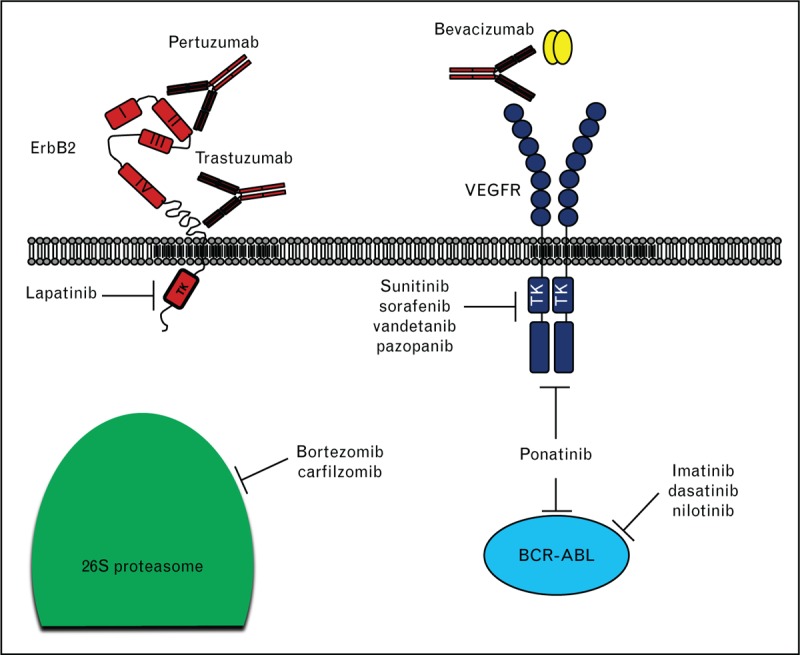
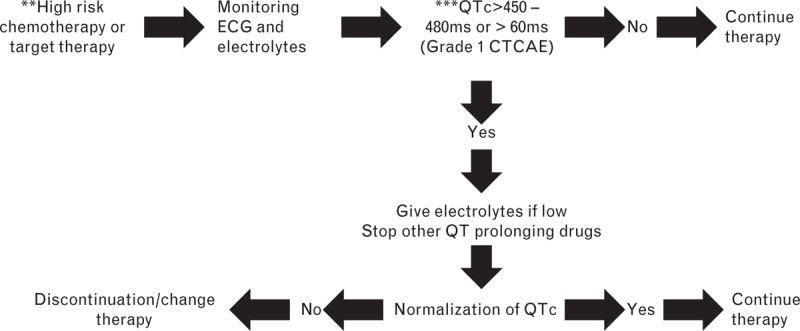
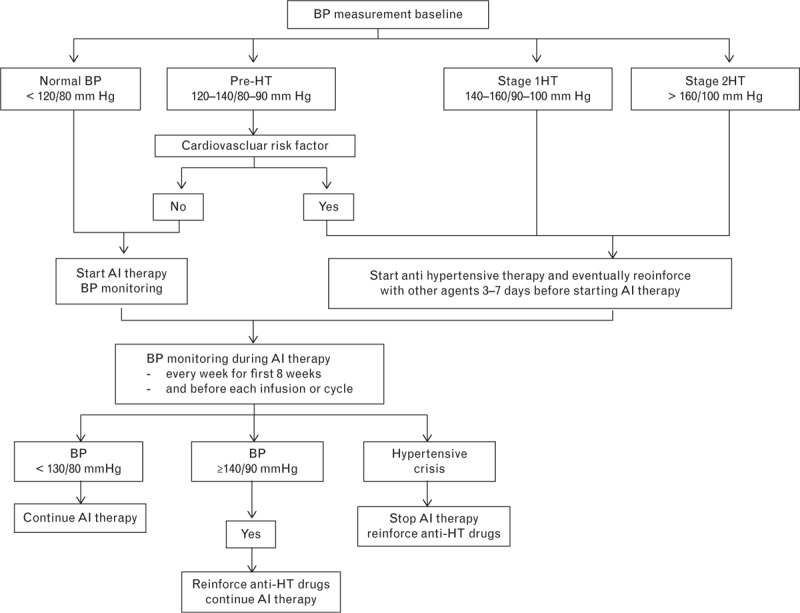
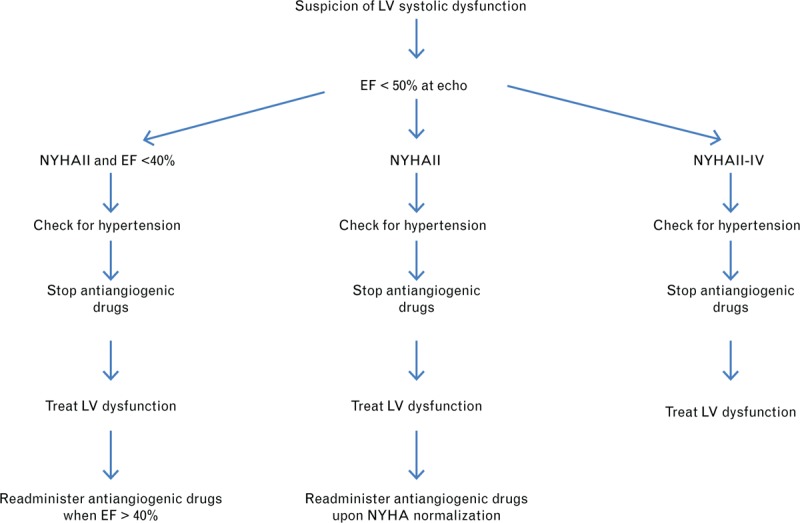
The US National Cancer Institute estimates that cardiotoxicity (CTX) from target therapy refers mostly to four groups of drugs: epidermal growth factor receptor 2 inhibitors, angiogenic inhibitors, directed Abelson murine leukemia viral oncogene homolog inhibitors, and proteasome inhibitors. The main cardiotoxic side-effects related to antiepidermal growth factor receptor 2 therapy are left ventricular systolic dysfunction and heart failure. Angiogenesis inhibitors are associated with hypertension, left ventricular dysfunction/heart failure, myocardial ischemia, QT prolongation, and thrombosis. Moreover, other agents may be related to CTX induced by treatment. In this study, we review the guidelines for a practical approach for the management of CTX in patients under anticancer target therapy.
美国国立癌症研究所估计,靶向治疗引起的心脏毒性(CTX)主要涉及四类药物:表皮生长因子受体2抑制剂、血管生成抑制剂、靶向阿贝尔逊鼠白血病病毒癌基因同源物抑制剂和蛋白酶体抑制剂。与抗表皮生长因子受体2治疗相关的主要心脏毒性副作用是左心室收缩功能障碍和心力衰竭。血管生成抑制剂与高血压、左心室功能障碍/心力衰竭、心肌缺血、QT间期延长和血栓形成有关。此外,其他药物可能与治疗引起的CTX有关。在本研究中,我们回顾了针对接受抗癌靶向治疗患者的CTX管理实用方法指南。