Pfaender Stephanie, von Hahn Thomas, Steinmann Joerg, Ciesek Sandra, Steinmann Eike
Institute for Experimental Virology, Twincore, and Hannover Medical School Hannover, Germany, and Helmholtz Centre for Infection Research, Braunschweig, Germany.
Department of Infectious Diseases and Pathobiology, University of Bern, 3012 Bern, Switzerland, Federal Department of Home Affairs, Institute of Virology and Immunology, 3012 Bern and 3147, Mittelhäusern, Switzerland.
Rev Med Virol. 2016 Sep;26(5):330-9. doi: 10.1002/rmv.1890. Epub 2016 May 17.
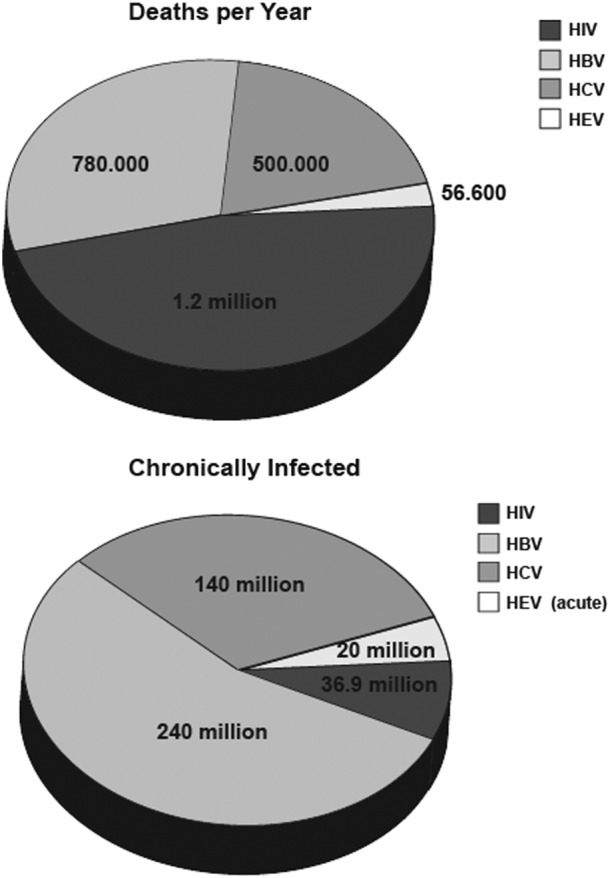
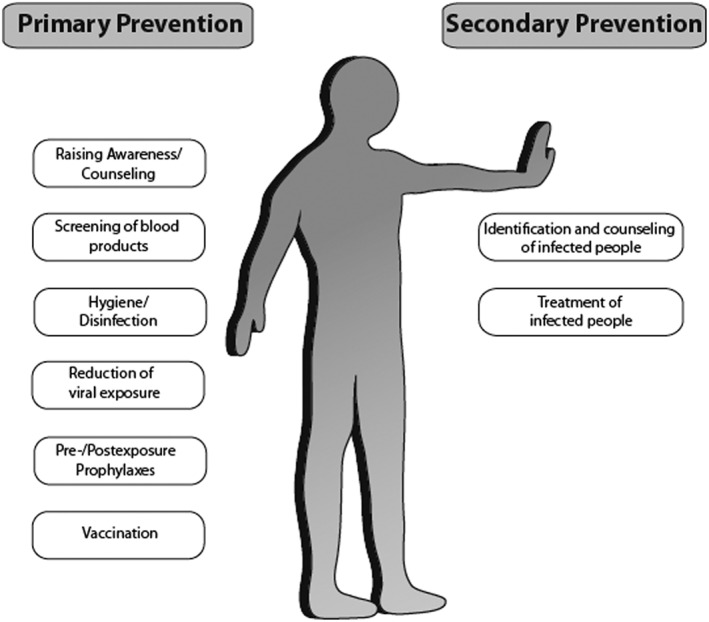
Blood-borne viruses, such as hepatitis B virus, hepatitis C virus, human immunodeficiency virus, and the facultative blood-borne hepatitis E virus, are considered a major public health problem given that they are accountable for millions of deaths each year. Treatment options, including effective vaccine design, development of antiviral strategies and the implementation of antiretroviral therapy have improved substantially over the last couple of years and contribute to successful treatment and prevention of these infectious diseases. In this review, we summarise the current knowledge and concepts in prevention of transmission of these blood-borne viruses.
血源性病毒,如乙型肝炎病毒、丙型肝炎病毒、人类免疫缺陷病毒以及兼性血源性戊型肝炎病毒,被视为一个重大的公共卫生问题,因为它们每年导致数百万人死亡。在过去几年中,包括有效疫苗设计、抗病毒策略开发以及抗逆转录病毒疗法实施在内的治疗选择有了显著改善,并有助于成功治疗和预防这些传染病。在本综述中,我们总结了目前关于预防这些血源性病毒传播的知识和概念。