Park Jin Ha, Lee Jong Seok, Nam Sang Beom, Ju Jin Wu, Kim Min Soo
Department of Anesthesiology and Pain Medicine, Anesthesia and Pain Research Institute, Yonsei University College of Medicine, Seoul, Korea.
Yonsei Med J. 2016 Jul;57(4):987-97. doi: 10.3349/ymj.2016.57.4.987.
Supraglottic airway devices have been widely utilized as an alternative to tracheal intubation in various clinical situations. The rotation technique has been proposed to improve the insertion success rate of supraglottic airways. However, the clinical efficacy of this technique remains uncertain as previous results have been inconsistent, depending on the variable evaluated.
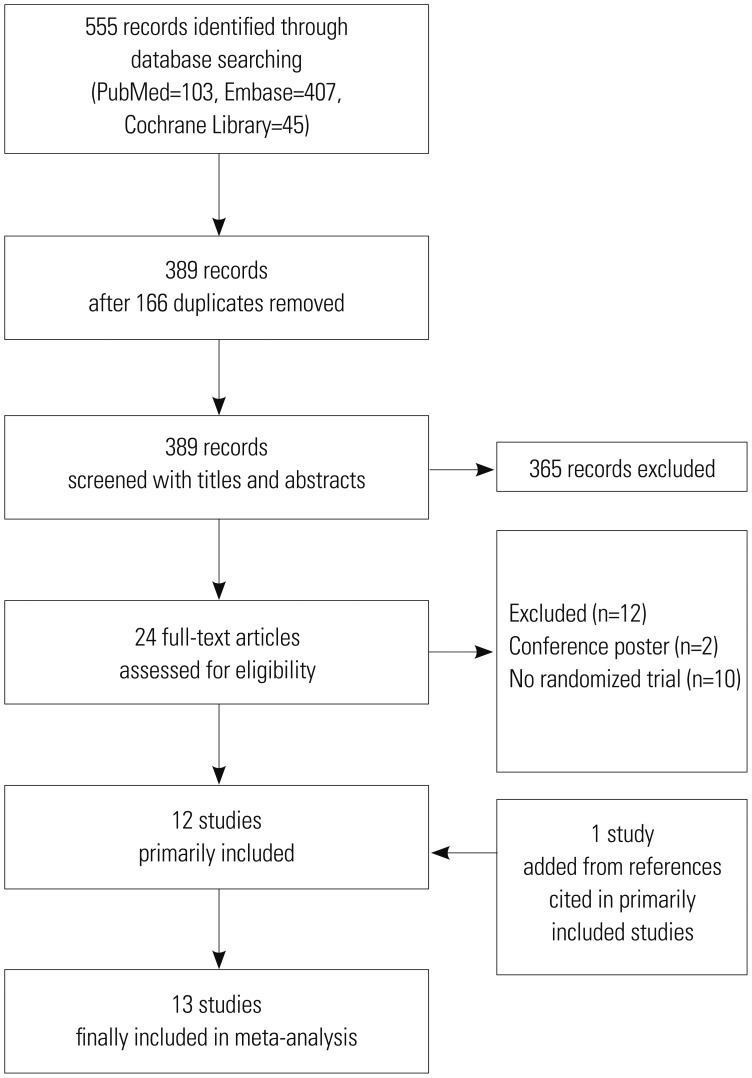
We systematically searched PubMed, Embase, and the Cochrane Central Register of Controlled Trials in April 2015 for randomized controlled trials that compared the rotation and standard techniques for inserting supraglottic airways.
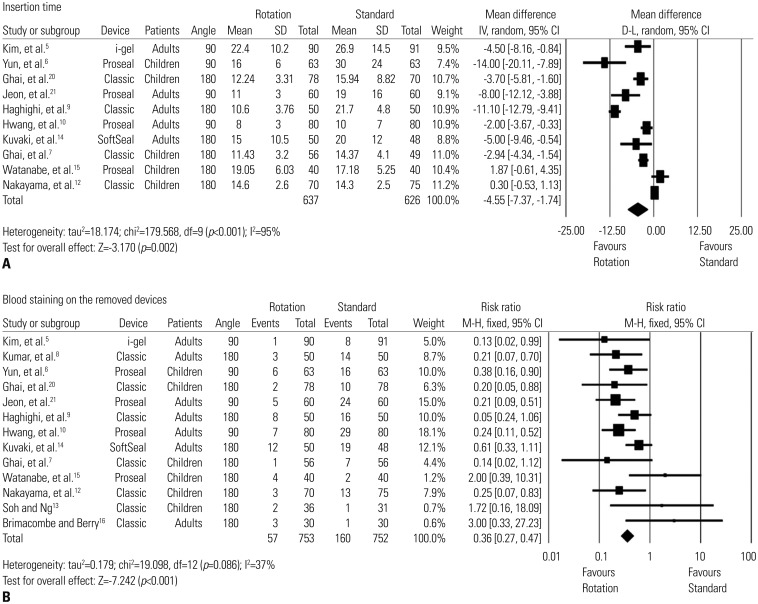
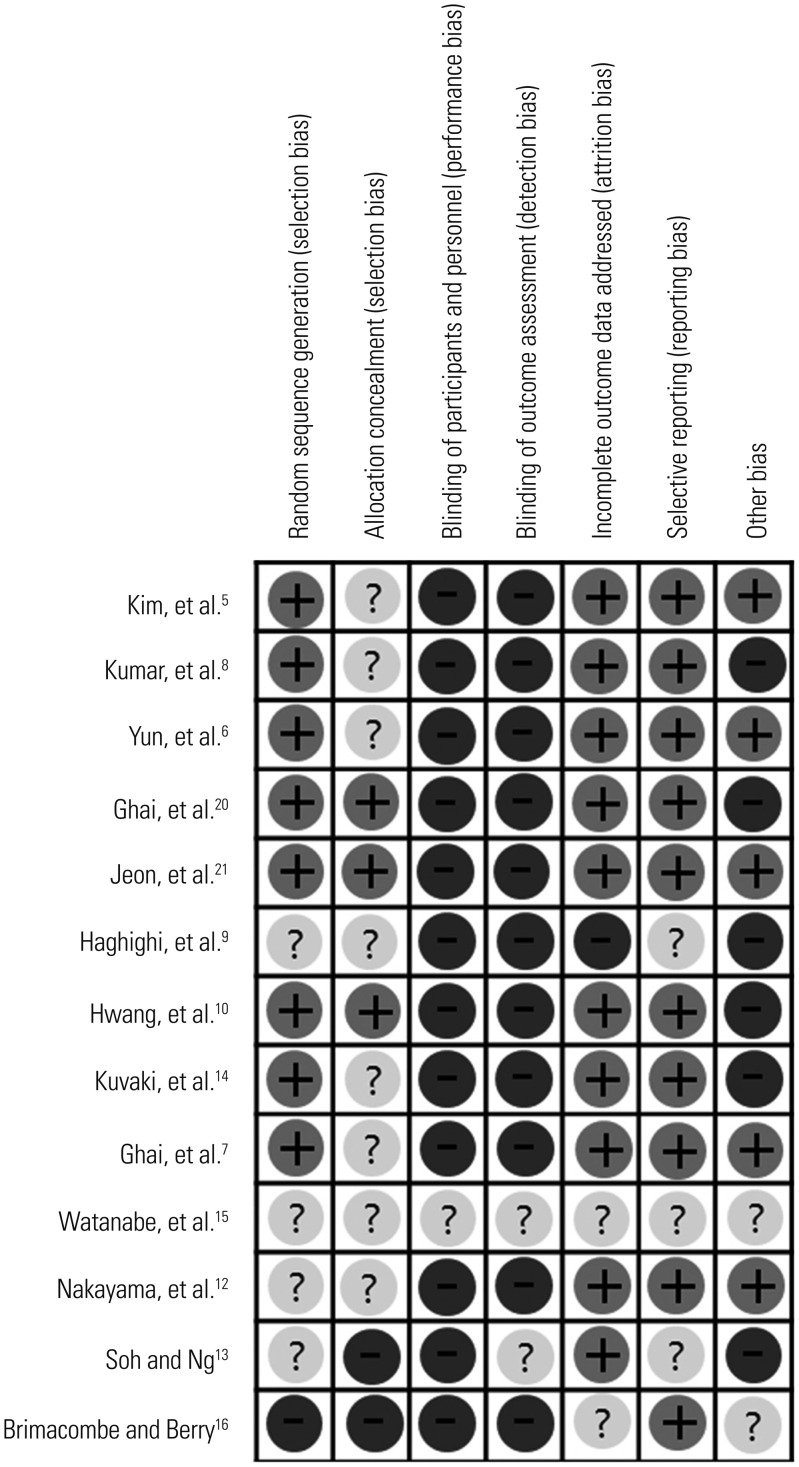
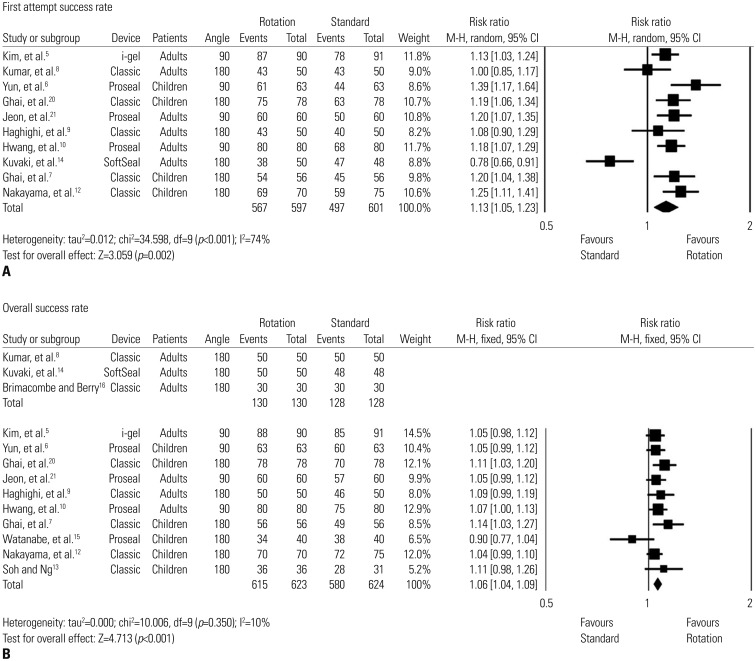
Thirteen randomized controlled trials (1505 patients, 753 with the rotation technique) were included. The success rate at the first attempt was significantly higher with the rotation technique than with the standard technique [relative risk (RR): 1.13; 95% confidence interval (CI): 1.05 to 1.23; p=0.002]. The rotation technique provided significantly higher overall success rates (RR: 1.06; 95% CI: 1.04 to 1.09; p<0.001). Device insertion was completed faster with the rotation technique (mean difference: -4.6 seconds; 95% CI: -7.37 to -1.74; p=0.002). The incidence of blood staining on the removed device (RR: 0.36; 95% CI: 0.27 to 0.47; p<0.001) was significantly lower with the rotation technique.
The rotation technique provided higher first-attempt and overall success rates, faster insertion, and a lower incidence of blood on the removed device, reflecting less mucosal trauma. Thus, it may be considered as an alternative to the standard technique when predicting or encountering difficulty in inserting supraglottic airways.
声门上气道装置已在各种临床情况下广泛用作气管插管的替代方法。有人提出旋转技术可提高声门上气道的插入成功率。然而,由于先前的结果不一致,取决于所评估的变量,该技术的临床疗效仍不确定。
我们于2015年4月系统检索了PubMed、Embase和Cochrane对照试验中央注册库,以查找比较声门上气道插入旋转技术和标准技术的随机对照试验。
纳入了13项随机对照试验(1505例患者,753例采用旋转技术)。旋转技术首次尝试的成功率显著高于标准技术[相对危险度(RR):1.13;95%置信区间(CI):1.05至1.23;p=0.002]。旋转技术的总体成功率显著更高(RR:1.06;95%CI:1.04至1.09;p<0.001)。旋转技术完成装置插入的速度更快(平均差:-4.6秒;95%CI:-7.37至-1.74;p=0.002)。旋转技术使取出装置上的血染发生率显著降低(RR:0.36;95%CI:0.【此处原文有误,应为0.27】至0.47;p<0.001)。
旋转技术提供了更高的首次尝试成功率和总体成功率,插入速度更快,取出装置上血迹的发生率更低,反映出黏膜损伤更小。因此,在预测或遇到声门上气道插入困难时,可考虑将其作为标准技术的替代方法。