Goloborodko Anton, Imakaev Maxim V, Marko John F, Mirny Leonid
Department of Physics, Massachusetts Institute of Technology, Cambridge, United States.
Department of Molecular Biosciences, Northwestern University, Evanston, United States.
Elife. 2016 May 18;5:e14864. doi: 10.7554/eLife.14864.
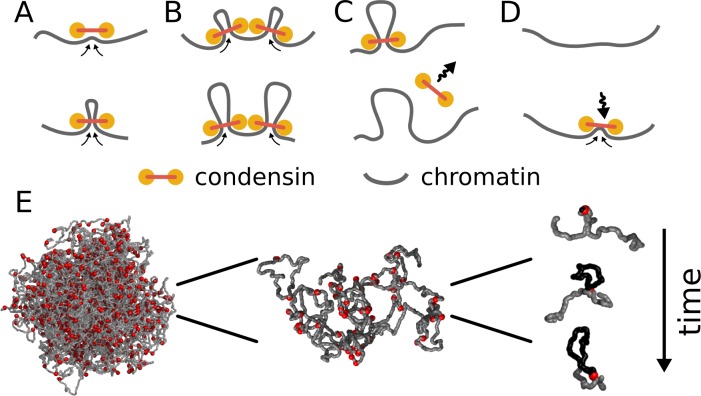
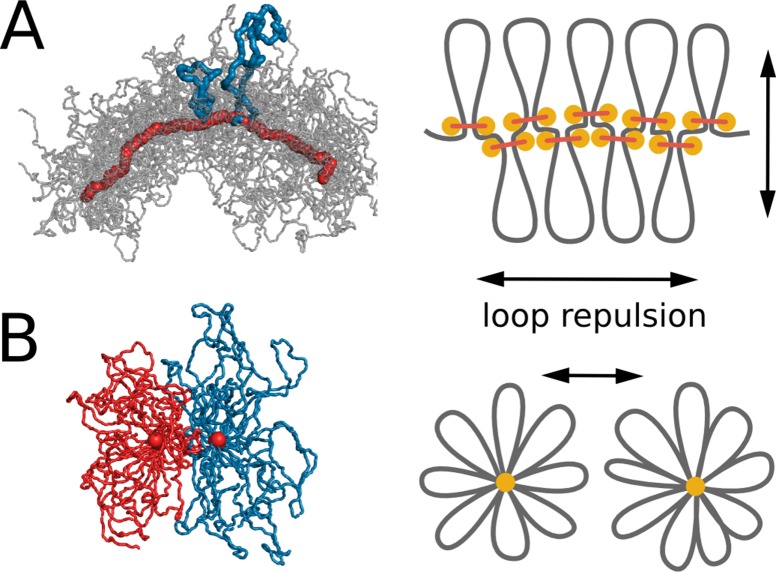
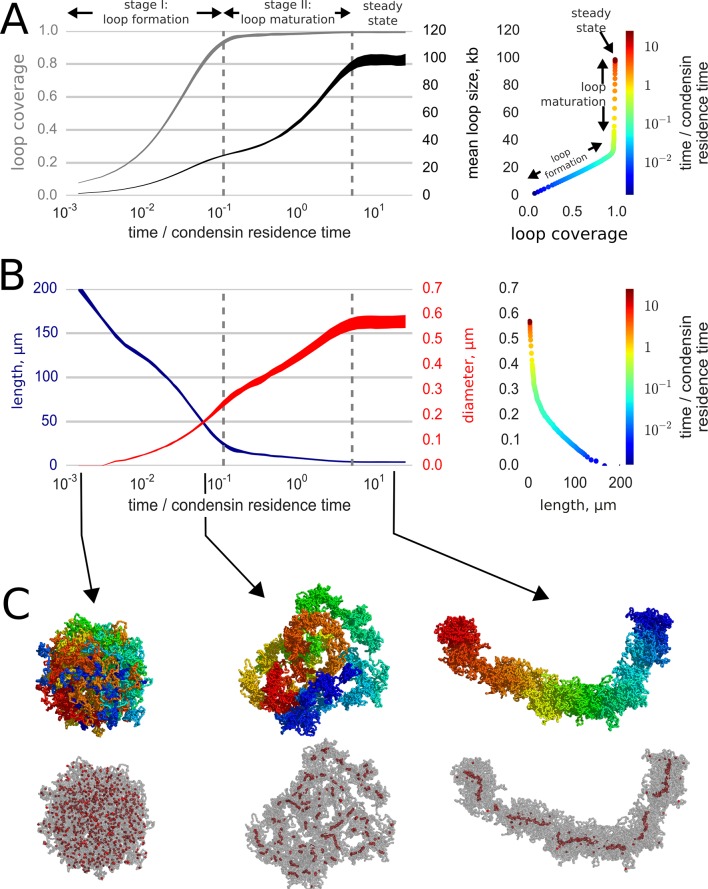
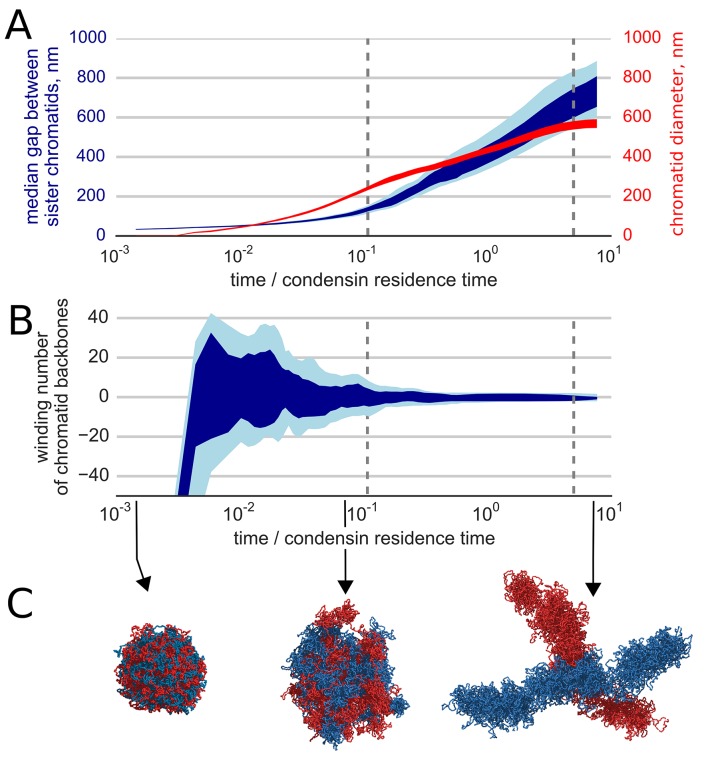
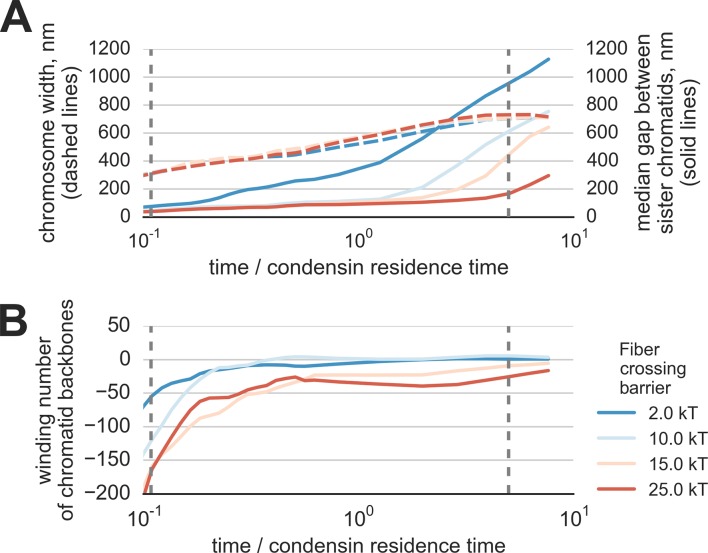
The mechanism by which chromatids and chromosomes are segregated during mitosis and meiosis is a major puzzle of biology and biophysics. Using polymer simulations of chromosome dynamics, we show that a single mechanism of loop extrusion by condensins can robustly compact, segregate and disentangle chromosomes, arriving at individualized chromatids with morphology observed in vivo. Our model resolves the paradox of topological simplification concomitant with chromosome 'condensation', and explains how enzymes a few nanometers in size are able to control chromosome geometry and topology at micron length scales. We suggest that loop extrusion is a universal mechanism of genome folding that mediates functional interactions during interphase and compacts chromosomes during mitosis.
在有丝分裂和减数分裂过程中,染色单体和染色体的分离机制是生物学和生物物理学中的一个重大谜题。通过对染色体动力学进行聚合物模拟,我们表明凝聚素介导的环挤压单一机制能够有力地压缩、分离和解开染色体,从而形成在体内观察到的具有特定形态的单个染色单体。我们的模型解决了染色体“凝聚”过程中拓扑简化的矛盾,并解释了尺寸仅为几纳米的酶如何能够在微米长度尺度上控制染色体的几何形状和拓扑结构。我们认为,环挤压是基因组折叠的一种普遍机制,它在间期介导功能相互作用,并在有丝分裂期间压缩染色体。