Piglet Nutrition and Cognition Laboratory, Department of Animal Sciences, University of Illinois, Urbana, IL, USA; Neuroscience Program, University of Illinois, Urbana, IL, USA.
Mead Johnson Pediatric Nutrition Institute , Evansville, IN , USA.
Front Pediatr. 2016 May 6;4:44. doi: 10.3389/fped.2016.00044. eCollection 2016.
Alpha-lipoic acid (a-LA) is an antioxidant shown to ameliorate age-associated impairments of brain and cardiovascular function. Human milk is known to have high antioxidant capacity; however, the role of antioxidants in the developing brain is largely uncharacterized. This exploratory study aimed to examine the dose-response effects of a-LA on piglet growth and neurodevelopment.
Beginning at 2 days of age, 31 male pigs received 1 of 3 diets: control (CONT) (0 mg a-LA/100 g), low a-LA (LOW) (120 mg a-LA/100 g), or high a-LA (HIGH) (240 mg a-LA/100 g). From 14 to 28 days of age, pigs were subjected to spatial T-maze assessment, and macrostructural and microstructural neuroimaging procedures were performed at 31 days of age.
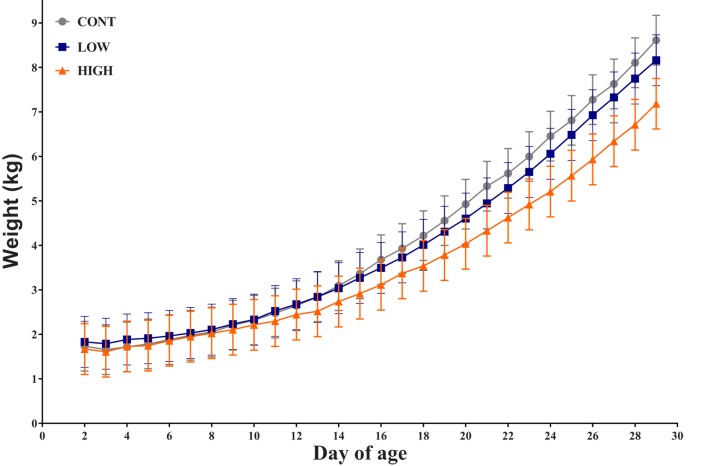
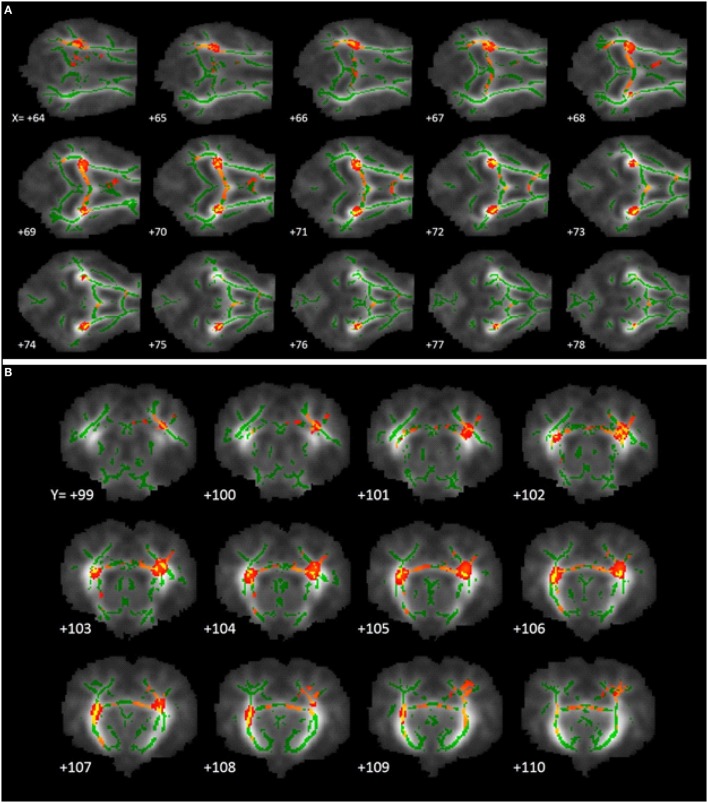
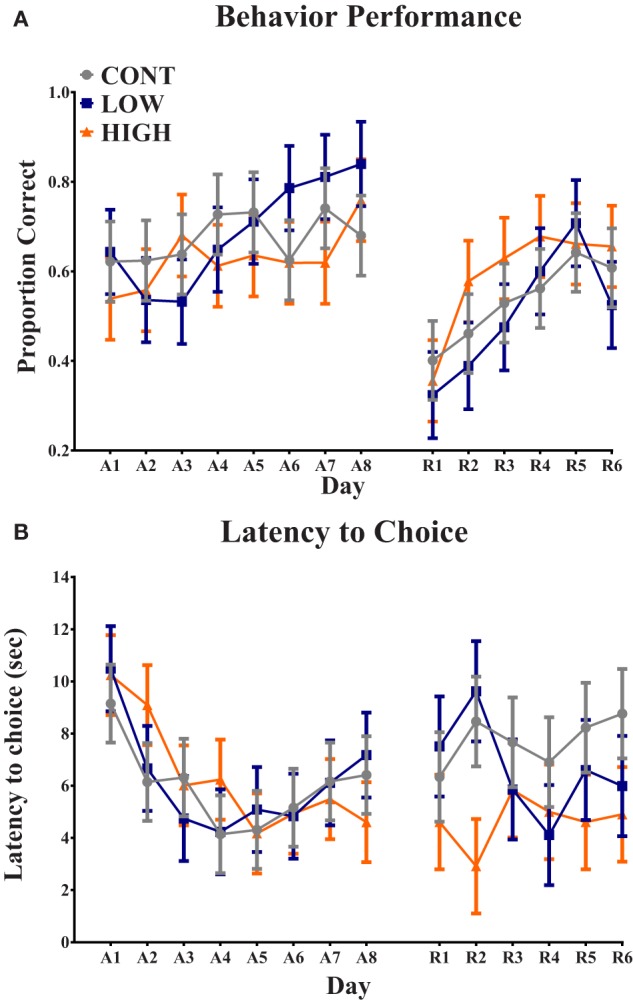
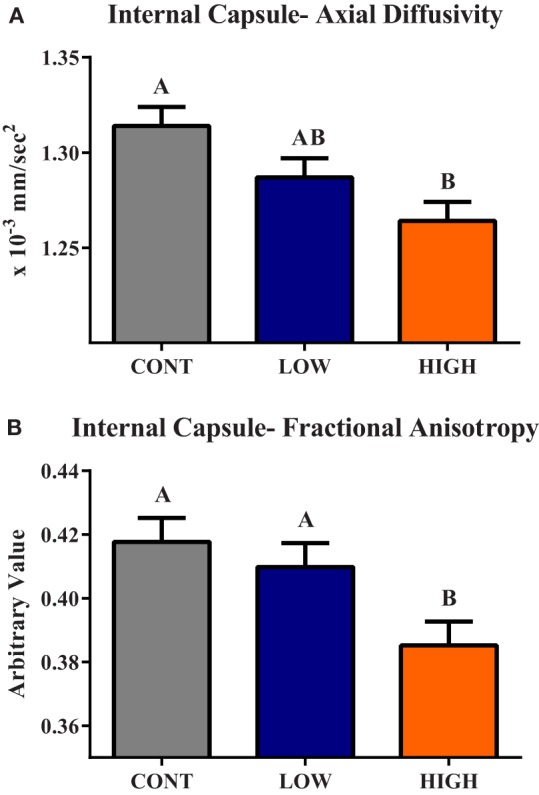
No differences due to diet were observed for bodyweight gain or intestinal weight and length. Spatial T-maze assessment did not reveal learning differences due to diet in proportion of correct choices or latency to choice measures. Diffusion tensor imaging revealed decreased (P = 0.01) fractional anisotropy (FA) in the internal capsule of HIGH-fed pigs compared with both the CONT (P < 0.01)- and LOW (P = 0.03)-fed pigs, which were not different from one another. Analysis of axial diffusivity (AD) within the internal capsule revealed a main effect of diet (P < 0.01) in which HIGH-fed piglets exhibited smaller (P < 0.01) rates of diffusion compared with CONT piglets, but HIGH-fed piglets were not different (P = 0.12) than LOW-fed piglets. Tract-based spatial statistics, a comparison of FA values along white matter tracts, revealed 1,650 voxels where CONT piglets exhibited higher (P < 0.05) values compared with HIGH-fed piglets.
The lack of differences in intestinal and bodyweight measures among piglets indicate a-LA supplementation does not impact overall growth, regardless of concentration. Additionally, no observed differences between CONT- and LOW-fed piglets in behavior and neuroimaging measures indicate a low concentration of a-LA does not affect normal brain development. Supplementation of a-LA at a high concentration appeared to alter white matter maturation in the internal capsule, which may indicate delayed neurodevelopment in these piglets.
α-硫辛酸(a-LA)是一种抗氧化剂,已被证明可改善与年龄相关的脑和心血管功能障碍。众所周知,人乳具有很高的抗氧化能力;然而,抗氧化剂在发育中的大脑中的作用在很大程度上还没有被描述。这项探索性研究旨在研究 a-LA 对仔猪生长和神经发育的剂量反应效应。
从 2 日龄开始,31 只雄性仔猪接受了 3 种饮食中的 1 种:对照(CONT)(0mg a-LA/100g)、低 a-LA(LOW)(120mg a-LA/100g)或高 a-LA(HIGH)(240mg a-LA/100g)。从 14 日龄到 28 日龄,仔猪接受空间 T 迷宫评估,31 日龄进行宏观结构和微观结构神经影像学检查。
饮食对体重增加或肠道重量和长度没有影响。饮食对正确选择比例或选择测量潜伏期的空间 T 迷宫评估没有显示出学习差异。弥散张量成像显示,与 CONT(P<0.01)和 LOW(P=0.03)喂养的仔猪相比,HIGH 喂养的仔猪内囊的各向异性分数(FA)降低(P=0.01),而 CONT 和 LOW 喂养的仔猪之间没有差异。内囊轴突弥散率(AD)分析显示,饮食有主要影响(P<0.01),HIGH 喂养的仔猪 AD 率较小(P<0.01),但与 LOW 喂养的仔猪无差异(P=0.12)。基于白质束的空间统计学,对沿白质束 FA 值的比较,显示 CONT 仔猪在 1650 个体素中表现出较高(P<0.05)的 FA 值,而 HIGH 仔猪表现出较低(P<0.05)的 FA 值。
仔猪的肠道和体重测量无差异表明,无论浓度如何,a-LA 补充都不会影响整体生长。此外,CONT 和 LOW 喂养的仔猪在行为和神经影像学测量方面没有差异表明,低浓度的 a-LA 不会影响正常的大脑发育。高浓度的 a-LA 补充似乎改变了内囊的白质成熟,这可能表明这些仔猪的神经发育延迟。