Holmgaard Rikke B, Zamarin Dmitriy, Lesokhin Alexander, Merghoub Taha, Wolchok Jedd D
Swim Across America/Ludwig Collaborative Laboratory, Memorial Sloan Kettering Cancer Center, New York, NY, United States.
Swim Across America/Ludwig Collaborative Laboratory, Memorial Sloan Kettering Cancer Center, New York, NY, United States; Department of Medicine, Memorial Sloan-Kettering Cancer Center, New York, NY, United States; Weill Cornell Medical College, New York, NY 10065, United States; Graduate School of Medical Sciences of Cornell University, New York, NY 10065, United States.
EBioMedicine. 2016 Apr;6:50-58. doi: 10.1016/j.ebiom.2016.02.024. Epub 2016 Feb 13.
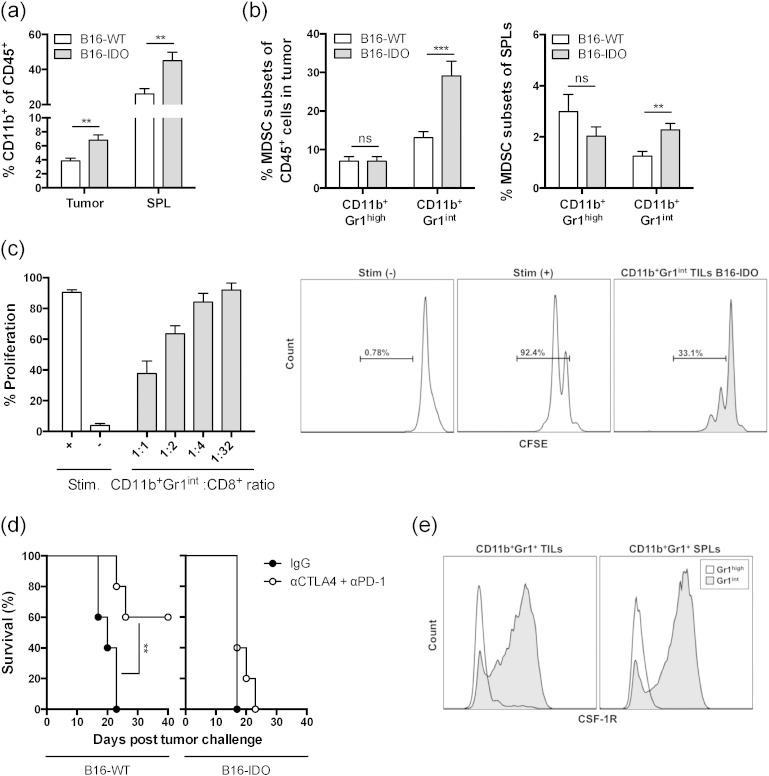
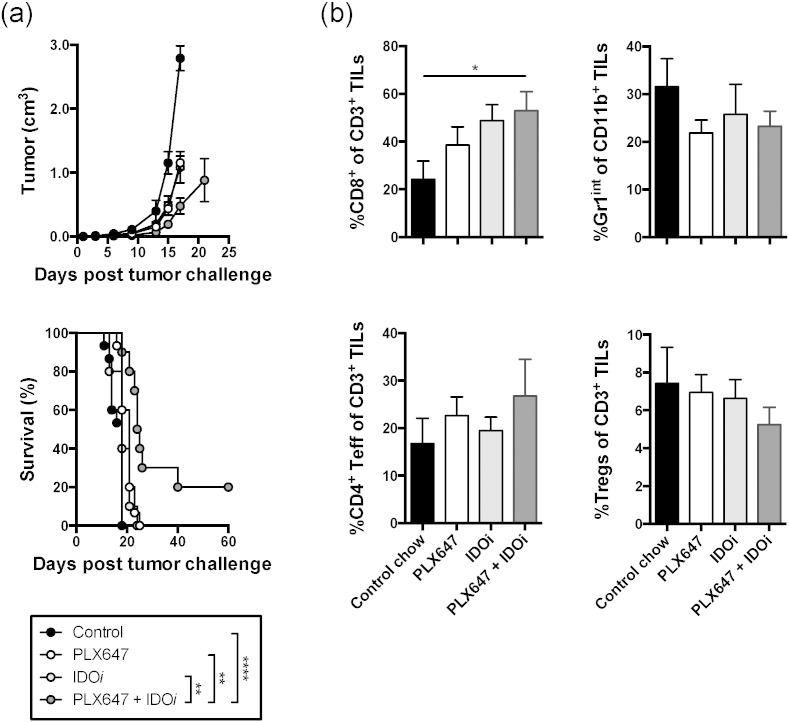
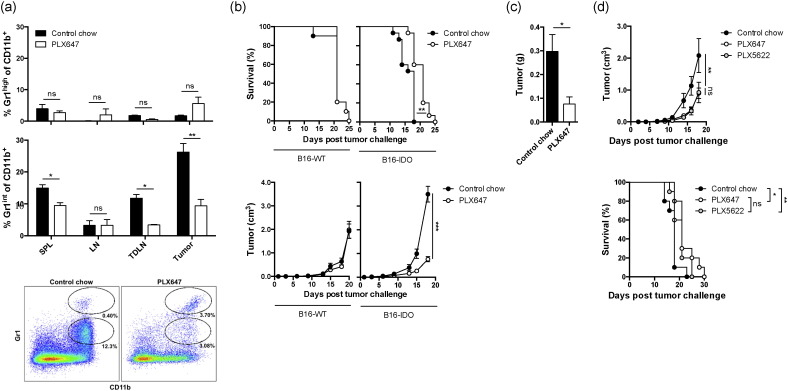
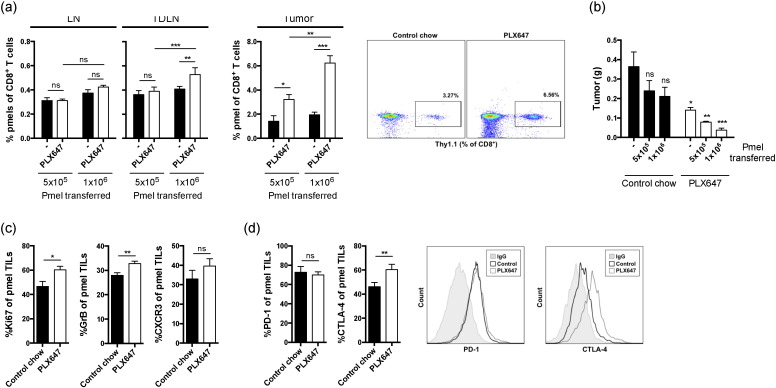
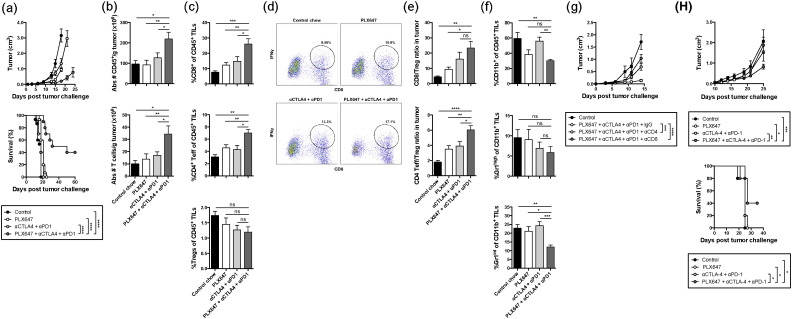
Tumor indoleamine 2,3-dioxygenase (IDO) promotes immunosuppression by direct action on effector T cells and Tregs and through recruitment, expansion and activation of myeloid-derived suppressor cells (MDSCs). Targeting of MDSCs is clinically being explored as a therapeutic strategy, though optimal targeting strategies and biomarkers predictive of response are presently unknown. Maturation and tumor recruitment of MDSCs are dependent on signaling through the receptor tyrosine kinase CSF-1R on myeloid cells. Here, we show that MDSCs are the critical cell population in IDO-expressing B16 tumors in mediating accelerated tumor outgrowth and resistance to immunotherapy. Using a clinically relevant drug, we show that inhibition of CSF-1R signaling can functionally block tumor-infiltrating MDSCs and enhance anti-tumor T cell responses. Furthermore, inhibition of CSF-1R sensitizes IDO-expressing tumors to immunotherapy with T cell checkpoint blockade, and combination of CSF-1R blockade with IDO inhibitors potently elicits tumor regression. These findings provide evidence for a critical and functional role for MDSCs on the in vivo outcome of IDO-expressing tumors.
肿瘤吲哚胺2,3-双加氧酶(IDO)通过直接作用于效应T细胞和调节性T细胞以及通过募集、扩增和激活髓源性抑制细胞(MDSC)来促进免疫抑制。尽管目前尚不清楚最佳的靶向策略和预测反应的生物标志物,但针对MDSC的靶向治疗正在临床上作为一种治疗策略进行探索。MDSC的成熟和肿瘤募集依赖于髓样细胞上受体酪氨酸激酶CSF-1R的信号传导。在这里,我们表明MDSC是表达IDO的B16肿瘤中介导肿瘤加速生长和对免疫治疗耐药的关键细胞群。使用一种临床相关药物,我们表明抑制CSF-1R信号传导可以在功能上阻断肿瘤浸润的MDSC并增强抗肿瘤T细胞反应。此外,抑制CSF-1R使表达IDO的肿瘤对T细胞检查点阻断免疫治疗敏感,并且CSF-1R阻断与IDO抑制剂的联合使用可有效引发肿瘤消退。这些发现为MDSC在表达IDO肿瘤的体内结局中的关键和功能作用提供了证据。