Liu Wenpeng, Zhou Mian, Li Zhengke, Li Hongzhi, Polaczek Piotr, Dai Huifang, Wu Qiong, Liu Changwei, Karanja Kenneth K, Popuri Vencat, Shan Shu-Ou, Schlacher Katharina, Zheng Li, Campbell Judith L, Shen Binghui
Colleges of Life Sciences, Zhejiang University, Hangzhou, Zhejiang 310027, China; Department of Cancer Genetics and Epigenetics, Beckman Research Institute, City of Hope, 1500 East Duarte Road, Duarte, CA 91010-3000, USA; Division of Chemistry and Chemical Engineering, Braun Laboratories, California Institute of Technology, Pasadena, CA 91125, USA.
Department of Cancer Genetics and Epigenetics, Beckman Research Institute, City of Hope, 1500 East Duarte Road, Duarte, CA 91010-3000, USA.
EBioMedicine. 2016 Apr;6:73-86. doi: 10.1016/j.ebiom.2016.02.043. Epub 2016 Mar 10.
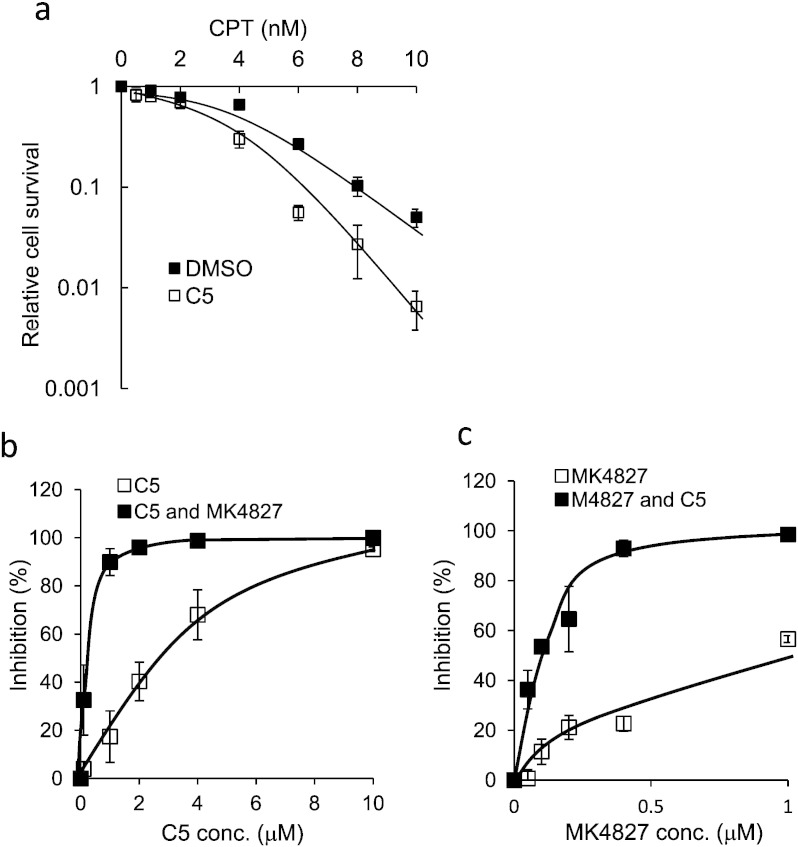
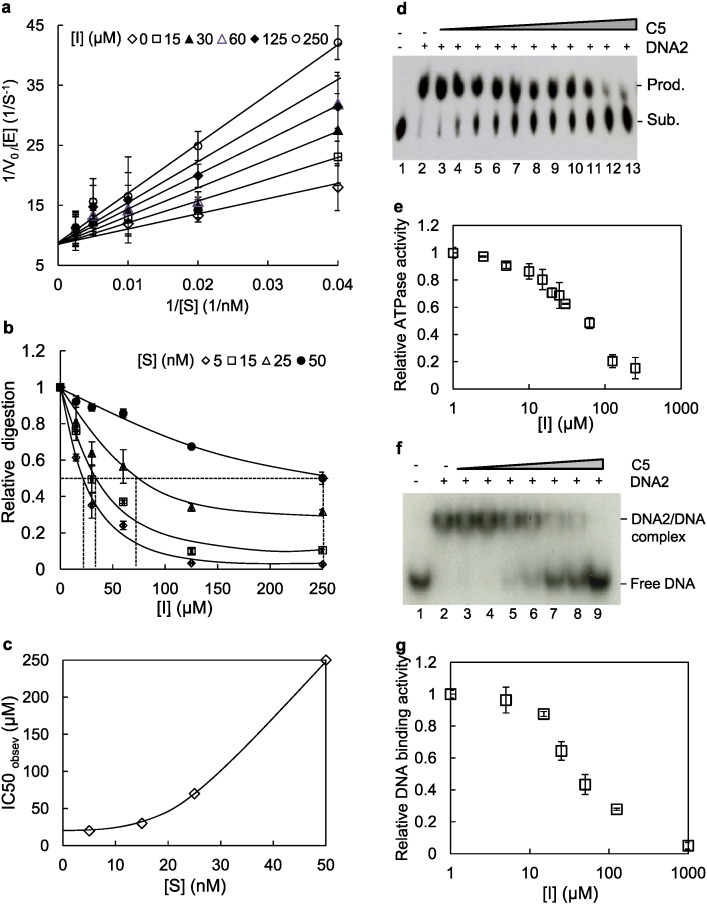
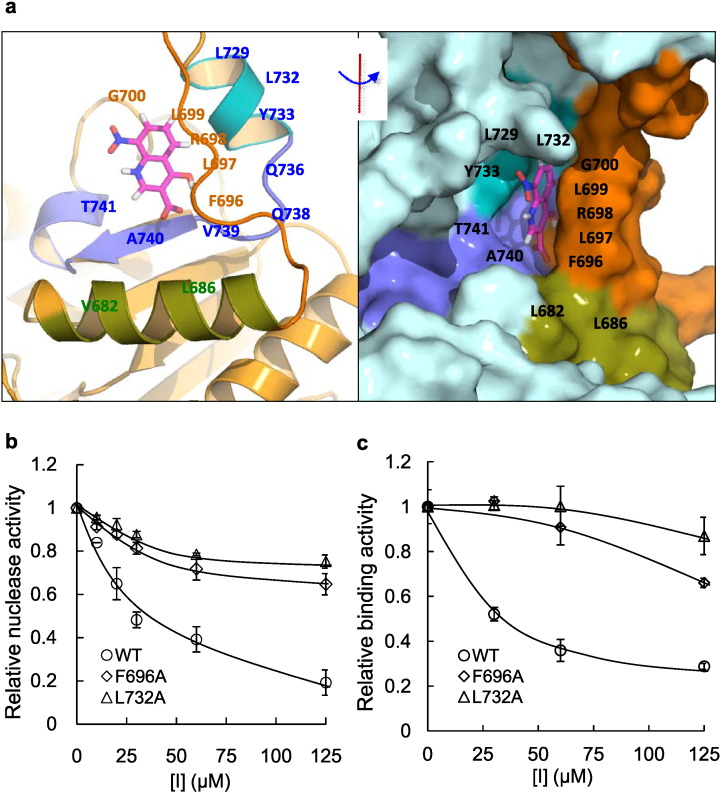
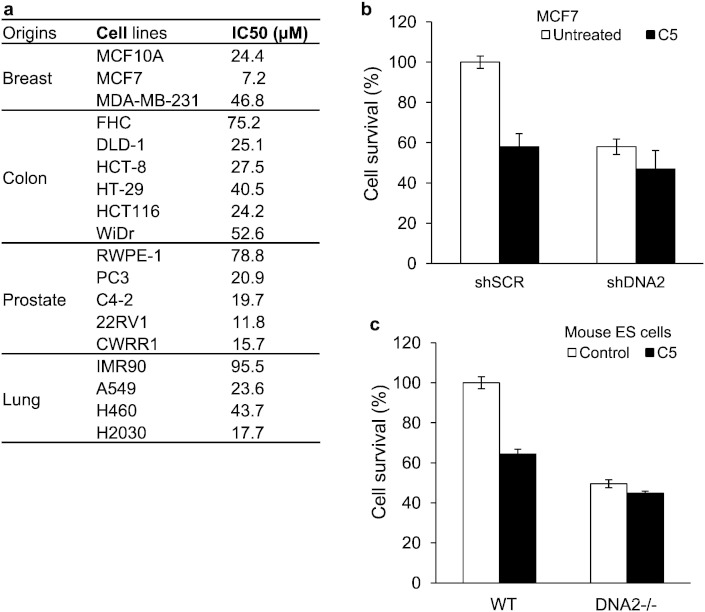
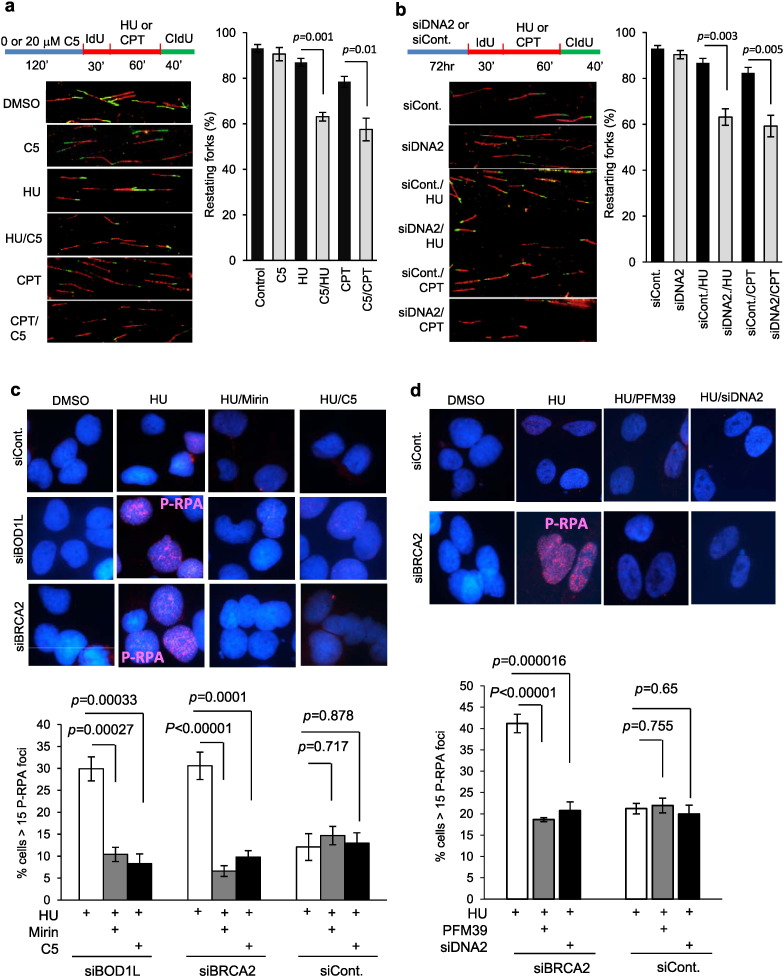
Cancer cells frequently up-regulate DNA replication and repair proteins such as the multifunctional DNA2 nuclease/helicase, counteracting DNA damage due to replication stress and promoting survival. Therefore, we hypothesized that blocking both DNA replication and repair by inhibiting the bifunctional DNA2 could be a potent strategy to sensitize cancer cells to stresses from radiation or chemotherapeutic agents. We show that homozygous deletion of DNA2 sensitizes cells to ionizing radiation and camptothecin (CPT). Using a virtual high throughput screen, we identify 4-hydroxy-8-nitroquinoline-3-carboxylic acid (C5) as an effective and selective inhibitor of DNA2. Mutagenesis and biochemical analysis define the C5 binding pocket at a DNA-binding motif that is shared by the nuclease and helicase activities, consistent with structural studies that suggest that DNA binding to the helicase domain is necessary for nuclease activity. C5 targets the known functions of DNA2 in vivo: C5 inhibits resection at stalled forks as well as reducing recombination. C5 is an even more potent inhibitor of restart of stalled DNA replication forks and over-resection of nascent DNA in cells defective in replication fork protection, including BRCA2 and BOD1L. C5 sensitizes cells to CPT and synergizes with PARP inhibitors.
癌细胞经常上调DNA复制和修复蛋白,如多功能DNA2核酸酶/解旋酶,以对抗复制应激引起的DNA损伤并促进存活。因此,我们推测通过抑制双功能DNA2来阻断DNA复制和修复可能是使癌细胞对辐射或化疗药物引起的应激敏感的有效策略。我们发现DNA2的纯合缺失会使细胞对电离辐射和喜树碱(CPT)敏感。通过虚拟高通量筛选,我们确定4-羟基-8-硝基喹啉-3-羧酸(C5)是DNA2的有效且选择性抑制剂。诱变和生化分析确定了C5在核酸酶和解旋酶活性共有的DNA结合基序处的结合口袋,这与结构研究一致,即DNA与解旋酶结构域的结合对于核酸酶活性是必需的。C5在体内靶向DNA2的已知功能:C5抑制停滞叉处的切除并减少重组。C5是停滞的DNA复制叉重新启动的更有效抑制剂,并且在复制叉保护缺陷的细胞(包括BRCA2和BOD1L)中对新生DNA的过度切除更有效。C5使细胞对CPT敏感,并与PARP抑制剂协同作用。