Lee Changhee, Kim Youngnam, Jeon Ji Hyun
Animal Virology Laboratory, School of Life Sciences, BK21 Plus KNU Creative BioResearch Group, Kyungpook National University, Daegu 702-701, Republic of Korea.
Animal Virology Laboratory, School of Life Sciences, BK21 Plus KNU Creative BioResearch Group, Kyungpook National University, Daegu 702-701, Republic of Korea.
Virus Res. 2016 Aug 15;222:1-12. doi: 10.1016/j.virusres.2016.05.018. Epub 2016 May 20.
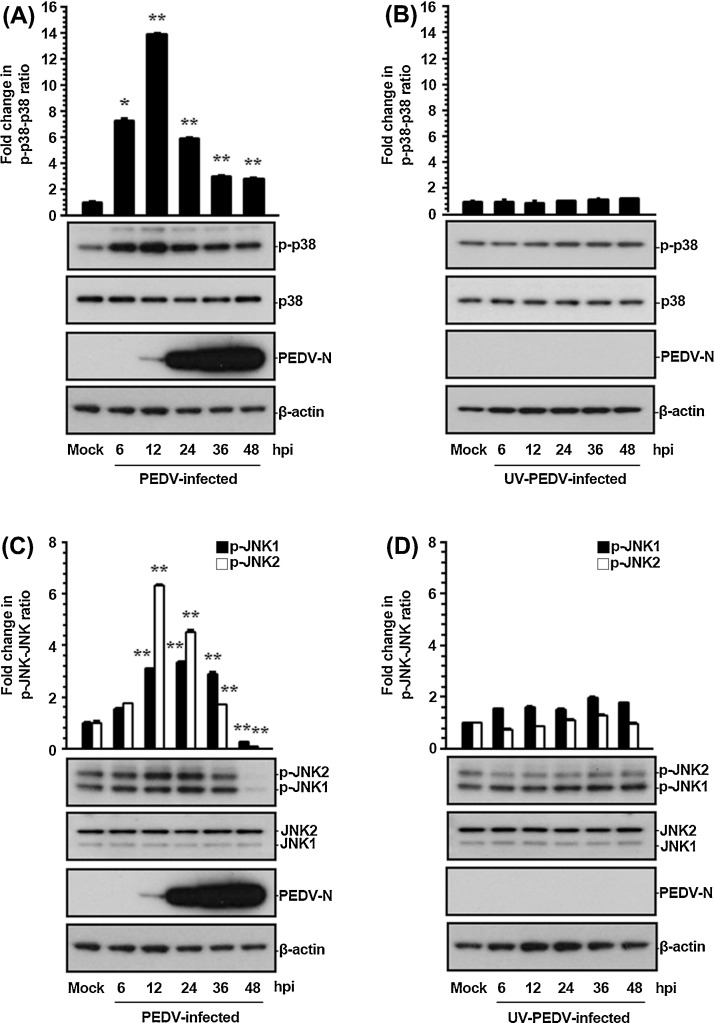
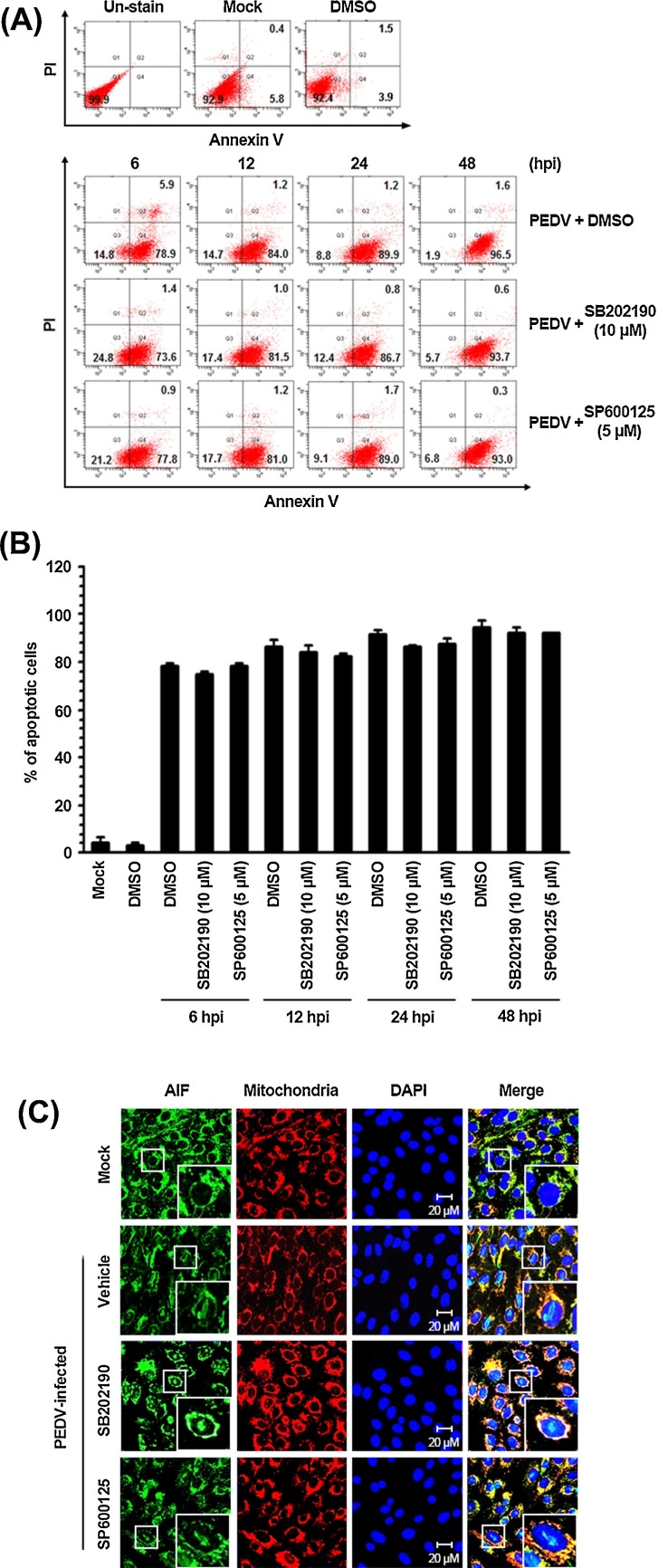
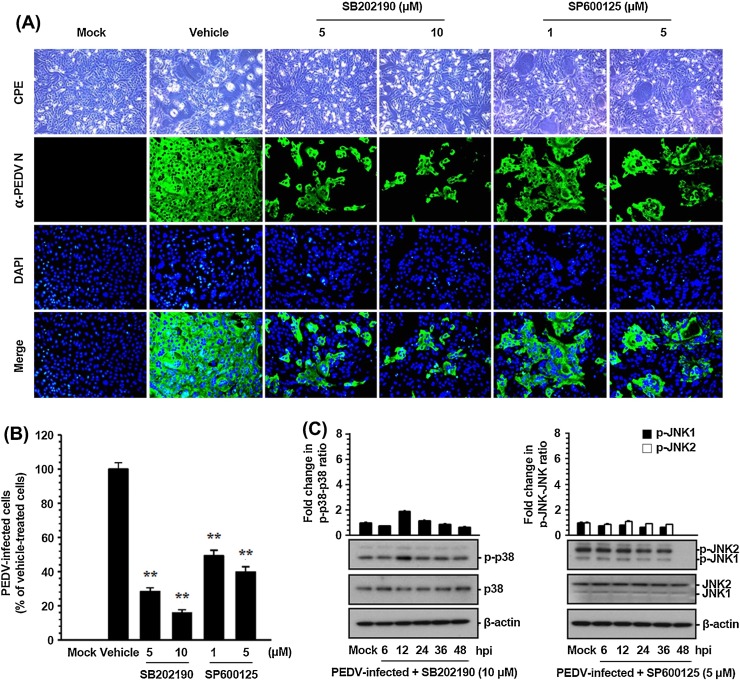
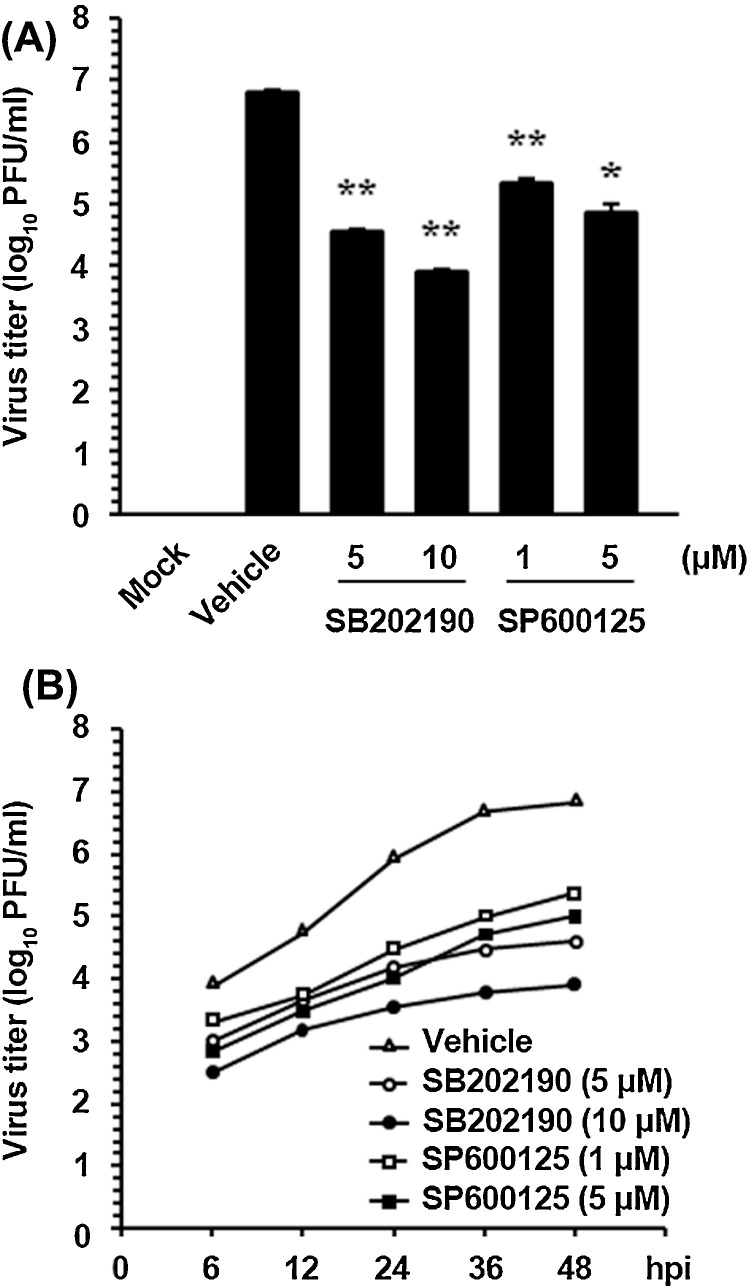
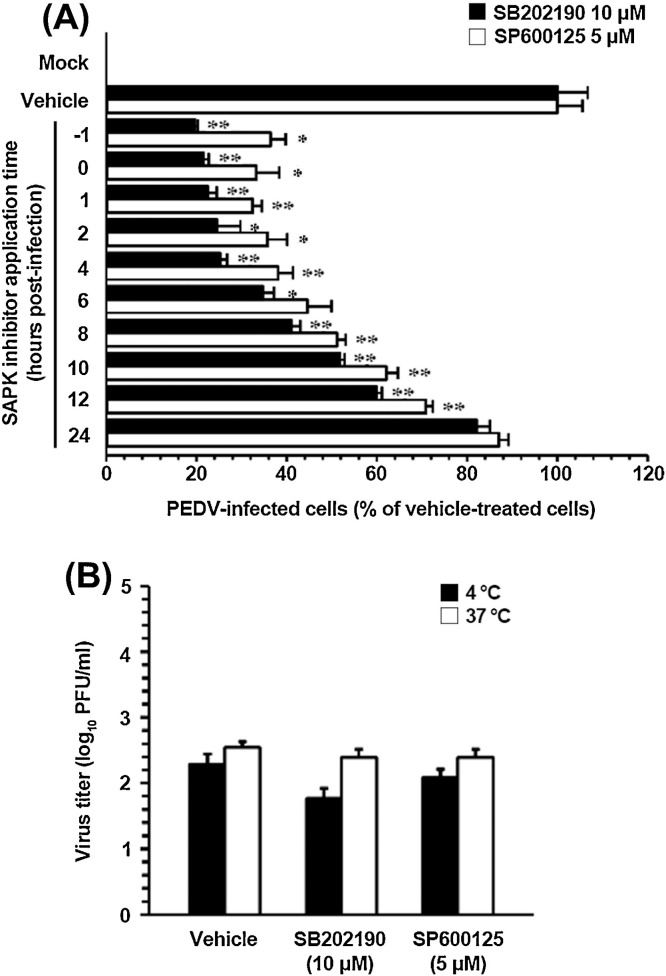
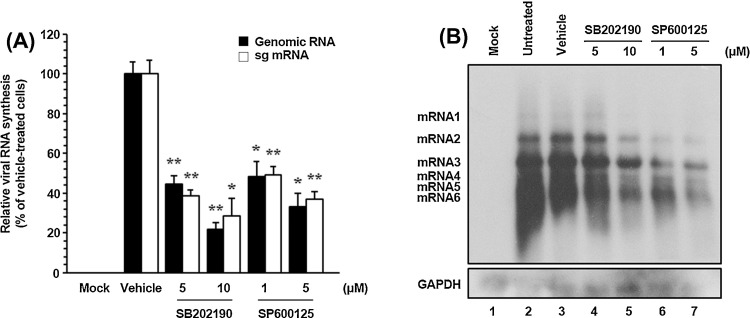
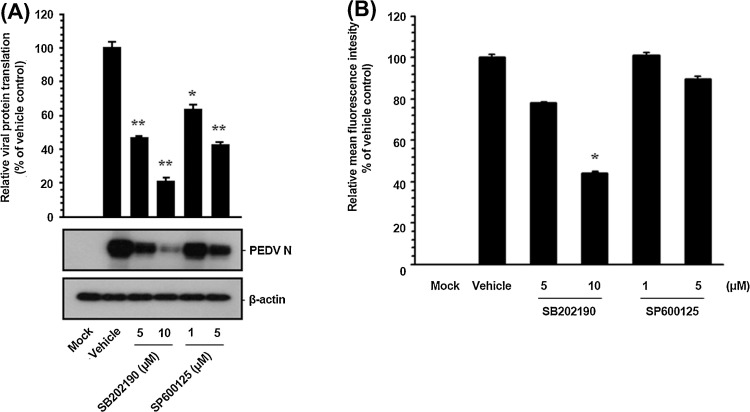
The mitogen-activated protein kinase (MAPK) pathways, which are central building blocks in the intracellular signaling network, are often manipulated by viruses of diverse families to favor their replication. Among the MAPK family, the extracellular signal-regulated kinase (ERK) pathway is known to be modulated during the infection with porcine epidemic diarrhea virus (PEDV); however, involvement of stress-activated protein kinases (SAPKs) comprising p38 MAPK and c-Jun NH2-terminal kinase (JNK) remains to be determined. Therefore, in the present study, we investigated whether activation of p38 MAPK and JNK cascades is required for PEDV replication. Our results showed that PEDV activates p38 MAPK and JNK1/2 up to 24h post-infection, whereas, thereafter their phosphorylation levels recede to baseline levels or even fall below them. Notably, UV-irradiated inactivated PEDV, which can enter cells but cannot replicate inside them, failed to induce phosphorylation of p38 MAPK and JNK1/2 suggesting that viral biosynthesis is essential for activation of these kinases. Treatment of cells with selective p38 or JNK inhibitors markedly impaired PEDV replication in a dose-dependent manner and these antiviral effects were found to be maximal during the early times of the infection. Furthermore, direct pharmacological inhibition of p38 MAPK or JNK1/2 activation resulted in a significant reduction of viral RNA synthesis, viral protein expression, and progeny release. However, independent treatments with either SAPK inhibitor did not inhibit PEDV-induced apoptotic cell death mediated by activation of mitochondrial apoptosis-inducing factor (AIF) suggesting that SAPKs are irrelevant to the apoptosis pathway during PEDV infection. In summary, our data demonstrated critical roles of the p38 and JNK1/2 signaling pathways in facilitating successful viral infection during the post-entry steps of the PEDV life cycle.
丝裂原活化蛋白激酶(MAPK)信号通路是细胞内信号网络的核心组成部分,常被不同科的病毒操控以利于自身复制。在MAPK家族中,已知细胞外信号调节激酶(ERK)通路在猪流行性腹泻病毒(PEDV)感染过程中会受到调节;然而,包含p38 MAPK和c-Jun氨基末端激酶(JNK)的应激激活蛋白激酶(SAPK)是否参与其中仍有待确定。因此,在本研究中,我们探究了PEDV复制是否需要激活p38 MAPK和JNK级联反应。我们的结果表明,PEDV在感染后24小时内激活p38 MAPK和JNK1/2,而此后它们的磷酸化水平会降至基线水平甚至低于基线水平。值得注意的是,紫外线照射灭活的PEDV能够进入细胞但无法在细胞内复制,它无法诱导p38 MAPK和JNK1/2的磷酸化,这表明病毒生物合成对于这些激酶的激活至关重要。用选择性p38或JNK抑制剂处理细胞会以剂量依赖的方式显著损害PEDV复制,并且这些抗病毒作用在感染早期最为明显。此外,直接药理抑制p38 MAPK或JNK1/2的激活会导致病毒RNA合成、病毒蛋白表达和子代释放显著减少。然而,单独使用任一SAPK抑制剂处理均未抑制由线粒体凋亡诱导因子(AIF)激活介导的PEDV诱导的凋亡细胞死亡,这表明SAPK与PEDV感染期间的凋亡途径无关。总之,我们的数据证明了p38和JNK1/2信号通路在PEDV生命周期进入后阶段促进病毒成功感染中的关键作用。