Chen Ya-Mei, Burrough Eric
College of Veterinary Medicine, National Pingtung University of Science and Technology, Neipu, Pingtung County 912301, Taiwan.
Department of Veterinary Diagnostic and Production Animal Medicine, College of Veterinary Medicine, Iowa State University, Ames, IA 50011, USA.
Pathogens. 2022 Aug 19;11(8):940. doi: 10.3390/pathogens11080940.
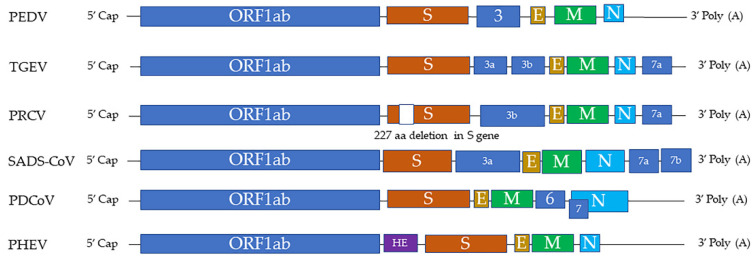
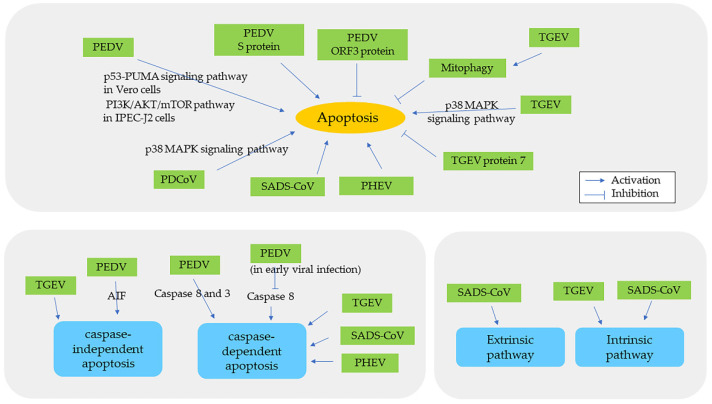
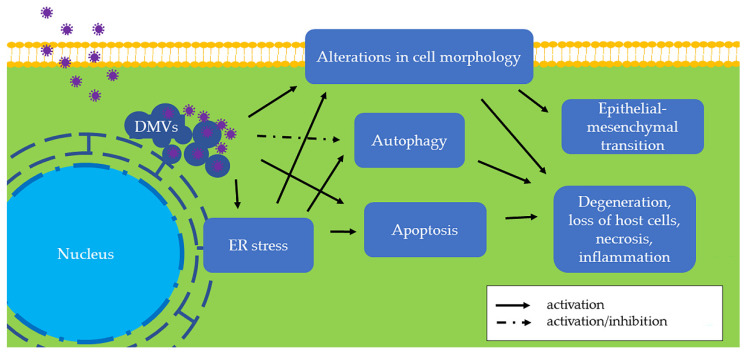
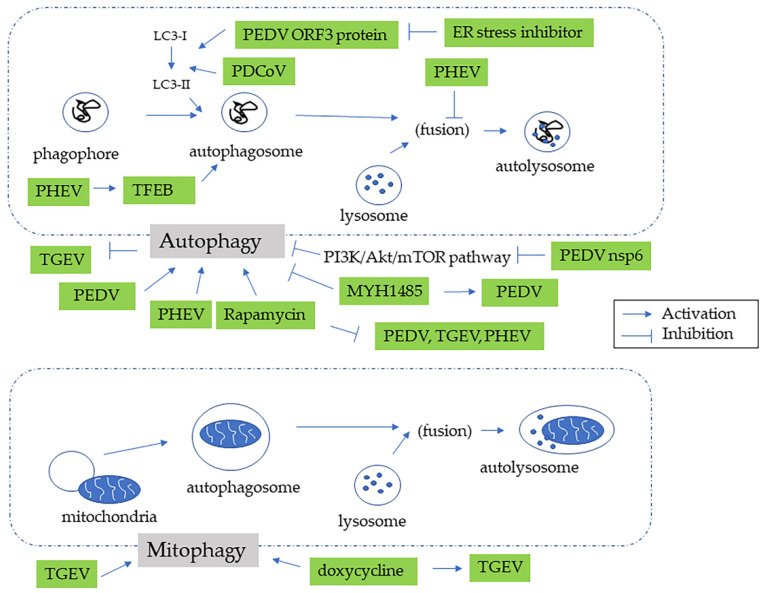
Swine coronaviruses include the following six members, namely porcine epidemic diarrhea virus (PEDV), transmissible gastroenteritis virus (TGEV), porcine delta coronavirus (PDCoV), swine acute diarrhea syndrome coronavirus (SADS-CoV), porcine hemagglutinating encephalomyelitis virus (PHEV), and porcine respiratory coronavirus (PRCV). Clinically, PEDV, TGEV, PDCoV, and SADS-CoV cause enteritis, whereas PHEV induces encephalomyelitis, and PRCV causes respiratory disease. Years of studies reveal that swine coronaviruses replicate in the cellular cytoplasm exerting a wide variety of effects on cells. Some of these effects are particularly pertinent to cell pathology, including endoplasmic reticulum (ER) stress, unfolded protein response (UPR), autophagy, and apoptosis. In addition, swine coronaviruses are able to induce cellular changes, such as cytoskeletal rearrangement, alterations of junctional complexes, and epithelial-mesenchymal transition (EMT), that render enterocytes unable to absorb nutrients normally, resulting in the loss of water, ions, and protein into the intestinal lumen. This review aims to describe the cellular changes in swine coronavirus-infected cells and to aid in understanding the pathogenesis of swine coronavirus infections. This review also explores how the virus exerted subcellular and molecular changes culminating in the clinical and pathological findings observed in the field.
猪冠状病毒包括以下六个成员,即猪流行性腹泻病毒(PEDV)、传染性胃肠炎病毒(TGEV)、猪δ冠状病毒(PDCoV)、猪急性腹泻综合征冠状病毒(SADS-CoV)、猪血凝性脑脊髓炎病毒(PHEV)和猪呼吸道冠状病毒(PRCV)。临床上,PEDV、TGEV、PDCoV和SADS-CoV引起肠炎,而PHEV诱发脑脊髓炎,PRCV引起呼吸道疾病。多年研究表明,猪冠状病毒在细胞质中复制,对细胞产生多种影响。其中一些影响与细胞病理学特别相关,包括内质网(ER)应激、未折叠蛋白反应(UPR)、自噬和凋亡。此外,猪冠状病毒能够诱导细胞变化,如细胞骨架重排、连接复合体改变和上皮-间质转化(EMT),使肠上皮细胞无法正常吸收营养,导致水、离子和蛋白质流失到肠腔中。本综述旨在描述猪冠状病毒感染细胞中的细胞变化,有助于理解猪冠状病毒感染的发病机制。本综述还探讨了病毒如何引起亚细胞和分子变化,最终导致在实际病例中观察到的临床和病理结果。