Ohwada Takayuki, Yokokawa Tetsuro, Kanno Yuki, Hotsuki Yu, Sakamoto Takayuki, Watanabe Kenichi, Nakazato Kazuhiko, Takeishi Yasuchika
Fukushima Red Cross Hospital, Department of Cardiology, Fukushima, Japan.
Fukushima Medical University, Department of Cardiology and Hematology, Fukushima, Japan.
Data Brief. 2016 Apr 7;7:1237-47. doi: 10.1016/j.dib.2016.03.101. eCollection 2016 Jun.
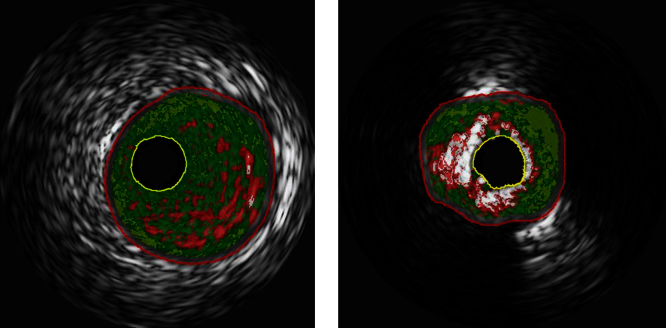
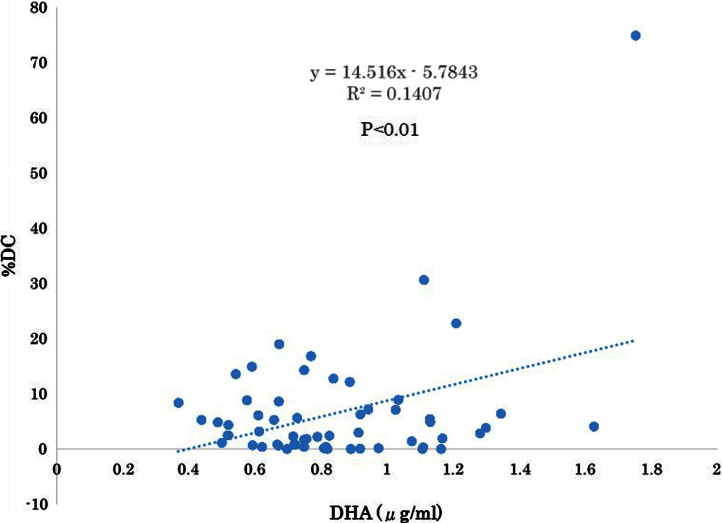
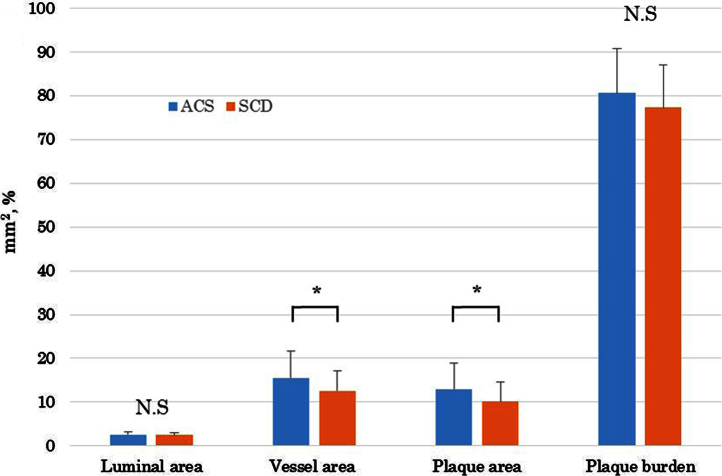
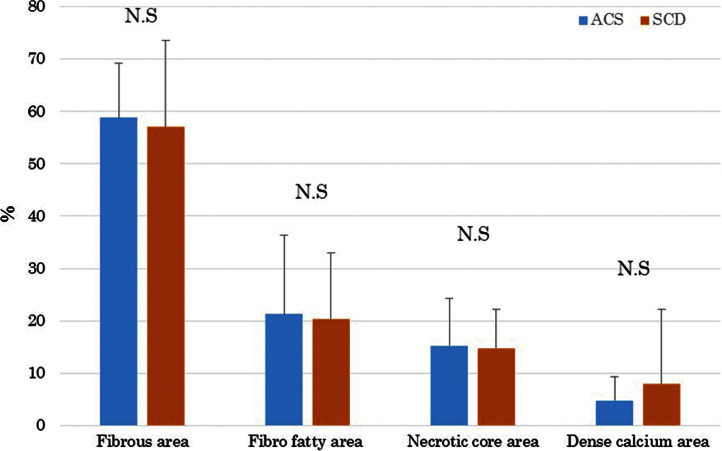
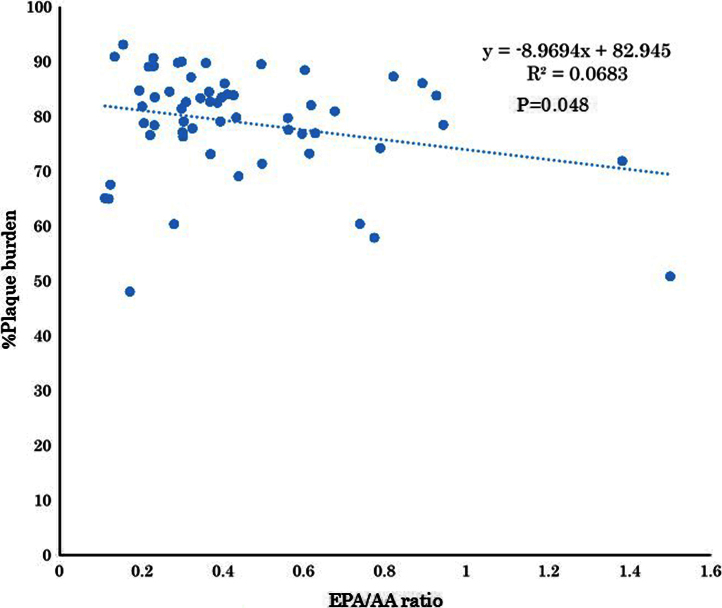
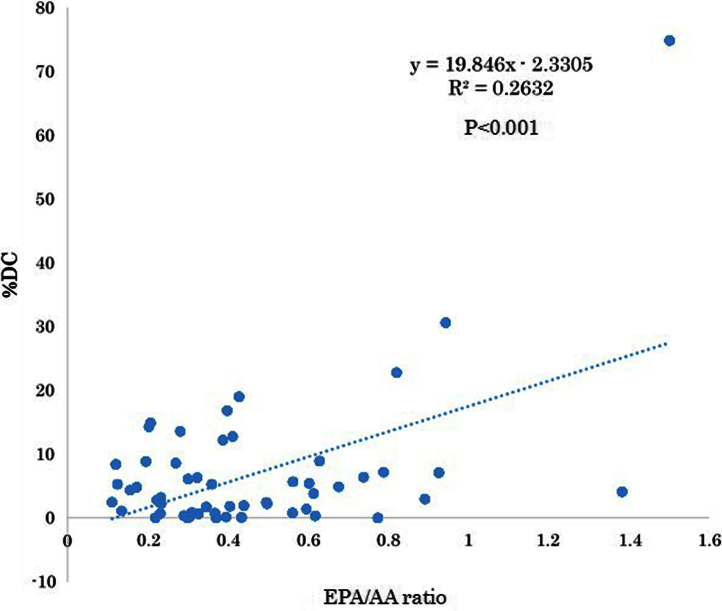
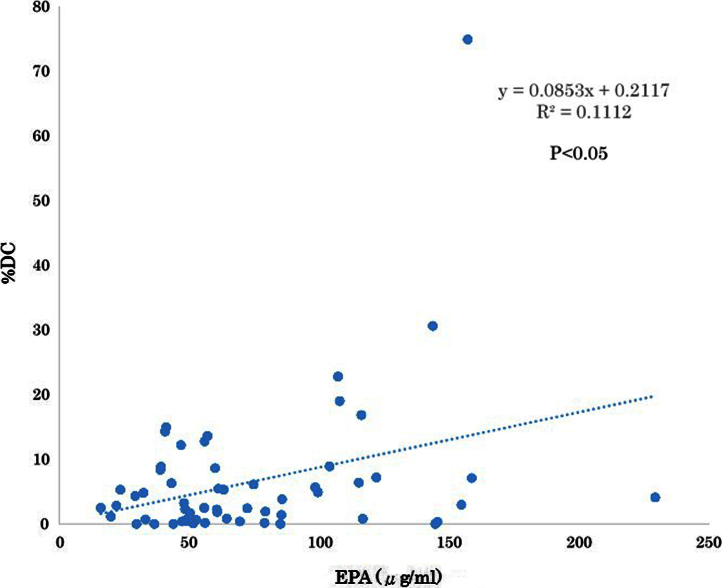
N-3 polyunsaturated fatty acids (PUFAs) are thought to have protective effects against cardiovascular disease. Here, we report the relationship between serum PUFA concentrations and plaque composition, as evaluated by virtual histology-intravascular ultrasound (VH-IVUS). Consecutive patients (n=61) who underwent percutaneous coronary intervention (PCI) were pre-operatively examined using VH-IVUS to assess the composition of culprit plaques. Gray-scale IVUS and VH-IVUS data of fibrous, fibro-fatty, necrotic core, and dense calcium regions of plaques were estimated at the minimal luminal area sites of culprit lesions. Serum levels of high-sensitivity C-reactive protein (hsCRP) and PUFAs, including eicosapentaenoic acid (EPA), docosahexaenoic acid (DHA), and arachidonic acid (AA), were compared between patients with (ACS, n=27) and without acute coronary syndrome (non-ACS, n=34) before PCI. Multiple logistic regression analysis of the data showed that EPA/AA under the median was more highly associated with ACS than hsCRP over the median. In addition, EPA/AA was negatively correlated with the percentage of fibrous plaque regions and EPA/AA and DHA/AA were positively correlated with the percentage of dense calcium regions in plaques. Furthermore, the correlation index of EPA/AA was the most highly (R=0.513) correlated with the percentage of dense calcium regions in plaques.
N-3多不饱和脂肪酸(PUFAs)被认为对心血管疾病具有保护作用。在此,我们报告血清PUFA浓度与斑块成分之间的关系,该关系通过虚拟组织学血管内超声(VH-IVUS)进行评估。对连续接受经皮冠状动脉介入治疗(PCI)的患者(n = 61)在术前使用VH-IVUS检查,以评估罪犯斑块的成分。在罪犯病变的最小管腔面积部位估计斑块的纤维、纤维脂肪、坏死核心和致密钙区域的灰阶IVUS和VH-IVUS数据。在PCI术前,比较有急性冠状动脉综合征(ACS,n = 27)和无急性冠状动脉综合征(非ACS,n = 34)患者的高敏C反应蛋白(hsCRP)和PUFAs(包括二十碳五烯酸(EPA)、二十二碳六烯酸(DHA)和花生四烯酸(AA))的血清水平。对数据进行的多因素逻辑回归分析表明,中位数以下的EPA/AA比中位数以上的hsCRP与ACS的相关性更高。此外,EPA/AA与纤维斑块区域的百分比呈负相关,EPA/AA和DHA/AA与斑块中致密钙区域的百分比呈正相关。此外,EPA/AA的相关指数与斑块中致密钙区域的百分比相关性最高(R = 0.513)。