He Peirong, Wang Suihai, Zhang Xuefeng, Gao Yanjun, Niu Wenbo, Dong Ningning, Shi Xiangyi, Geng Yan, Ma Qiang, Li Ming, Jiang Bo, Li Ji-Liang
School of Biotechnology, Southern Medical University, Guangzhou 510515, China.
Guangdong Provincial Key Laboratory of Gastroenterology, Department of Gastroenterology, Nanfang Hospital, Southern Medical University, Guangzhou 510515, China.
Oncotarget. 2016 Jun 28;7(26):40160-40173. doi: 10.18632/oncotarget.9514.
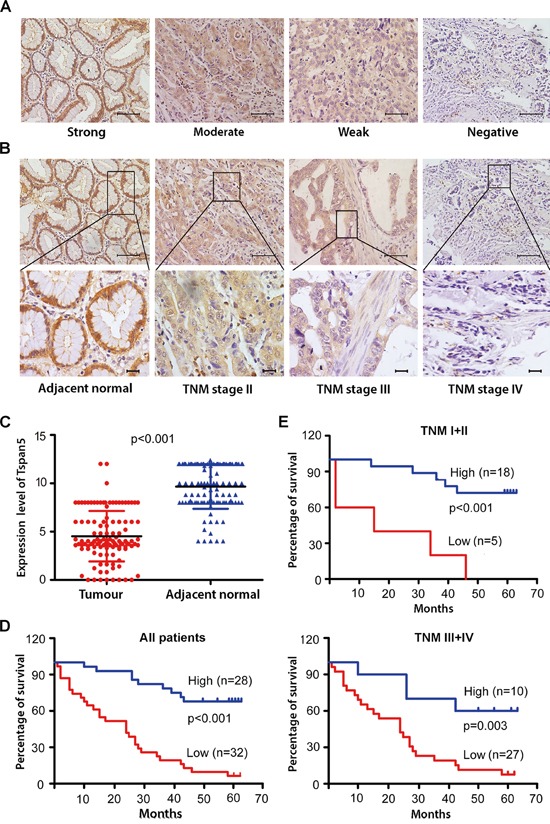
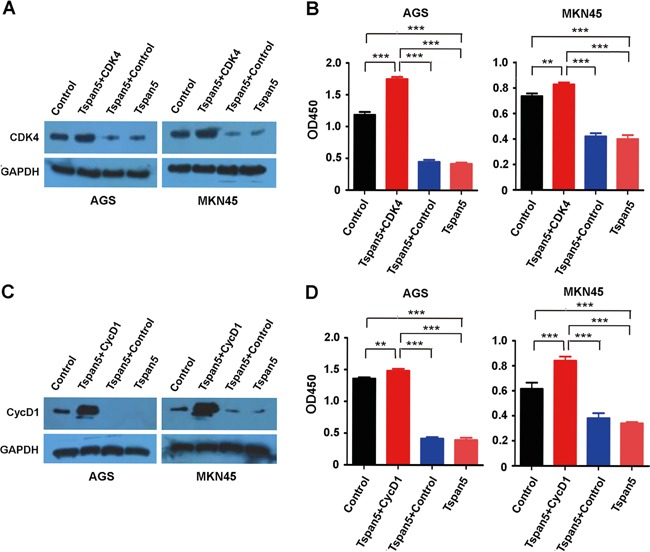
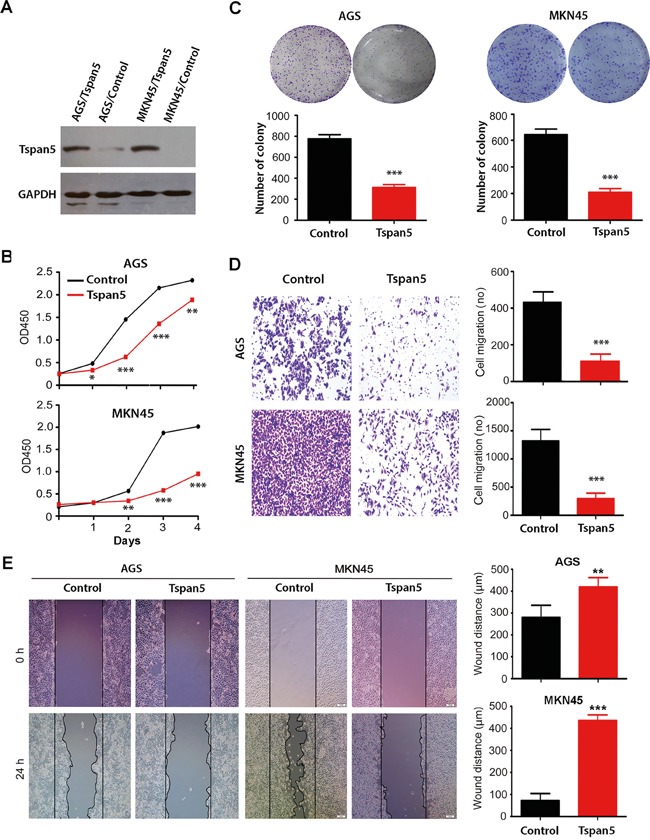
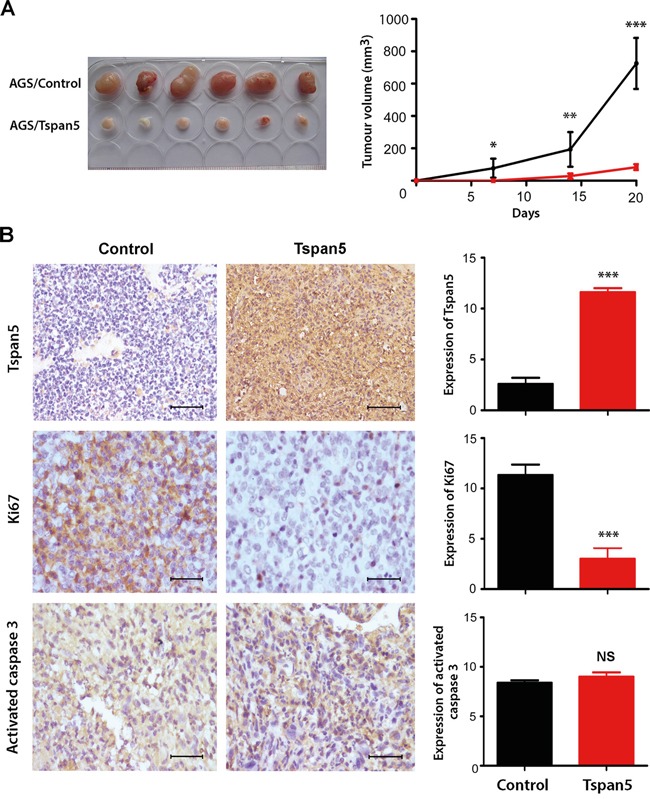
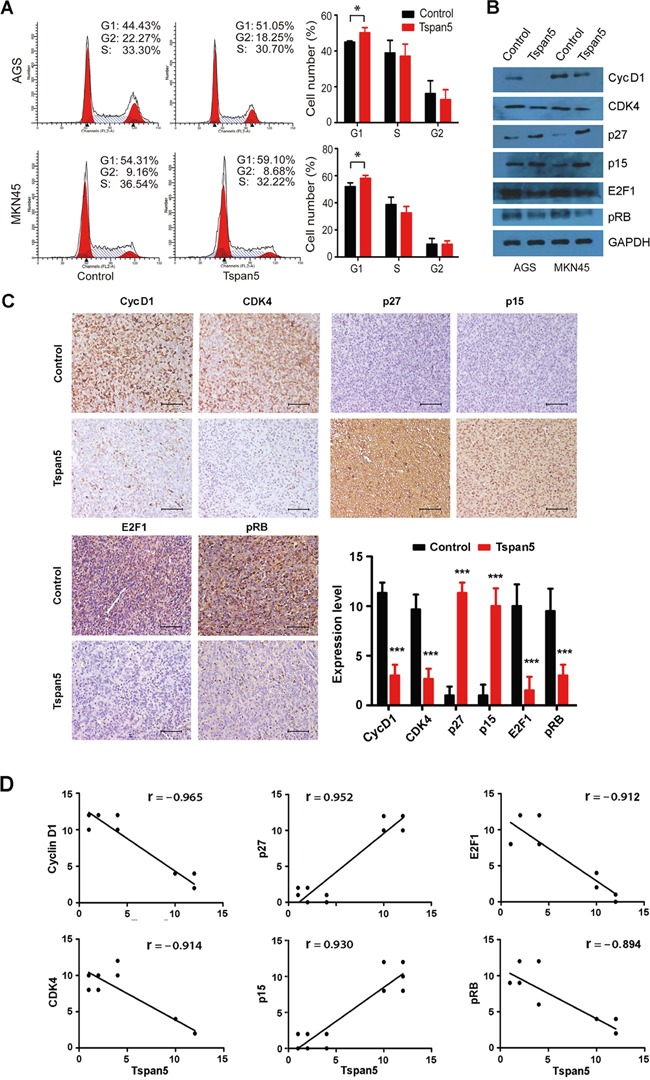
Tetraspanins are believed to interact with specific partner proteins forming tetraspanin-enriched microdomains and regulate some aspects of partner protein functions. However, the role of Tspan5 during pathological processes, particularly in cancer biology, remains unknown. Here we report that Tspan5 is significantly downregulated in gastric cancer (GC) and closely associated with clinicopathological features including tumour size and TNM stage. The expression of Tspan5 is inversely correlated with patient overall survival and is an independent prognostic factor in GC. Upregulation of Tspan5 in tumour cells results in inhibition of cell proliferation and colony formation in vitro and suppression of xenograft growth of GC by reducing tumour cell proliferation in vivo. Thus, Tspan5 functions as a tumour suppressor in stomach to control the tumour growth. Mechanistically, Tspan5 inhibits the cell cycle transition from G1-S phase by increasing the expression of p27 and p15 and decreasing the expression of cyclin D1, CDK4, pRB and E2F1. The correlation of Tspan5 expression with the expression of p27, p15, cyclin D1, CDK4, pRB and E2F1 in vivo are also revealed in xenografted tumours. Reconstitution of either cyclin D1 or CDK4 in Tspan5-overexpressing GC cells rescues the inhibitory phenotype produced by Tspan5, suggesting that cyclin D1/CDK4 play a dominant role in mediating the suppression of tumour growth by Tspan5 in GC. Our results suggest that Tspan5 may serve as a prognostic biomarker for predicting outcome of GC patients and provide new insights into the pathogenesis of GC and rational for the development of clinical intervention strategies against GC.
四跨膜蛋白被认为与特定的伴侣蛋白相互作用,形成富含四跨膜蛋白的微结构域,并调节伴侣蛋白功能的某些方面。然而,Tspan5在病理过程中的作用,尤其是在癌症生物学中的作用,仍然未知。在此我们报告,Tspan5在胃癌(GC)中显著下调,并且与包括肿瘤大小和TNM分期在内的临床病理特征密切相关。Tspan5的表达与患者的总生存期呈负相关,并是GC的一个独立预后因素。肿瘤细胞中Tspan5的上调导致体外细胞增殖和集落形成受到抑制,并且通过在体内减少肿瘤细胞增殖而抑制GC的异种移植生长。因此,Tspan5在胃中作为肿瘤抑制因子发挥作用以控制肿瘤生长。机制上, Tspan5通过增加p27和p15表达以及降低细胞周期蛋白D1、CDK4、pRB和E2F1的表达来抑制细胞周期从G1期到S期的转变。在异种移植肿瘤中也揭示了Tspan5表达与体内p27、p15、细胞周期蛋白D1、CDK4、pRB和E2F1表达之间的相关性。在过表达Tspan5的GC细胞中恢复细胞周期蛋白D1或CDK4可挽救由Tspan5产生的抑制表型,这表明细胞周期蛋白D1/CDK4在介导Tspan5对GC肿瘤生长的抑制中起主导作用。我们的结果表明,Tspan5可能作为预测GC患者预后的生物标志物,并为GC的发病机制提供新的见解以及为开发针对GC的临床干预策略提供理论依据。