Chukkapalli S S, Velsko I M, Rivera-Kweh M F, Larjava H, Lucas A R, Kesavalu L
Department of Periodontology, College of Dentistry, University of Florida, Gainesville, FL, USA.
Division of Periodontics and Dental Hygiene, University of British Columbia, Vancouver, BC, Canada.
Mol Oral Microbiol. 2017 Jun;32(3):211-225. doi: 10.1111/omi.12165. Epub 2016 Jul 20.
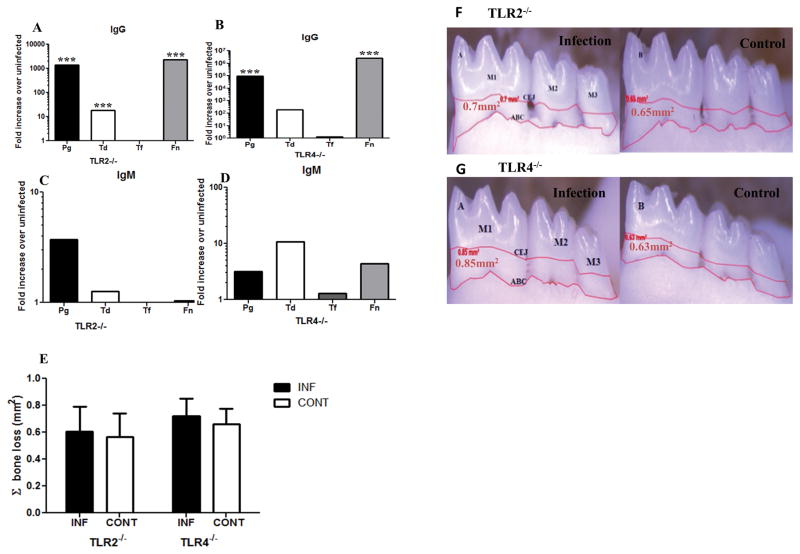
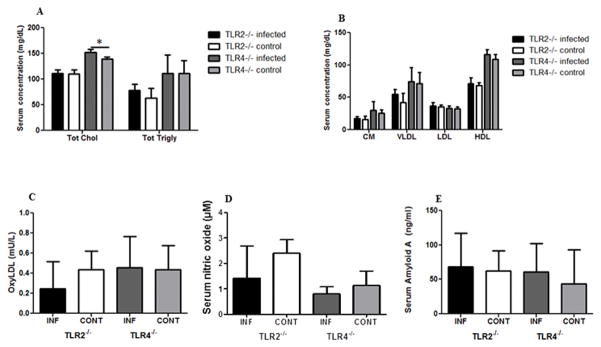
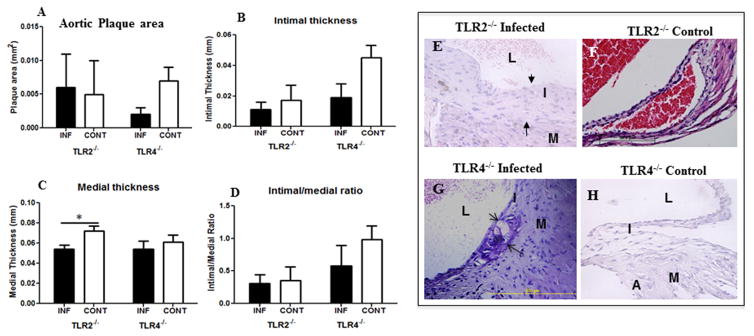
Toll-like-receptors (TLRs) play a significant role in the generation of a specific innate immune response against invading pathogens. TLR2 and TLR4 signaling contributes to infection-induced inflammation in periodontal disease (PD) and atherosclerosis. Observational studies point towards a relationship between PD and atherosclerosis, but the role of TLR2 and TLR4 in the recognition of multiple oral pathogens and their modulation of host response leading to atherosclerosis are not clear. We evaluated the role of TLR2 and TLR4 signaling in the induction of both PD and atherosclerosis in TLR2 and TLR4 mice to polymicrobial infection with periodontal pathogens Porphyromonas gingivalis, Treponema denticola, Tannerella forsythia, and Fusobacterium nucleatum. Polybacterial infections have established gingival colonization in TLR2 and TLR4 mice and induction of a pathogen-specific immunoglobulin G immune response. But TLR deficiency dampened accelerated alveolar bone resorption and intrabony defects, indicating a central role in infection-induced PD. Periodontal bacteria disseminated from gingival tissue to the heart and aorta through intravascular dissemination; however, there was no increase in atherosclerosis progression in the aortic arch. Polybacterial infection does not alter levels of serum risk factors such as oxidized low-density lipoprotein, nitric oxide, and lipid fractions in both mice. Polymicrobial-infected TLR2 mice demonstrated significant levels (P < 0.05 to P < 0.01) of T helper type 2 [transforming growth factor-β , macrophage inflammatory protein-3α, interleukin-13 (IL-13)] and T helper type 17 (IL-17, IL-21, IL-22, IL-23) splenic T-cell cytokine responses. Increased heat-shock protein expression, hspa1a for Hsp 70, was observed for both TLR2 and TLR4 mice. This study supports a role for TLR2 and TLR4 in PD and atherosclerosis, corroborating an intricate association between two inflammatory diseases.
Toll样受体(TLRs)在针对入侵病原体产生特异性固有免疫反应中发挥着重要作用。TLR2和TLR4信号传导促成了牙周病(PD)和动脉粥样硬化中感染诱导的炎症。观察性研究表明PD与动脉粥样硬化之间存在关联,但TLR2和TLR4在识别多种口腔病原体及其对导致动脉粥样硬化的宿主反应的调节作用尚不清楚。我们评估了TLR2和TLR4信号传导在用牙周病原体牙龈卟啉单胞菌、具核梭杆菌、福赛坦纳菌和齿垢密螺旋体进行多微生物感染的TLR2和TLR4小鼠中诱导PD和动脉粥样硬化的作用。多细菌感染已在TLR2和TLR4小鼠中建立牙龈定植并诱导病原体特异性免疫球蛋白G免疫反应。但TLR缺陷抑制了加速的牙槽骨吸收和骨内缺损,表明其在感染诱导的PD中起核心作用。牙周细菌通过血管内播散从牙龈组织扩散到心脏和主动脉;然而,主动脉弓中的动脉粥样硬化进展并未增加。多细菌感染不会改变两种小鼠血清风险因子如氧化型低密度脂蛋白、一氧化氮和脂质成分的水平。多微生物感染的TLR2小鼠脾脏T细胞细胞因子反应中2型辅助性T细胞[转化生长因子-β、巨噬细胞炎性蛋白-3α、白细胞介素-13(IL-13)]和17型辅助性T细胞(IL-17、IL-21、IL-22、IL-23)水平显著(P<0.05至P<0.01)。在TLR2和TLR4小鼠中均观察到热休克蛋白表达增加,Hsp 70的hspa1a表达增加。本研究支持TLR2和TLR4在PD和动脉粥样硬化中的作用,证实了两种炎症性疾病之间的复杂关联。