Coller Kelly E, Berg Michael G, Frankel Matthew, Forberg Kenn, Surani Rita, Chiu Charles Y, Hackett John, Dawson George J
Abbott Laboratories, Abbott Park, Illinois, USA
Abbott Laboratories, Abbott Park, Illinois, USA.
J Clin Microbiol. 2016 Aug;54(8):2023-30. doi: 10.1128/JCM.00515-16. Epub 2016 May 25.
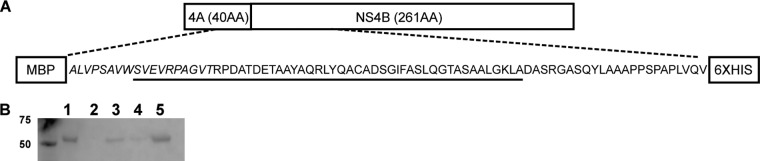
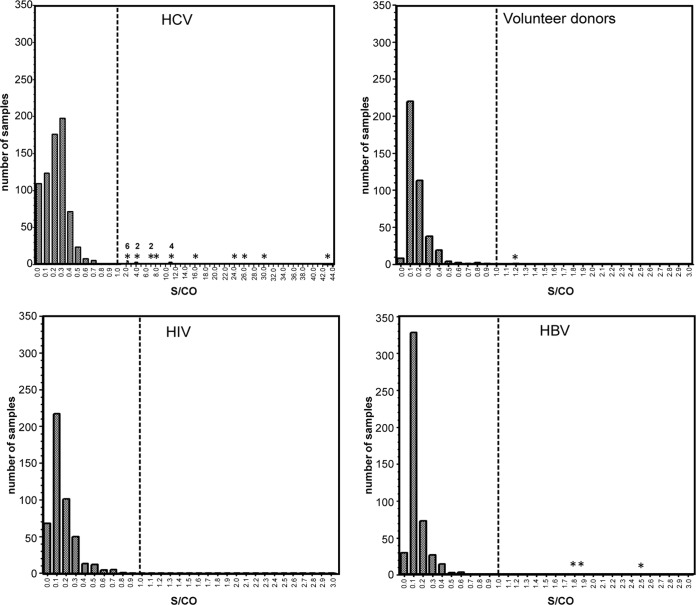
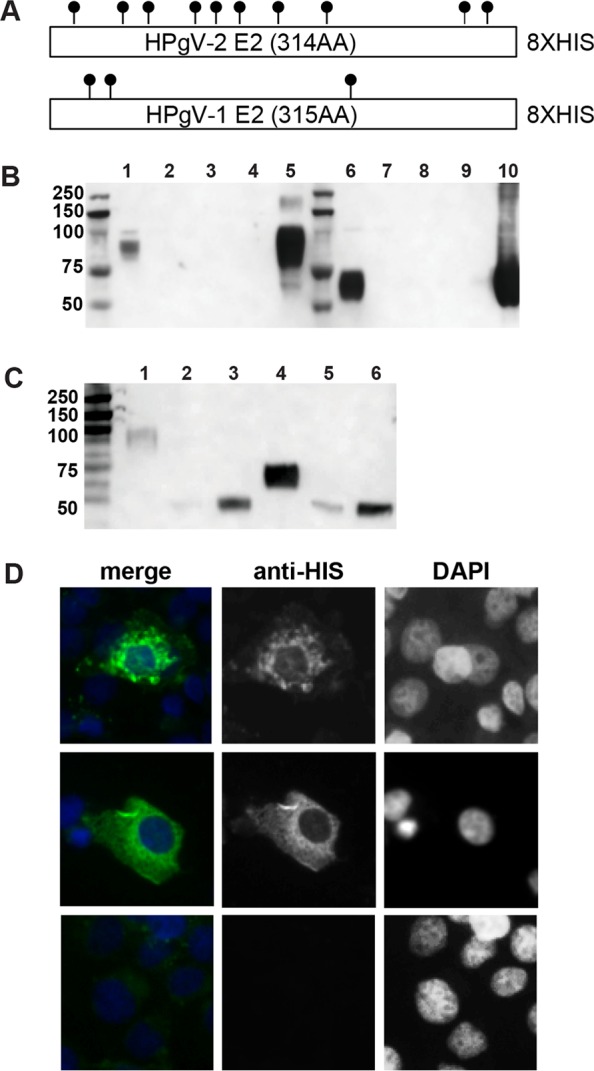
A novel blood-borne human pegivirus (HPgV), HPgV-2, was recently identified in hepatitis C virus (HCV)-infected individuals and individuals who had received multiple transfusions. Robust serological assays capable of detecting antibodies in HPgV-2-infected individuals are needed to establish global seroprevalence rates and potential disease associations. The two objectives of this study were to determine the utility of mammalian cell-expressed HPgV-2 E2 glycoprotein or bacterium-expressed nonstructural protein 4AB (NS4AB) in detecting past or present infections and to compare the total prevalence (antibody and RNA positive) of HPgV-2 with that of the other human pegivirus, HPgV-1 (GB virus C [GBV-C]). HPgV-2 E2 antibodies were detected in 13 (92.86%) of 14 HPgV-2-viremic cases, and NS4AB antibodies were detected in 8 (57.14%) of 14 cases. The HPgV-2 seroprevalence was significantly higher (P < 0.0001) among HCV-infected individuals (3.31% [24 of 726 samples]) than among non-HCV-infected individuals (0.30% [4 of 1,348 samples]). Of 31 anti-E2-positive samples, 22 had supplemental supporting data; 12 samples were HPgV-2 RNA positive and 10 nonviremic samples were antibody positive for peptides or NS4AB. The total prevalence of HPgV-1 (35.00%) was significantly higher than that of HPgV-2 (1.33%) in all populations tested (P < 0.0001). For HPgV-1, codetection of antibodies to E2 and RNA was infrequent (5.88%). In contrast, antibodies to E2 were detected in most HPgV-2-viremic individuals (92.86%), as is observed among individuals chronically infected with HCV, most of whom are antibody positive for HCV E2. Our studies indicate that HPgV-2 circulates with HCV and displays a profile similar to the serological profile of HCV-infected persons, although the pathogenicity of this virus has yet to be established.
一种新型的血源人pegivirus(HPgV),即HPgV-2,最近在丙型肝炎病毒(HCV)感染个体和接受多次输血的个体中被发现。需要能够检测HPgV-2感染个体中抗体的可靠血清学检测方法来确定全球血清流行率和潜在的疾病关联。本研究的两个目标是确定哺乳动物细胞表达的HPgV-2 E2糖蛋白或细菌表达的非结构蛋白4AB(NS4AB)在检测既往或当前感染中的效用,并比较HPgV-2与另一种人pegivirus HPgV-1(GB病毒C [GBV-C])的总流行率(抗体和RNA阳性)。在14例HPgV-2病毒血症病例中的13例(92.86%)检测到HPgV-2 E2抗体,在14例病例中的8例(57.14%)检测到NS4AB抗体。HCV感染个体中的HPgV-2血清流行率(3.31% [726份样本中的24份])显著高于非HCV感染个体(0.30% [1348份样本中的4份])(P < 0.0001)。在31份抗E2阳性样本中,22份有补充支持数据;12份样本HPgV-2 RNA阳性,10份非病毒血症样本对肽或NS4AB抗体呈阳性。在所有检测人群中,HPgV-1的总流行率(35.00%)显著高于HPgV-2(1.33%)(P < 0.0001)。对于HPgV-1,E2抗体和RNA的联合检测很少见(5.88%)。相比之下,在大多数HPgV-2病毒血症个体(92.86%)中检测到E2抗体,这与慢性HCV感染个体中观察到的情况相似,其中大多数人对HCV E2抗体呈阳性。我们的研究表明,HPgV-2与HCV共同传播,并且显示出与HCV感染人群相似的血清学特征,尽管这种病毒的致病性尚未确定。