Hao Mingju, Liu Min, Fan Gaowei, Yang Xin, Li Jinming
From the National Center for Clinical Laboratories (MH, GF, XY, JL), Beijing Hospital; Graduate School (MH, GF, XY, JL), Peking Union Medical College, Chinese Academy of Medical Sciences, Beijing; Department of Clinical Laboratory (MH), Qianfo Mountain Hospital of Shandong University; and Department of Clinical Laboratory (ML), Jinan Dermatosis Prevention and Control Hospital, Jinan, People's Republic of China.
Medicine (Baltimore). 2016 May;95(21):e3785. doi: 10.1097/MD.0000000000003785.
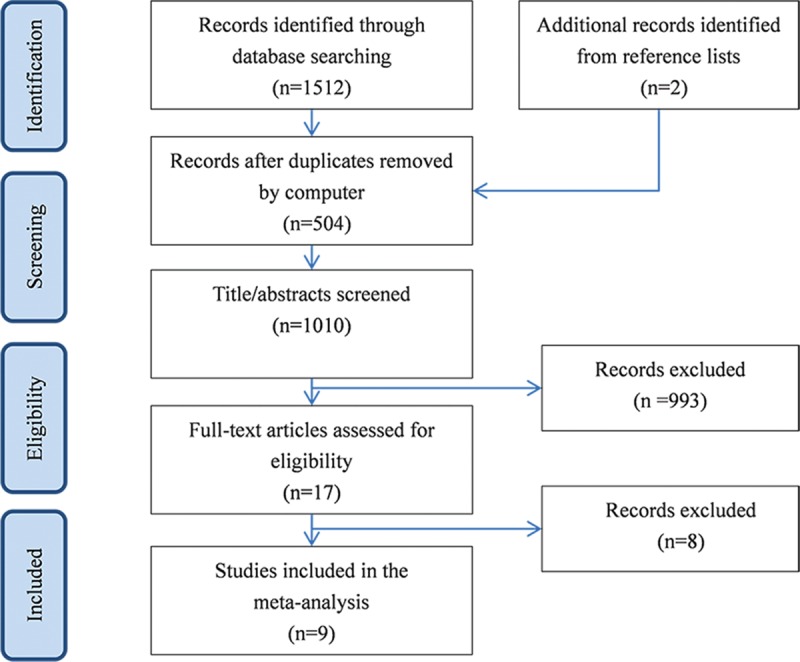
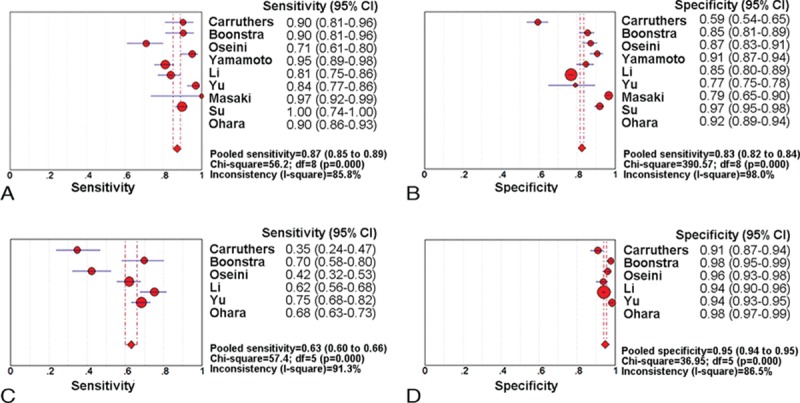
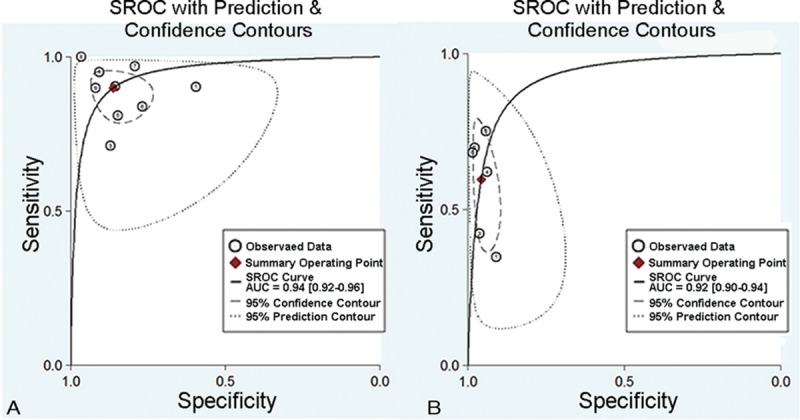
Many studies about serum IgG4 for the diagnosis of IgG4-related disease (IgG4-RD) have been reported. However, these studies had relatively small sample sizes and the diagnostic accuracy values varied much between them.The aim of this study was to perform a meta-analysis to evaluate the diagnostic value of serum IgG4 for IgG4-RD.We conducted a search of relevant articles using MEDLINE, EMBASE, Web of Science, SCOPUS, and Cochrane Library databases published before December 2015.Studies those assessed the diagnostic accuracy of serum IgG4 for IgG4-RD and those provided the cut-off value for serum IgG4 were included.Data were synthesized using the random-effect model. Statistical analysis was performed using STATA with the MIDAS module and Meta-DiSc 1.4 software.A total of 9 case-control studies were analyzed, which included 1235 patients with IgG4-RD and 5696 overall controls. The pooled estimate, for a cut-off value ranged from 135 to 144 mg/dL, produced a sensitivity of 87.2% (95% CI, 85.2-89.0%) and a specificity of 82.6% (95% CI, 81.6-83.6%). The positive likelihood ratio (PLR), negative likelihood ratio (NLR), and diagnostic odds ratio (DOR) were 6.48 (95% CI, 3.98-10.57), 0.14 (95% CI, 0.09-0.21), and 45.15 (95% CI, 23.41-87.06), respectively. The area under the curve (AUC) of the summary receiver operating characteristic curve (SROC) was 0.94 (0.92-0.96). When a cut-off value of 2-fold the upper limit of normal was used (ranged from 270 to 280 mg/dL), the pooled sensitivity was 63% (95% CI, 60.0-66.0%), and the specificity was 94.8% (95% CI, 94.1-95.4%). The PLR, NLR, and DOR were 13.3 (95% CI, 7.39-24.0), 0.41 (95% CI, 0.29-0.58) and 33.42 (95% CI, 13.88-80.43), respectively. The AUC of the SROC was 0.92 (0.90-0.94).Only a relatively small number of studies were included, and significant heterogeneity was observed in this meta-analysis.Serum IgG4 is a modestly effective marker to diagnose IgG4-RD. Doubling the cut-off value for IgG4 could not improve the overall test characteristics. A high specificity inevitably accompanies with a significant sacrifice in sensitivity.
关于血清IgG4用于诊断IgG4相关疾病(IgG4-RD)的许多研究已有报道。然而,这些研究的样本量相对较小,且它们之间的诊断准确性值差异很大。本研究的目的是进行一项荟萃分析,以评估血清IgG4对IgG4-RD的诊断价值。我们使用MEDLINE、EMBASE、科学网、SCOPUS和Cochrane图书馆数据库检索了2015年12月之前发表的相关文章。纳入了评估血清IgG4对IgG4-RD诊断准确性以及提供血清IgG4临界值的研究。使用随机效应模型对数据进行合成。使用带有MIDAS模块的STATA和Meta-DiSc 1.4软件进行统计分析。总共分析了9项病例对照研究,其中包括1235例IgG4-RD患者和5696例总体对照。对于临界值范围为135至144mg/dL的情况,汇总估计得出敏感性为87.2%(95%CI,85.2 - 89.0%),特异性为82.6%(95%CI,81.6 - 83.6%)。阳性似然比(PLR)、阴性似然比(NLR)和诊断比值比(DOR)分别为6.48(95%CI,3.98 - 10.57)、0.14(95%CI,0.09 - 0.21)和45.15(95%CI,23.41 - 87.06)。汇总受试者工作特征曲线(SROC)的曲线下面积(AUC)为0.94(0.92 - 0.96)。当使用正常上限2倍的临界值(范围为270至280mg/dL)时,汇总敏感性为63%(95%CI,60.0 - 66.0%),特异性为94.8%(95%CI,94.1 - 95.4%)。PLR、NLR和DOR分别为13.3(95%CI,7.39 - 24.0)、0.41(95%CI,0.29 - 0.58)和33.42(95%CI,13.88 - 80.43)。SROC的AUC为