Lin Tsung-Yao, Chen Ku-Chung, Liu Hsing-Jin Eugene, Liu Ann-Jeng, Wang Kun-Li, Shih Chwen-Ming
Graduate Institute of Medical Sciences, College of Medicine, Taipei Medical University, Taipei, Taiwan.
Department of Biochemistry and Molecular Cell Biology, College of Medicine, Taipei Medical University, Taipei, Taiwan.
PLoS One. 2016 May 26;11(5):e0156260. doi: 10.1371/journal.pone.0156260. eCollection 2016.
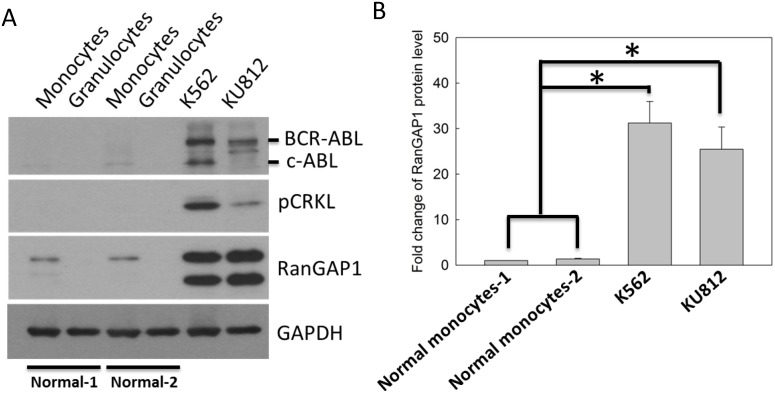
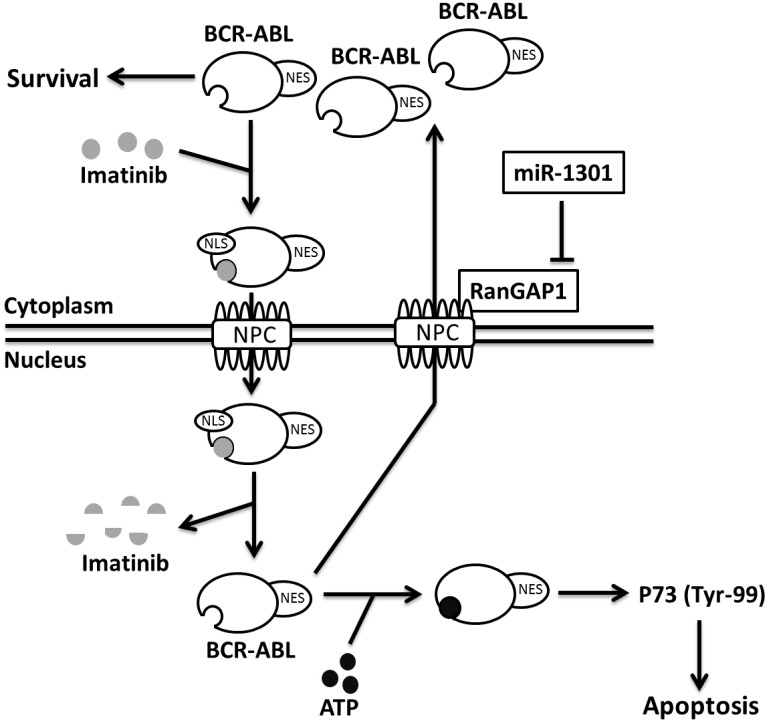
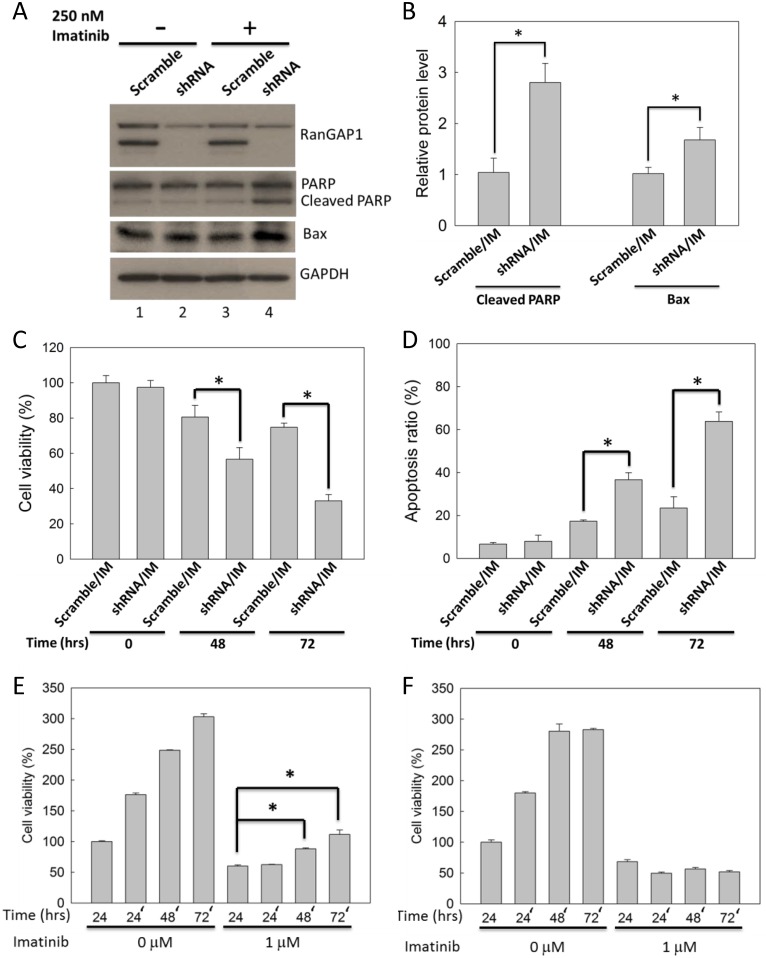
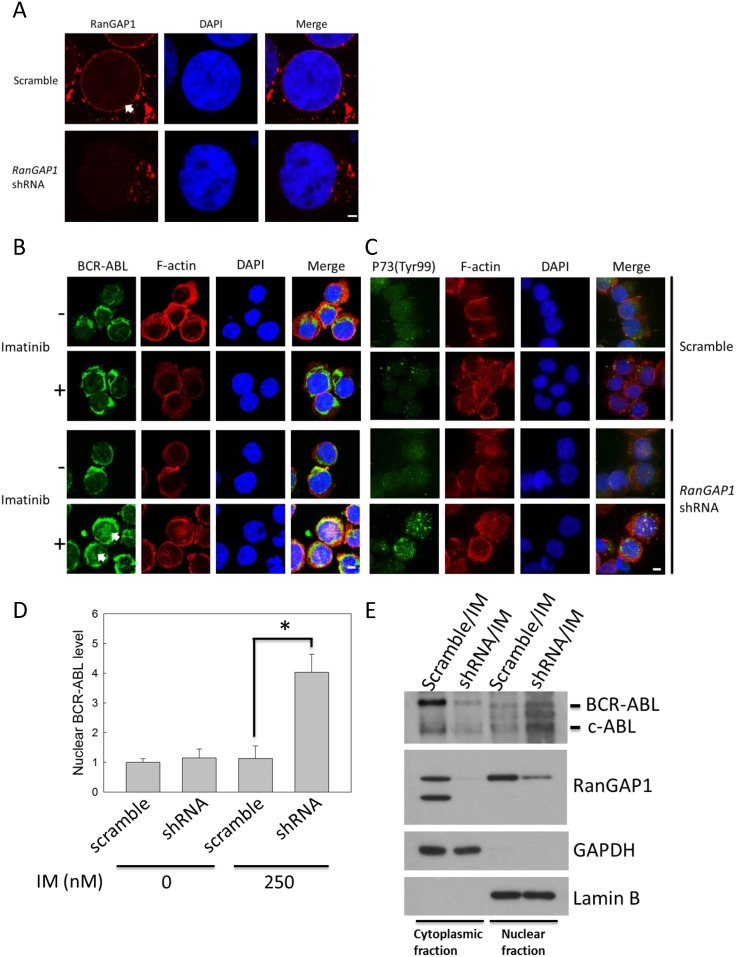
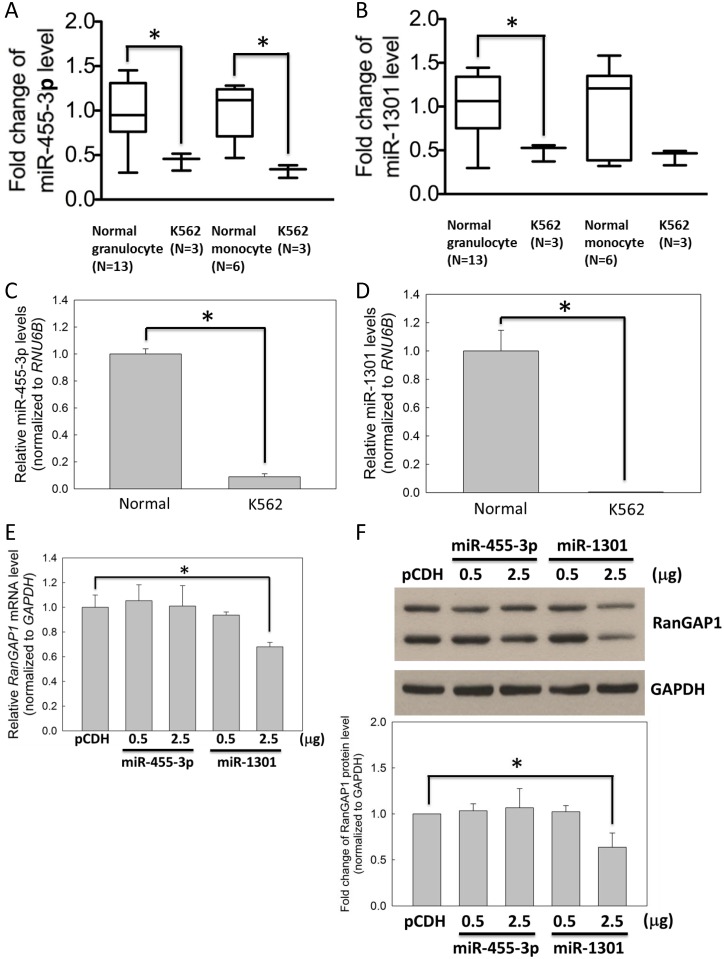
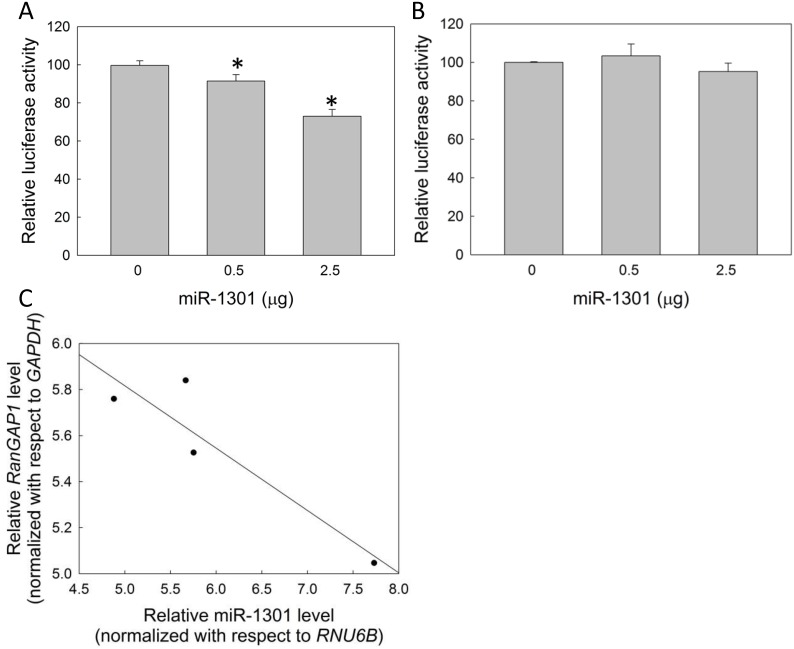
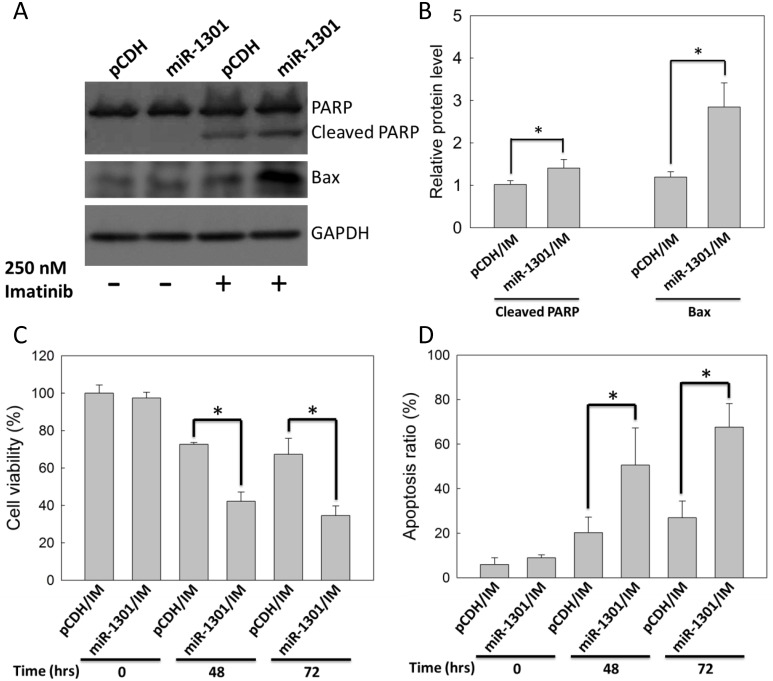
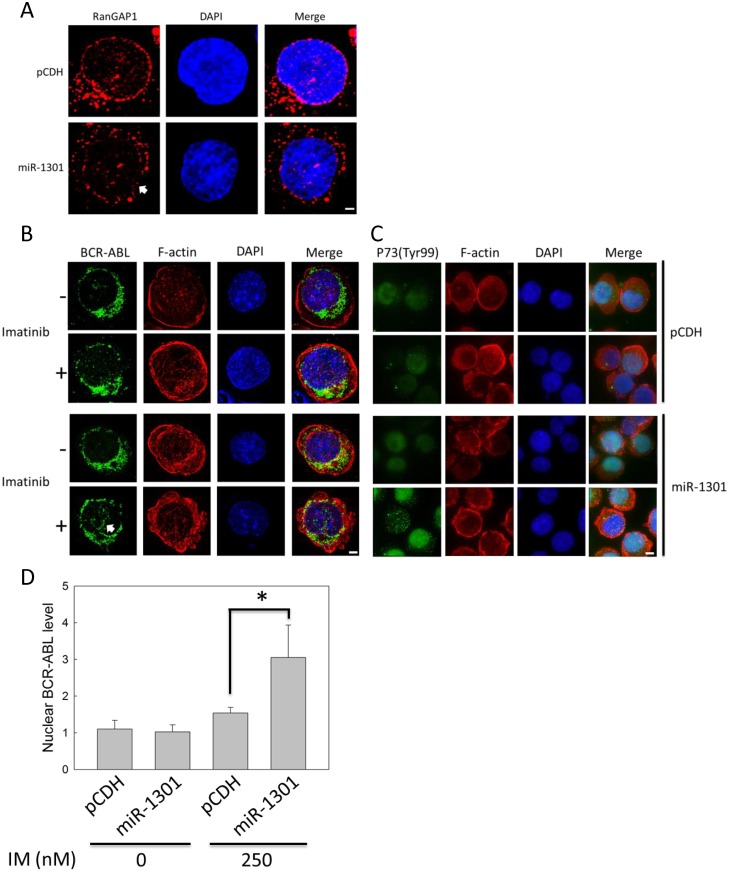
Chronic myeloid leukemia (CML) is a myeloproliferative disease. Imatinib (IM), the first line treatment for CML, is excessively expensive and induces various side effects in CML patients. Therefore, it is essential to investigate a new strategy for improving CML therapy. Our immunoblot data revealed that RanGTPase activating protein 1 (RanGAP1) protein levels increased by approximately 30-fold in K562 cells compared with those in normal cells. RanGAP1 is one of the important components of RanGTPase system, which regulates the export of nuclear protein. However, whether RanGAP1 level variation influences BCR-ABL nuclear export is still unknown. In this report, using shRNA to downregulate RanGAP1 expression level augmented K562 cell apoptosis by approximately 40% after treatment with 250 nM IM. Immunofluorescence assay also indicated that three-fold of nuclear BCR-ABL was detected. These data suggest that BCR-ABL nuclear entrapment induced by RanGAP1 downregulation can be used to improve IM efficacy. Moreover, our qRT-PCR data indicated a trend of inverse correlation between the RanGAP1 and microRNA (miR)-1301 levels in CML patients. MiR-1301, targeting the RanGAP1 3' untranslated region, decreased by approximately 100-fold in K562 cells compared with that in normal cells. RanGAP1 downregulation by miR-1301 transfection impairs BCR-ABL nuclear export to increase approximately 60% of cell death after treatment of 250 nM IM. This result was almost the same as treatment with 1000 nM IM alone. Furthermore, immunofluorescence assay demonstrated that Tyr-99 of nuclear P73 was phosphorylated accompanied with nuclear entrapment of BCR-ABL after transfection with RanGAP1 shRNA or miR-1301 in IM-treated K562 cells. Altogether, we demonstrated that RanGAP1 downregulation can mediate BCR-ABL nuclear entrapment to activate P73-dependent apoptosis pathway which is a novel strategy for improving current IM treatment for CML.
慢性髓性白血病(CML)是一种骨髓增殖性疾病。伊马替尼(IM)作为CML的一线治疗药物,价格昂贵且会在CML患者中引发各种副作用。因此,研究改善CML治疗的新策略至关重要。我们的免疫印迹数据显示,与正常细胞相比,K562细胞中RanGTP酶激活蛋白1(RanGAP1)的蛋白水平增加了约30倍。RanGAP1是RanGTP酶系统的重要组成部分之一,该系统调节核蛋白的输出。然而,RanGAP1水平变化是否影响BCR-ABL的核输出仍不清楚。在本报告中,使用短发夹RNA(shRNA)下调RanGAP1表达水平,在用250 nM伊马替尼处理后,K562细胞凋亡增加了约40%。免疫荧光分析还表明,检测到核内BCR-ABL增加了三倍。这些数据表明,RanGAP1下调诱导的BCR-ABL核滞留可用于提高伊马替尼的疗效。此外,我们的定量逆转录聚合酶链反应(qRT-PCR)数据表明,CML患者中RanGAP1与微小RNA(miR)-1301水平呈负相关趋势。MiR-1301靶向RanGAP1的3'非翻译区,与正常细胞相比,K562细胞中其水平降低了约100倍。通过转染miR-1301下调RanGAP1会损害BCR-ABL的核输出,在用250 nM伊马替尼处理后细胞死亡增加约60%。这一结果与单独使用1000 nM伊马替尼治疗几乎相同。此外,免疫荧光分析表明,在用伊马替尼处理的K562细胞中转染RanGAP1 shRNA或miR-1301后,核内P73的酪氨酸99位点发生磷酸化,同时伴有BCR-ABL的核滞留。总之,我们证明了RanGAP1下调可介导BCR-ABL核滞留以激活P73依赖性凋亡途径,这是改善当前CML伊马替尼治疗的一种新策略。