Gentric Géraldine, Mieulet Virginie, Mechta-Grigoriou Fatima
1 Stress and Cancer Laboratory, Équipe Labelisée LNCC, Institut Curie , Paris, France .
2 Inserm , U830, Paris, France .
Antioxid Redox Signal. 2017 Mar 20;26(9):462-485. doi: 10.1089/ars.2016.6750. Epub 2016 Jul 13.
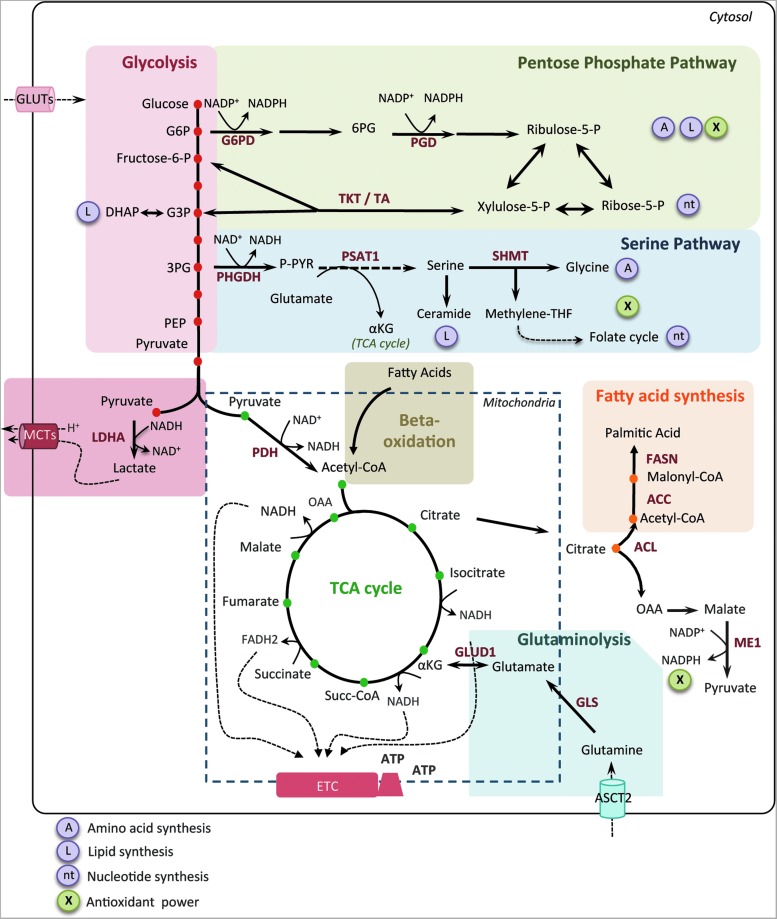
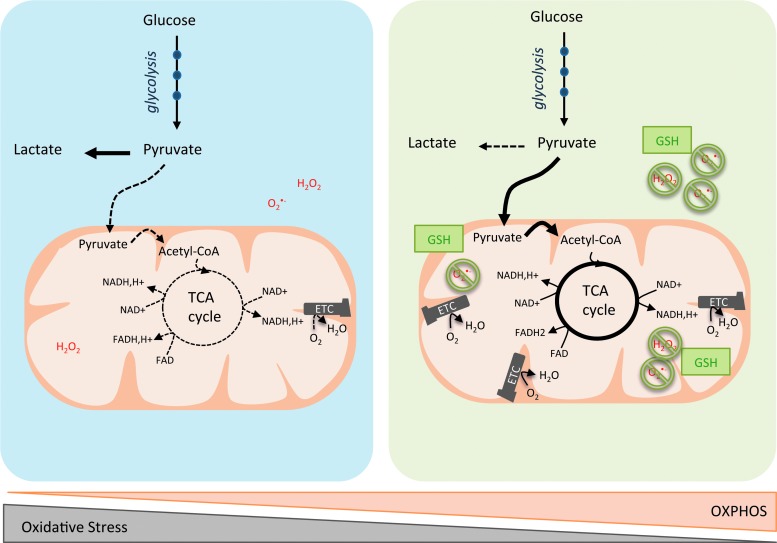
In the last years, metabolic reprogramming, fluctuations in bioenergetic fuels, and modulation of oxidative stress became new key hallmarks of tumor development. In cancer, elevated glucose uptake and high glycolytic rate, as a source of adenosine triphosphate, constitute a growth advantage for tumors. This represents the universally known Warburg effect, which gave rise to one major clinical application for detecting cancer cells using glucose analogs: the positron emission tomography scan imaging. Recent Advances: Glucose utilization and carbon sources in tumors are much more heterogeneous than initially thought. Indeed, new studies emerged and revealed a dual capacity of tumor cells for glycolytic and oxidative phosphorylation (OXPHOS) metabolism. OXPHOS metabolism, which relies predominantly on mitochondrial respiration, exhibits fine-tuned regulation of respiratory chain complexes and enhanced antioxidant response or detoxification capacity.
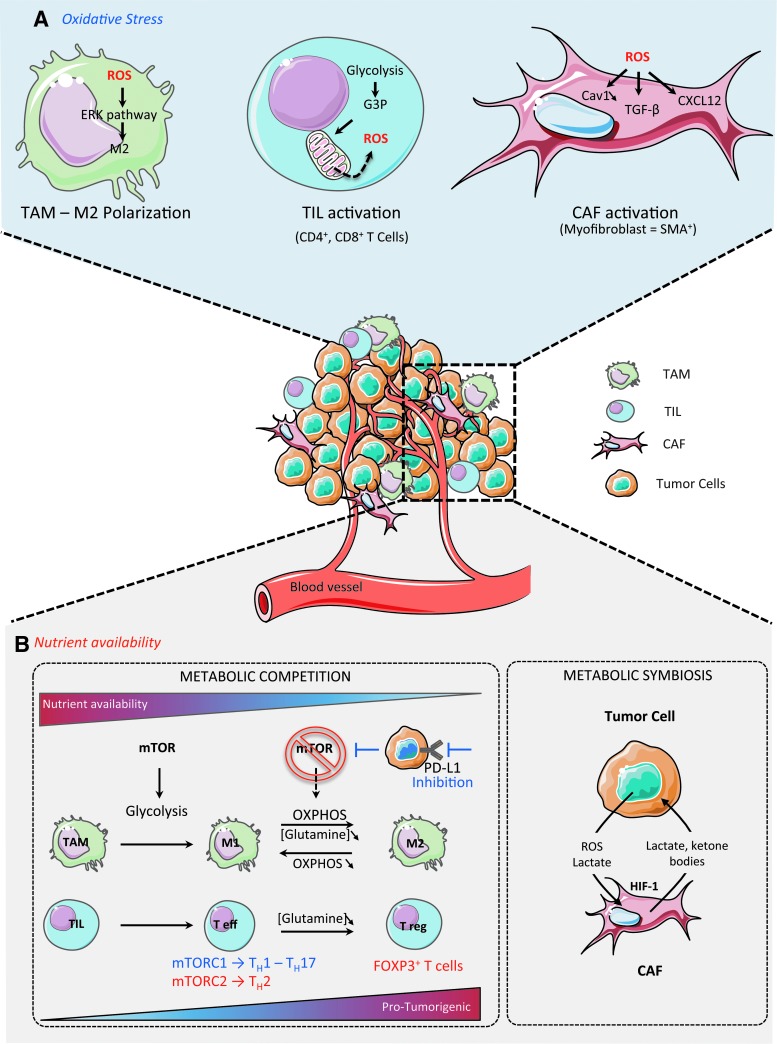
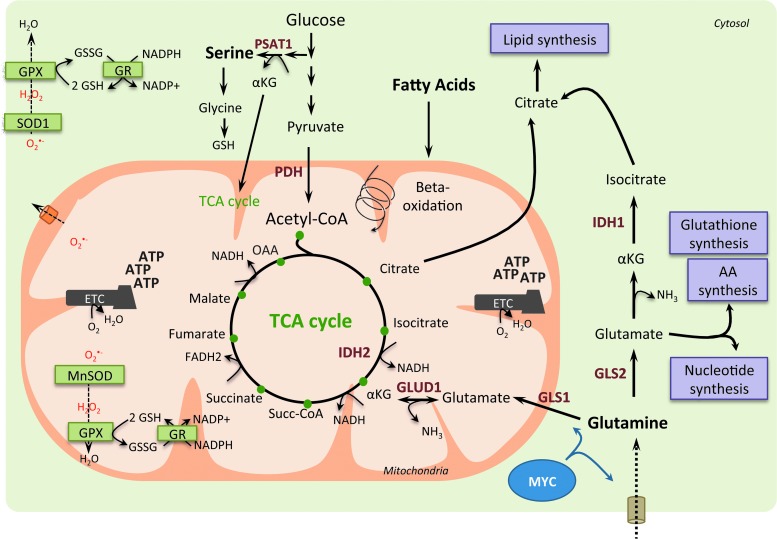
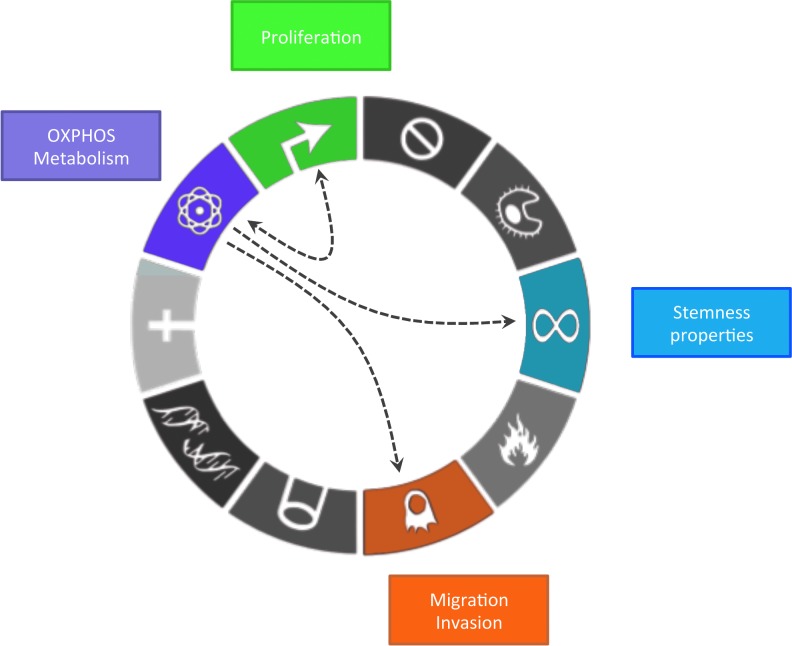
OXPHOS-dependent cancer cells use alternative oxidizable substrates, such as glutamine and fatty acids. The diversity of carbon substrates fueling neoplastic cells is indicative of metabolic heterogeneity, even within tumors sharing the same clinical diagnosis. Metabolic switch supports cancer cell stemness and their bioenergy-consuming functions, such as proliferation, survival, migration, and invasion. Moreover, reactive oxygen species-induced mitochondrial metabolism and nutrient availability are important for interaction with tumor microenvironment components. Carcinoma-associated fibroblasts and immune cells participate in the metabolic interplay with neoplastic cells. They collectively adapt in a dynamic manner to the metabolic needs of cancer cells, thus participating in tumorigenesis and resistance to treatments.
Characterizing the reciprocal metabolic interplay between stromal, immune, and neoplastic cells will provide a better understanding of treatment resistance. Antioxid. Redox Signal. 26, 462-485.
在过去几年中,代谢重编程、生物能量燃料的波动以及氧化应激的调节成为肿瘤发展的新关键特征。在癌症中,葡萄糖摄取增加和高糖酵解速率作为三磷酸腺苷的来源,为肿瘤提供了生长优势。这就是普遍所知的瓦伯格效应,它催生了一项主要的临床应用,即使用葡萄糖类似物检测癌细胞:正电子发射断层扫描成像。最新进展:肿瘤中的葡萄糖利用和碳源比最初认为的更加异质。事实上,新的研究表明肿瘤细胞具有糖酵解和氧化磷酸化(OXPHOS)代谢的双重能力。OXPHOS代谢主要依赖线粒体呼吸,对呼吸链复合物表现出精细调节,并增强抗氧化反应或解毒能力。
依赖OXPHOS的癌细胞使用替代的可氧化底物,如谷氨酰胺和脂肪酸。为肿瘤细胞提供能量的碳底物的多样性表明了代谢异质性,即使在具有相同临床诊断的肿瘤中也是如此。代谢转换支持癌细胞干性及其生物能量消耗功能,如增殖、存活、迁移和侵袭。此外,活性氧诱导的线粒体代谢和营养可用性对于与肿瘤微环境成分的相互作用很重要。癌相关成纤维细胞和免疫细胞参与与肿瘤细胞的代谢相互作用。它们共同以动态方式适应癌细胞的代谢需求,从而参与肿瘤发生和治疗抗性。
表征基质、免疫和肿瘤细胞之间相互的代谢相互作用将有助于更好地理解治疗抗性。《抗氧化与氧化还原信号》26卷,462 - 485页。