Bargues María Dolores, Malandrini Jorge Bruno, Artigas Patricio, Soria Claudia Cecilia, Velásquez Jorge Néstor, Carnevale Silvana, Mateo Lucía, Khoubbane Messaoud, Mas-Coma Santiago
Departamento de Parasitología, Facultad de Farmacia, Universidad de Valencia, Av. Vicente Andrés Estellés s/n, 46100, Burjassot, Valencia, Spain.
Facultad de Ciencias de la Salud, Universidad Nacional de Catamarca, Maestro Quiroga 1ra. Cuadra, CP 4700, San Fernando del Valle de Catamarca, Argentina.
Parasit Vectors. 2016 May 27;9(1):306. doi: 10.1186/s13071-016-1589-z.
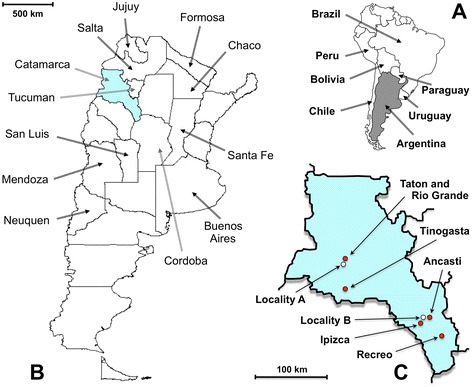
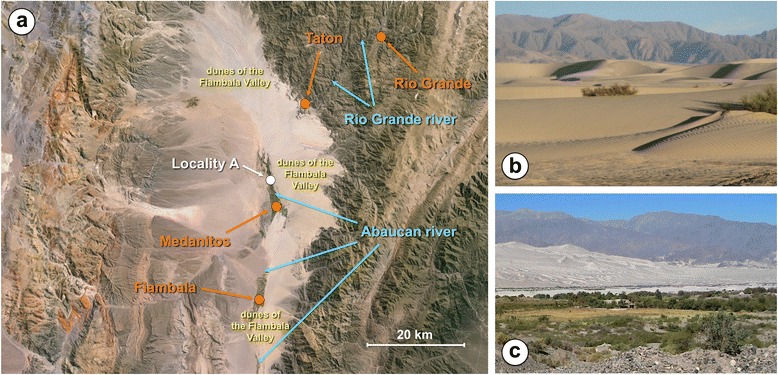
In South America, fascioliasis stands out due to the human endemic areas in many countries. In Argentina, human endemic areas have recently been detected. Lymnaeid vectors were studied in two human endemic localities of Catamarca province: Locality A beside Taton and Rio Grande villages; Locality B close to Recreo town.
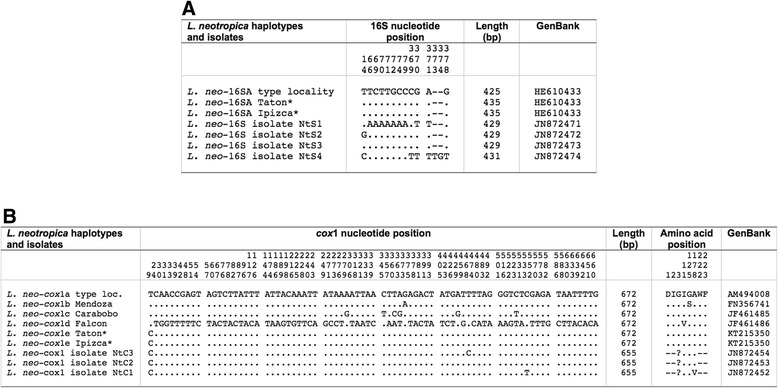
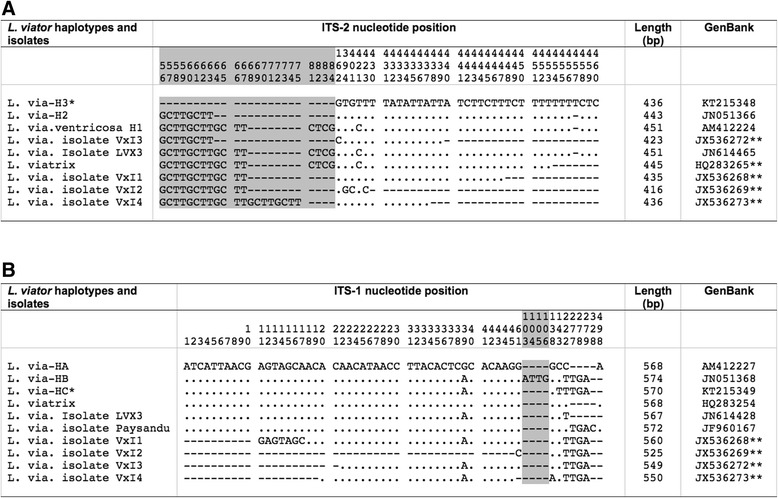
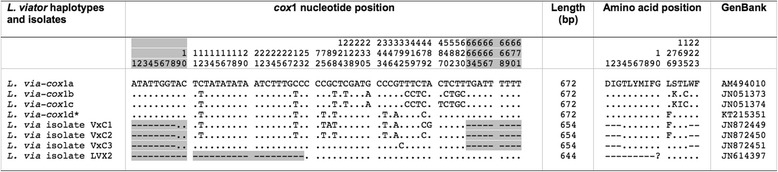
Lymnaeids were characterised by the complete sequences of rDNA ITS-2 and ITS-1 and fragments of the mtDNA 16S and cox1. Shell morphometry was studied with the aid of a computer image analysis system. Climate analyses were made by nearest neighbour interpolation from FAO data. Koeppen & Budyko climate classifications were used. De Martonne aridity index and Gorczynski continentality index were obtained. Lymnaeid distribution was assessed in environmental studies.
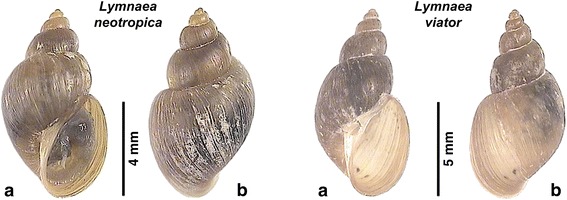
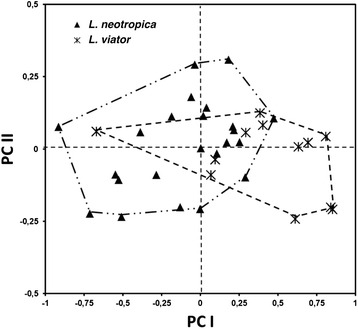
DNA sequences demonstrated the presence of Lymnaea neotropica and L. viator in Locality A and of L. neotropica in Locality B. Two and four new haplotypes were found in L. neotropica and L. viator, respectively. For interspecific differentiation, ITS-1 and 16S showed the highest and lowest resolution, respectively. For intraspecific analyses, cox1 was the best marker and ITS-1 the worst. Shell intraspecific variability overlapped in both species, except maximum length which was greater in L. viator. The desertic-arid conditions surrounding Locality A, the semiaridity-aridity surrounding Locality B, and the very low yearly precipitation in both localities, are very different from the typical fascioliasis transmission foci. Lymnaeids are confined to lateral river side floodings and small man-made irrigation systems. Water availability only depends on the rivers flowing from neighbouring mountains. All disease transmission factors are concentrated in small areas where humans and animals go for water supply, vegetable cultures and livestock farming.
The unusually high number of DNA haplotypes and the extreme climate unsuitable for F. hepatica and lymnaeid development, demonstrate that the transmission foci are isolated. Seasonal transmission may depend on the timely overlap of appropriate temperature and river water availability. Lymnaeids and F. hepatica have probably reached these localities by livestock introduction. DNA differences regarding other populations of L. neotropica and L. viator in Argentina suggest an introduction independent from the spreading movements which allowed these two lymnaeids to expand throughout the country.
在南美洲,由于许多国家存在人类肝片吸虫病流行区,肝片吸虫病备受关注。在阿根廷,最近发现了人类肝片吸虫病流行区。对卡塔马卡省两个人类肝片吸虫病流行地区的椎实螺媒介进行了研究:A地区位于塔顿村和里奥格兰德村附近;B地区靠近雷克雷奥镇。
通过核糖体DNA ITS - 2和ITS - 1的完整序列以及线粒体DNA 16S和细胞色素c氧化酶亚基1(cox1)的片段对椎实螺进行特征分析。借助计算机图像分析系统研究贝壳形态测量学。通过对粮农组织数据进行最近邻插值法进行气候分析。采用柯本 - 布迪科气候分类法。计算了德马顿干旱指数和戈尔琴斯基大陆性指数。在环境研究中评估椎实螺的分布情况。
DNA序列显示A地区存在新热带椎实螺和旅行椎实螺,B地区存在新热带椎实螺。在新热带椎实螺和旅行椎实螺中分别发现了2个和4个新单倍型。对于种间分化,ITS - 1和16S分别显示出最高和最低的分辨率。对于种内分析,cox1是最佳标记,ITS - 1是最差标记。两种椎实螺的贝壳种内变异性存在重叠,但旅行椎实螺的最大长度更大。A地区周围的沙漠干旱条件、B地区周围的半干旱 - 干旱条件以及两个地区极低的年降水量,与典型的肝片吸虫病传播疫源地有很大不同。椎实螺局限于河流侧向洪水区域和小型人工灌溉系统。水源仅依赖于从邻近山脉流淌而来的河流。所有疾病传播因素都集中在人类和动物取水、种植蔬菜和从事畜牧业的小区域内。
DNA单倍型数量异常之多以及极端气候不利于肝片吸虫和椎实螺的发育,表明这些传播疫源地是孤立的。季节性传播可能取决于适宜温度与河水可利用性的适时重叠。椎实螺和肝片吸虫可能是通过引入牲畜而到达这些地区的。与阿根廷新热带椎实螺和旅行椎实螺的其他种群相比,DNA差异表明其引入独立于使这两种椎实螺在全国范围内扩散的传播活动。